

204
sea-level rise in south Florida were only about 0.67 mm per year (2.6 inches per
century). That is about three to five times lower than today’s estimated rate of relative sea-level rise! (See the chapter by Kemp and Horton for an explanation of relative sea-level rise). If relative rates of sea-level rise were so low, what caused the
coastline to be inundated so rapidly? Had we made a mistake in our calculations of
the age for the different segments of the core or our interpretations? And if coastal
inundation could occur when relative rates of sea-level rise were so low, what about
today when they are 2.5–3.7 mm per year (9.8–14.5 inches per century)?
To be sure of our initial interpretations, we sent off more samples for radiometric
analysis to refine our estimates of the age of different parts of the core (see the chapter by Kemp and Horton for an explanation of radiocarbon and other sediment dating methods) and we re-evaluated all of our independent pieces of evidence.
Everything agreed with our original interpretation – the coastal mangroves had been
inundated in less than 200 years during one of the periods of lowest relative sealevel rise in south Florida over the last 100,000 years. So, what could explain this?
It turns out that climate variability is the cause. Other researchers working in the
Caribbean and the Gulf of Mexico found evidence that at the same time we saw
coastal inundation in the cores, their research sites were recording periods of prolonged droughts and frequent storms.
Linking the Lessons of Present and Past Hurricanes
Our next goal was to develop a better understanding of how drought, storms, and
climate variability could cause retreat of a mangrove shoreline. We had just begun
to research this in late summer 2017, when fate intervened again. This time it was
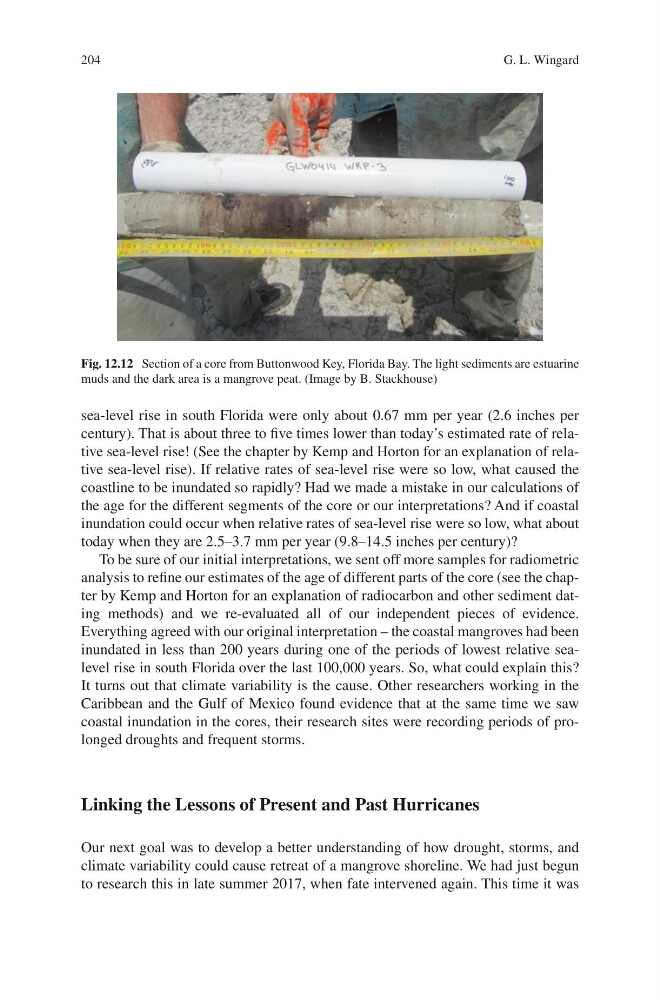
Fig. 12.12 Section of a core from Buttonwood Key, Florida Bay. The light sediments are estuarine
muds and the dark area is a mangrove peat. (Image by B. Stackhouse)
G. L. Wingard
sea-level rise in south Florida were only about 0.67 mm per year (2.6 inches per
century). That is about three to five times lower than today’s estimated rate of relative sea-level rise! (See the chapter by Kemp and Horton for an explanation of relative sea-level rise). If relative rates of sea-level rise were so low, what caused the
coastline to be inundated so rapidly? Had we made a mistake in our calculations of
the age for the different segments of the core or our interpretations? And if coastal
inundation could occur when relative rates of sea-level rise were so low, what about
today when they are 2.5–3.7 mm per year (9.8–14.5 inches per century)?
To be sure of our initial interpretations, we sent off more samples for radiometric
analysis to refine our estimates of the age of different parts of the core (see the chapter by Kemp and Horton for an explanation of radiocarbon and other sediment dating methods) and we re-evaluated all of our independent pieces of evidence.
Everything agreed with our original interpretation – the coastal mangroves had been
inundated in less than 200 years during one of the periods of lowest relative sealevel rise in south Florida over the last 100,000 years. So, what could explain this?
It turns out that climate variability is the cause. Other researchers working in the
Caribbean and the Gulf of Mexico found evidence that at the same time we saw
coastal inundation in the cores, their research sites were recording periods of prolonged droughts and frequent storms.
Linking the Lessons of Present and Past Hurricanes
Our next goal was to develop a better understanding of how drought, storms, and
climate variability could cause retreat of a mangrove shoreline. We had just begun
to research this in late summer 2017, when fate intervened again. This time it was
Fig. 12.12 Section of a core from Buttonwood Key, Florida Bay. The light sediments are estuarine
muds and the dark area is a mangrove peat. (Image by B. Stackhouse)
G. L. Wingard