

98
my dissertation at the University of Washington. As a Ph.D. student, I was fortunate
to have an incredible project working in Papua New Guinea. If you’re not familiar
with the country, it is positioned immediately north of Australia’s Great Barrier
Reef and is comprised of the eastern half of the island of New Guinea as well as a
few other islands. PNG, as it is often referred to, is a wonderfully wild place. Stories
of cannibalism and pictures of men with penis gourds are still produced today. It is
a country rich in amazing natural beauty whose resources are being exploited extensively, and its unemployment and poverty have led to social and security challenges.
With Google Earth, anyone can now explore remote places in PNG from the comfort of one’s living room. If this technology existed back then, I might have reconsidered the travel! To get there for field work, one of my first trips used a ship from
Thursday Island, located just off the northeastern tip of Australia. After days of
travel, I arrived at this little island at the northern end of the Great Barrier Reef.
Once onboard the ship, I was told the research cruise might not occur because the
cook and one of the crew had come down with an unknown disease after returning
from our destination! But sometimes life is serendipitous – the ship got some new
crew (the other crew eventually recovered), and we headed to PNG.
Determining coastal dynamics or other spatial changes over time often requires
a birds-eye perspective. I won’t get into the details of my dissertation, but in short,
I was trying to understand how the sediments pouring down from the large, wet and
rugged island of New Guinea flowed into the ocean and then are moved by currents,
waves and tides into sedimentary deposits on the ocean floor. Yes, it was a truly
overambitious effort, especially considering the scale of the system. But I was
young and optimistic, and my advisor, Dr. Chuck Nittrouer, was a legend for such
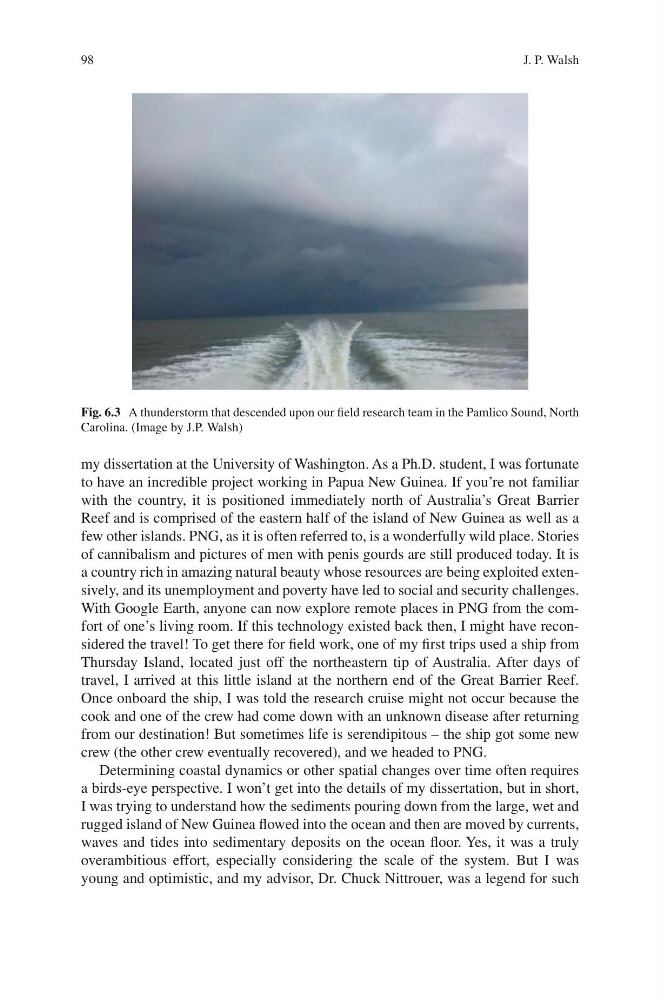
Fig. 6.3 A thunderstorm that descended upon our field research team in the Pamlico Sound, North
Carolina. (Image by J.P. Walsh)
J. P. Walsh
my dissertation at the University of Washington. As a Ph.D. student, I was fortunate
to have an incredible project working in Papua New Guinea. If you’re not familiar
with the country, it is positioned immediately north of Australia’s Great Barrier
Reef and is comprised of the eastern half of the island of New Guinea as well as a
few other islands. PNG, as it is often referred to, is a wonderfully wild place. Stories
of cannibalism and pictures of men with penis gourds are still produced today. It is
a country rich in amazing natural beauty whose resources are being exploited extensively, and its unemployment and poverty have led to social and security challenges.
With Google Earth, anyone can now explore remote places in PNG from the comfort of one’s living room. If this technology existed back then, I might have reconsidered the travel! To get there for field work, one of my first trips used a ship from
Thursday Island, located just off the northeastern tip of Australia. After days of
travel, I arrived at this little island at the northern end of the Great Barrier Reef.
Once onboard the ship, I was told the research cruise might not occur because the
cook and one of the crew had come down with an unknown disease after returning
from our destination! But sometimes life is serendipitous – the ship got some new
crew (the other crew eventually recovered), and we headed to PNG.
Determining coastal dynamics or other spatial changes over time often requires
a birds-eye perspective. I won’t get into the details of my dissertation, but in short,
I was trying to understand how the sediments pouring down from the large, wet and
rugged island of New Guinea flowed into the ocean and then are moved by currents,
waves and tides into sedimentary deposits on the ocean floor. Yes, it was a truly
overambitious effort, especially considering the scale of the system. But I was
young and optimistic, and my advisor, Dr. Chuck Nittrouer, was a legend for such
Fig. 6.3 A thunderstorm that descended upon our field research team in the Pamlico Sound, North
Carolina. (Image by J.P. Walsh)
J. P. Walsh