

by stock trampling on hill-slopes in winter or by close
grazing during periods of feed shortage.
The hill country landscape tends to present a mosaic of
landform units. Thus a mosaic approach to land use and
management, with pasture, productive forest, and protection
forest, matched to land capability is likely to be the best way
to maintain sustainable food and fibre production, economically sustainable rural communities, and environmental
protection.
Further Reading
Almond PC, Tonkin PJ (1999) Pedogenesis by upbuilding in an
extreme leaching and weathering, environment, and slow loess
accretion, south Westland, New Zealand. Geoderma 92:1–36
Almond PC, Shanun FL, Rieser U et al (2007) An OSL, radiocarbon
and tephra isochron-based chronology for Birdlings Flat loess at
Ahuriri Quarry, Banks Peninsula, Canterbury, New Zealand. Quat
Geochronol 2:4–8
Barringer JRF, Hewitt AE, Lynn IH, et al (2007) National mapping of
landform elements for New Zealand in support of S-Map, a New
Zealand soils database. Benmore Range & Motueka Catchment,
Landform element mapping, Soil series mapping. https://lris.scinfo.
org.nz/document/9367-landform-elements-barringer-et-al-2007/.
Accessed 4 Mar 2020
Basher LR (2013) Erosion processes and their control in New Zealand.
In: Dymond JR (ed) Ecosystem services in New Zealand—
conditions and trends. Manaaki Whenua Press, Lincoln, pp p363–
374
Brash DW, Beecroft FG (1987) Soil resources of Central Otago.
Proceedings of New Zealand Grassland Association 48:23–30
Bruce JG (1984) Soils of the Gore-Waikaka District, South Island, New
Zealand. NZ Soil Survey Report 74. New Zealand Soil Bureau,
DSIR, Lower Hutt. 86 p
Bruce JG (1984) Soil resources of the Southland Region. NZ Soil
Survey Report 76. New Zealand Soil Bureau, DSIR, Lower Hutt.
27 p
Campbell IB (ed) (1985) Proceedings of the soil dynamics and land use
seminar, Blenheim, May 1985. New Zealand Society of Soil
Science, and New Zealand Soil Conservators Association
Childs CW (1992) Ferrihydrite: a review of structure, properties and
occurrence in relation to soils. Zeitschrift fuer Pflanzenaehrung
Bodenkunde 154:441–8
Churchman GJ, Lowe DJ (2012) Alteration, formation, and occurrence
of minerals in soils. In: Huang PM et al (eds) Handbook of soil
sciences, 2nd edn. Vol. 1: Properties and processes. CRC Press,
Boca Raton, pp 20.1–20.72
Crozier MJ (2005) Multiple-occurrence regional landslide events in
New Zealand: hazard management issues. Landslides 2:247–256
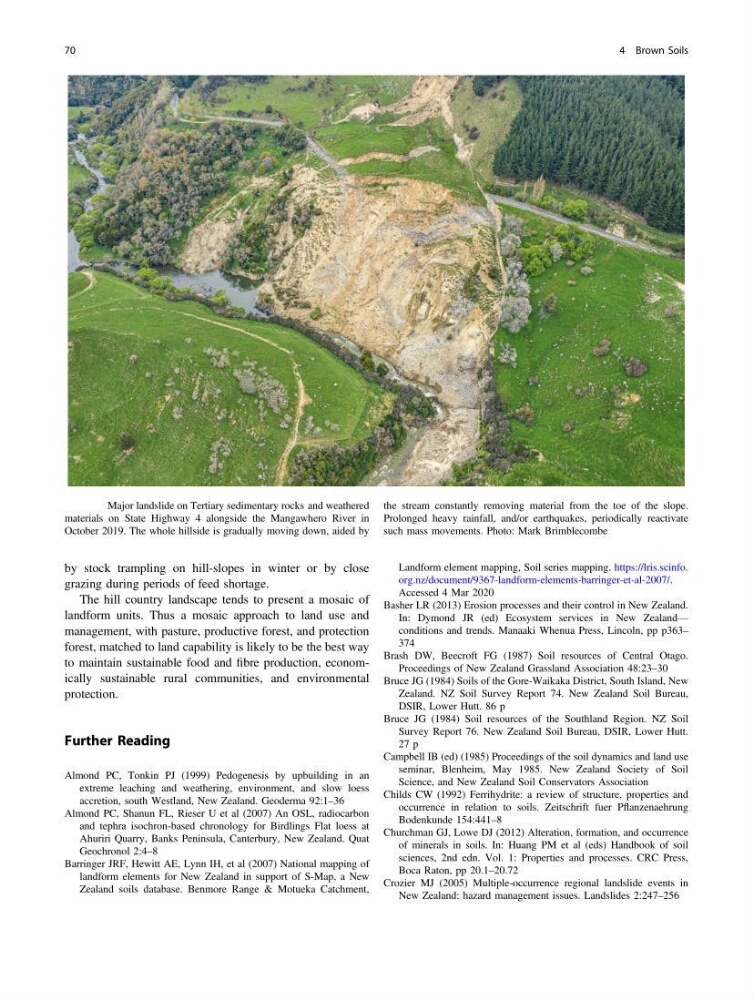
Fig. 4.7 Major landslide on Tertiary sedimentary rocks and weathered
materials on State Highway 4 alongside the Mangawhero River in
October 2019. The whole hillside is gradually moving down, aided by
the stream constantly removing material from the toe of the slope.
Prolonged heavy rainfall, and/or earthquakes, periodically reactivate
such mass movements. Photo: Mark Brimblecombe
70
4 Brown Soils
grazing during periods of feed shortage.
The hill country landscape tends to present a mosaic of
landform units. Thus a mosaic approach to land use and
management, with pasture, productive forest, and protection
forest, matched to land capability is likely to be the best way
to maintain sustainable food and fibre production, economically sustainable rural communities, and environmental
protection.
Further Reading
Almond PC, Tonkin PJ (1999) Pedogenesis by upbuilding in an
extreme leaching and weathering, environment, and slow loess
accretion, south Westland, New Zealand. Geoderma 92:1–36
Almond PC, Shanun FL, Rieser U et al (2007) An OSL, radiocarbon
and tephra isochron-based chronology for Birdlings Flat loess at
Ahuriri Quarry, Banks Peninsula, Canterbury, New Zealand. Quat
Geochronol 2:4–8
Barringer JRF, Hewitt AE, Lynn IH, et al (2007) National mapping of
landform elements for New Zealand in support of S-Map, a New
Zealand soils database. Benmore Range & Motueka Catchment,
Landform element mapping, Soil series mapping. https://lris.scinfo.
org.nz/document/9367-landform-elements-barringer-et-al-2007/.
Accessed 4 Mar 2020
Basher LR (2013) Erosion processes and their control in New Zealand.
In: Dymond JR (ed) Ecosystem services in New Zealand—
conditions and trends. Manaaki Whenua Press, Lincoln, pp p363–
374
Brash DW, Beecroft FG (1987) Soil resources of Central Otago.
Proceedings of New Zealand Grassland Association 48:23–30
Bruce JG (1984) Soils of the Gore-Waikaka District, South Island, New
Zealand. NZ Soil Survey Report 74. New Zealand Soil Bureau,
DSIR, Lower Hutt. 86 p
Bruce JG (1984) Soil resources of the Southland Region. NZ Soil
Survey Report 76. New Zealand Soil Bureau, DSIR, Lower Hutt.
27 p
Campbell IB (ed) (1985) Proceedings of the soil dynamics and land use
seminar, Blenheim, May 1985. New Zealand Society of Soil
Science, and New Zealand Soil Conservators Association
Childs CW (1992) Ferrihydrite: a review of structure, properties and
occurrence in relation to soils. Zeitschrift fuer Pflanzenaehrung
Bodenkunde 154:441–8
Churchman GJ, Lowe DJ (2012) Alteration, formation, and occurrence
of minerals in soils. In: Huang PM et al (eds) Handbook of soil
sciences, 2nd edn. Vol. 1: Properties and processes. CRC Press,
Boca Raton, pp 20.1–20.72
Crozier MJ (2005) Multiple-occurrence regional landslide events in
New Zealand: hazard management issues. Landslides 2:247–256
Fig. 4.7 Major landslide on Tertiary sedimentary rocks and weathered
materials on State Highway 4 alongside the Mangawhero River in
October 2019. The whole hillside is gradually moving down, aided by
the stream constantly removing material from the toe of the slope.
Prolonged heavy rainfall, and/or earthquakes, periodically reactivate
such mass movements. Photo: Mark Brimblecombe
70
4 Brown Soils