

dam leading to catastrophic flooding downstream and
potential for tsunami-like waves in Lake Dunstan.
4.3.5 Contrasting Terrains in Canterbury
and Otago
There is an interesting contrast between the greywacke terrains of Canterbury and the schist terrains of Otago. A notable boundary lies between the greywacke terrain on the
northern side of the Waitaki River, and southern schistose
terrain. The shattered greywacke is more readily eroded
(forming small, cubic blocks) than schist (larger tabular
blocks) and, as a result, the greywacke landscape is dominated by narrow ridge lines, with planar steep slopes that
terminate in V-shaped valleys. On the steep slopes a larger
proportion of rainfall runs off, infiltration is lower, and
hence streams may be dry for long periods between rainfall
events. In the greywacke terrain the soils tend to be fairly
uniform with relatively lower habitat- and biodiversity. In
contrast, the schist terrain tends to have rounded crests,
concave slopes, and meandering streams, with stream flow
maintained for longer during dry spells. The schist terrain
supports a wider range of soil materials and consequent
higher habitat- and biodiversity.
4.3.6 Southland Plains, Terraces, Downlands,
and Rolling Hills
Brown Soils are the predominant soil order in Southland,
occurring on the productive lowland plains, terraces, rolling
downlands, and the lower hills, as well as on some steeplands.
A diverse range of Brown Soils has been recognised, particularly in the soil surveys of John Bruce and Peter McIntosh.
The soil diversity reflects the range of topography and soil
parent materials that include loess, greywacke, tuffaceous
(containing volcanic material) greywacke, sandstone, siltstone, and schist, along with glacial moraine and outwash
alluvium on intermediate terraces. Allophanic Brown Soils
form on tuffaceous greywackes and may be associated with
Melanic Soils where both limestone and base-rich tuffaceous
greywacke overlie the greywacke basement rocks.
Recent Soils from alluvium form on river flood plains,
sometimes with adjacent Gley or Organic Soils in poorly
drained hollows. The Brown Soils merge into Pallic soils in
warmer and drier areas. In the drier areas where Pallic Soils
predominate, Brown Soils are found on sites with shallower
stony soils where leaching is more effective.
4.4 Key Soil Properties
4.4.1 Soil Composition
Most of the Brown Soil groups are derived from
quartzo-feldspathic sedimentary rocks (schist, greywacke,
mudstones and sandstones) or acid igneous rocks (e.g. rhyolites and granites), or derivatives including alluvium, colluvium, and loess. However, Mafic Brown Soils are
recognised on soils derived from weakly weathered intermediate or basic igneous rocks (e.g. phonolite and basalt) or
sediments derived from such rocks. Brown Soil profiles tend
to be mineralogically uniform with depth.
Many Brown Soils are formed on calcareous mudstone
parent materials yet the calcium carbonate content in most
Brown Soils is generally low as a result of the leaching that has
occurred during soil formation. However, in some places calcium carbonates do form a calcareous horizon and are recognised as a Calcareous subgroup of the Orthic Brown Soils.
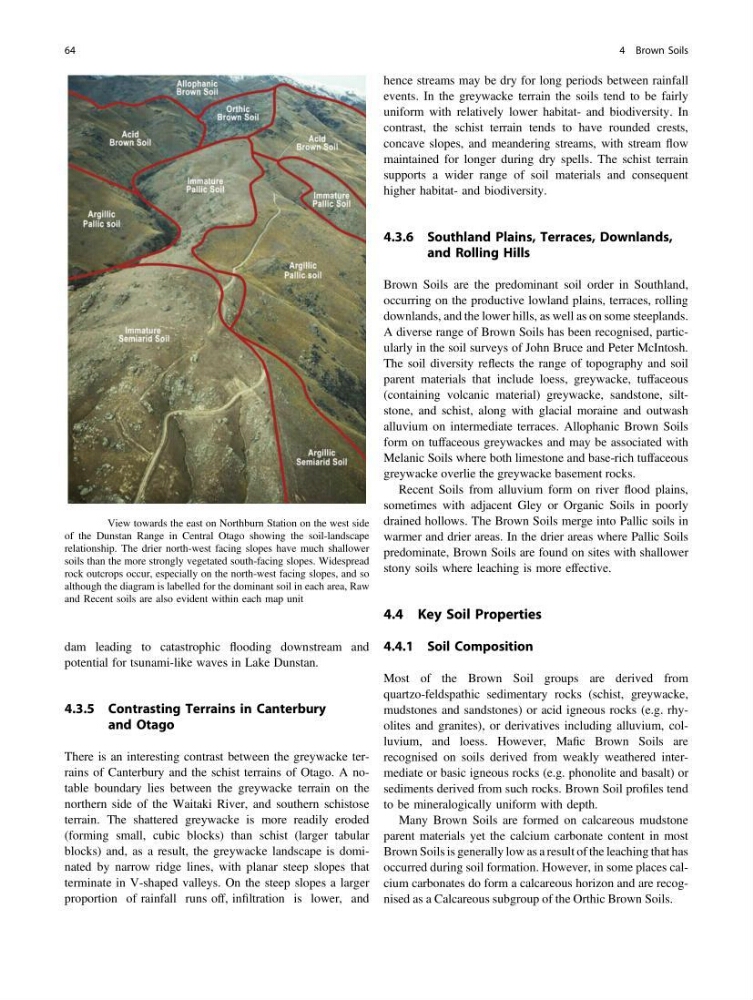
Fig. 4.4 View towards the east on Northburn Station on the west side
of the Dunstan Range in Central Otago showing the soil-landscape
relationship. The drier north-west facing slopes have much shallower
soils than the more strongly vegetated south-facing slopes. Widespread
rock outcrops occur, especially on the north-west facing slopes, and so
although the diagram is labelled for the dominant soil in each area, Raw
and Recent soils are also evident within each map unit
64
4 Brown Soils
potential for tsunami-like waves in Lake Dunstan.
4.3.5 Contrasting Terrains in Canterbury
and Otago
There is an interesting contrast between the greywacke terrains of Canterbury and the schist terrains of Otago. A notable boundary lies between the greywacke terrain on the
northern side of the Waitaki River, and southern schistose
terrain. The shattered greywacke is more readily eroded
(forming small, cubic blocks) than schist (larger tabular
blocks) and, as a result, the greywacke landscape is dominated by narrow ridge lines, with planar steep slopes that
terminate in V-shaped valleys. On the steep slopes a larger
proportion of rainfall runs off, infiltration is lower, and
hence streams may be dry for long periods between rainfall
events. In the greywacke terrain the soils tend to be fairly
uniform with relatively lower habitat- and biodiversity. In
contrast, the schist terrain tends to have rounded crests,
concave slopes, and meandering streams, with stream flow
maintained for longer during dry spells. The schist terrain
supports a wider range of soil materials and consequent
higher habitat- and biodiversity.
4.3.6 Southland Plains, Terraces, Downlands,
and Rolling Hills
Brown Soils are the predominant soil order in Southland,
occurring on the productive lowland plains, terraces, rolling
downlands, and the lower hills, as well as on some steeplands.
A diverse range of Brown Soils has been recognised, particularly in the soil surveys of John Bruce and Peter McIntosh.
The soil diversity reflects the range of topography and soil
parent materials that include loess, greywacke, tuffaceous
(containing volcanic material) greywacke, sandstone, siltstone, and schist, along with glacial moraine and outwash
alluvium on intermediate terraces. Allophanic Brown Soils
form on tuffaceous greywackes and may be associated with
Melanic Soils where both limestone and base-rich tuffaceous
greywacke overlie the greywacke basement rocks.
Recent Soils from alluvium form on river flood plains,
sometimes with adjacent Gley or Organic Soils in poorly
drained hollows. The Brown Soils merge into Pallic soils in
warmer and drier areas. In the drier areas where Pallic Soils
predominate, Brown Soils are found on sites with shallower
stony soils where leaching is more effective.
4.4 Key Soil Properties
4.4.1 Soil Composition
Most of the Brown Soil groups are derived from
quartzo-feldspathic sedimentary rocks (schist, greywacke,
mudstones and sandstones) or acid igneous rocks (e.g. rhyolites and granites), or derivatives including alluvium, colluvium, and loess. However, Mafic Brown Soils are
recognised on soils derived from weakly weathered intermediate or basic igneous rocks (e.g. phonolite and basalt) or
sediments derived from such rocks. Brown Soil profiles tend
to be mineralogically uniform with depth.
Many Brown Soils are formed on calcareous mudstone
parent materials yet the calcium carbonate content in most
Brown Soils is generally low as a result of the leaching that has
occurred during soil formation. However, in some places calcium carbonates do form a calcareous horizon and are recognised as a Calcareous subgroup of the Orthic Brown Soils.
Fig. 4.4 View towards the east on Northburn Station on the west side
of the Dunstan Range in Central Otago showing the soil-landscape
relationship. The drier north-west facing slopes have much shallower
soils than the more strongly vegetated south-facing slopes. Widespread
rock outcrops occur, especially on the north-west facing slopes, and so
although the diagram is labelled for the dominant soil in each area, Raw
and Recent soils are also evident within each map unit
64
4 Brown Soils