

Some gravel extraction has also been undertaken. On the
West Coast, vegetation provides a basis for extensive
grazing.
3.3.9 Sports Fields
Because of intensive use under varying climatic conditions
sports fields are increasingly being constructed to meet
specific requirements. Cricket pitches have long been subject
to careful construction and import of particular clay materials. The state of ‘the pitch’ and its impact on bowlers and
batspersons, and how it evolves over the course of a game of
cricket, is the subject of endless discussion and debate in the
cricket world.
Ideally a cricket pitch provides a resilient, even, surface
which allows the ball to bounce strongly and not to slow
greatly when it hits the ground. The pitch also has to survive
up to five days of intensive use by players in a test match
without breaking up. Some cracking of the surface as it dries
over the course of a match is deemed acceptable as cracking
adds some character to the game, but breaking to an uneven
surface, which can send the ball bouncing off in unexpected
directions, is not appreciated. To get the preferred level of
surface hardness and smoothness requires a high soil bulk
density which is achieved by compaction using a roller. The
process of compaction is sensitive to the moisture content of
the clay. Thus there is a need to get water to move deeply
into the clay to provide an even moisture content to facilitate
survival of the grass cover as well as compaction. Managing
the balance between grass growth, water content, and surface
compaction in cricket pitches is often considered as much an
art as a science.
In New Zealand four clay sources have been widely used
for cricket pitches in recent decades—the ‘Patumahoe clay’
and ‘Naike clay’ of the Waikato, the ‘Waikari clay’ of north
Canterbury, and the ‘Kakanui clay’ of North Otago. In 2017,
Seddon Park in Hamilton had nine cricket pitches, five
constructed from Patumahoe clay (previously a similar soil,
Naike clay, was used), and four from Waikari clay. The
chocolate-brown coloured Patumahoe clay is derived from
the subsoil of a Granular Soil and is described as a ‘strong’,
but weakly swelling, clay (the dominant clay type in the soil
is halloysite, a 1:1 clay which has a low, but significant,
shrink-swell range). The Patumahoe clay has the ability to
dry faster, after wetting, than some other clays (especially
montmorillonite) meaning less time is needed for pitch
preparation and presumably its use is less ‘risky’ in the early
summer when showers and higher humidity tend to be more
likely. The Patumahoe clay is favoured for the longer cricket
test matches. Cricket player and coach Grant Bradburn
commented in the NZ Herald newspaper that ‘I’m a huge fan
of Patumahoe [clay] which is what they’ve got at the Basin
Reserve. I think that is the best track in the country for pace
and bounce—Colin Maiden Park and Eden Park use the
same soil too. Batsmen love it because they get consistent
bounce. If it lands halfway down the track they know they
can play cross-bat shots with freedom. That’s critical for
exciting cricket. … Patumahoe soil also forces batsmen to
play off the back foot better. Waikari [clay] produces a front
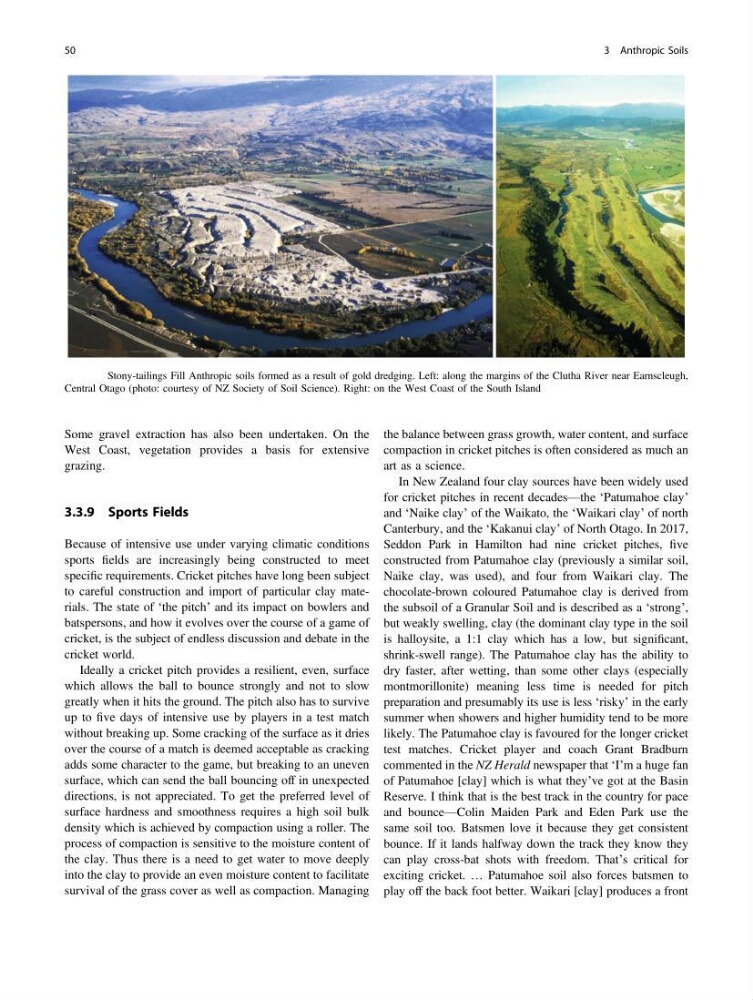
Fig. 3.8 Stony-tailings Fill Anthropic soils formed as a result of gold dredging. Left: along the margins of the Clutha River near Earnscleugh,
Central Otago (photo: courtesy of NZ Society of Soil Science). Right: on the West Coast of the South Island
50
3 Anthropic Soils
West Coast, vegetation provides a basis for extensive
grazing.
3.3.9 Sports Fields
Because of intensive use under varying climatic conditions
sports fields are increasingly being constructed to meet
specific requirements. Cricket pitches have long been subject
to careful construction and import of particular clay materials. The state of ‘the pitch’ and its impact on bowlers and
batspersons, and how it evolves over the course of a game of
cricket, is the subject of endless discussion and debate in the
cricket world.
Ideally a cricket pitch provides a resilient, even, surface
which allows the ball to bounce strongly and not to slow
greatly when it hits the ground. The pitch also has to survive
up to five days of intensive use by players in a test match
without breaking up. Some cracking of the surface as it dries
over the course of a match is deemed acceptable as cracking
adds some character to the game, but breaking to an uneven
surface, which can send the ball bouncing off in unexpected
directions, is not appreciated. To get the preferred level of
surface hardness and smoothness requires a high soil bulk
density which is achieved by compaction using a roller. The
process of compaction is sensitive to the moisture content of
the clay. Thus there is a need to get water to move deeply
into the clay to provide an even moisture content to facilitate
survival of the grass cover as well as compaction. Managing
the balance between grass growth, water content, and surface
compaction in cricket pitches is often considered as much an
art as a science.
In New Zealand four clay sources have been widely used
for cricket pitches in recent decades—the ‘Patumahoe clay’
and ‘Naike clay’ of the Waikato, the ‘Waikari clay’ of north
Canterbury, and the ‘Kakanui clay’ of North Otago. In 2017,
Seddon Park in Hamilton had nine cricket pitches, five
constructed from Patumahoe clay (previously a similar soil,
Naike clay, was used), and four from Waikari clay. The
chocolate-brown coloured Patumahoe clay is derived from
the subsoil of a Granular Soil and is described as a ‘strong’,
but weakly swelling, clay (the dominant clay type in the soil
is halloysite, a 1:1 clay which has a low, but significant,
shrink-swell range). The Patumahoe clay has the ability to
dry faster, after wetting, than some other clays (especially
montmorillonite) meaning less time is needed for pitch
preparation and presumably its use is less ‘risky’ in the early
summer when showers and higher humidity tend to be more
likely. The Patumahoe clay is favoured for the longer cricket
test matches. Cricket player and coach Grant Bradburn
commented in the NZ Herald newspaper that ‘I’m a huge fan
of Patumahoe [clay] which is what they’ve got at the Basin
Reserve. I think that is the best track in the country for pace
and bounce—Colin Maiden Park and Eden Park use the
same soil too. Batsmen love it because they get consistent
bounce. If it lands halfway down the track they know they
can play cross-bat shots with freedom. That’s critical for
exciting cricket. … Patumahoe soil also forces batsmen to
play off the back foot better. Waikari [clay] produces a front
Fig. 3.8 Stony-tailings Fill Anthropic soils formed as a result of gold dredging. Left: along the margins of the Clutha River near Earnscleugh,
Central Otago (photo: courtesy of NZ Society of Soil Science). Right: on the West Coast of the South Island
50
3 Anthropic Soils