

soils. In Soil Taxonomy, the soils in the Ross Sea region are
classified as Gelisols. In World Reference Base, they are
called Cryosols.
The Gelisols of the Ross Sea region generally fall within
the Turbels where there is evidence of cryoturbation (mixing
of the soil as a result of freeze-thaw processes) or Orthels. At
the great-group level, the soils are further divided into those
that do not have ice-cemented permafrost (Anhyorthels or
Anhyturbels) and the more typical soils that contain
ice-cemented permafrost (Haplorthels or Haploturbels) with
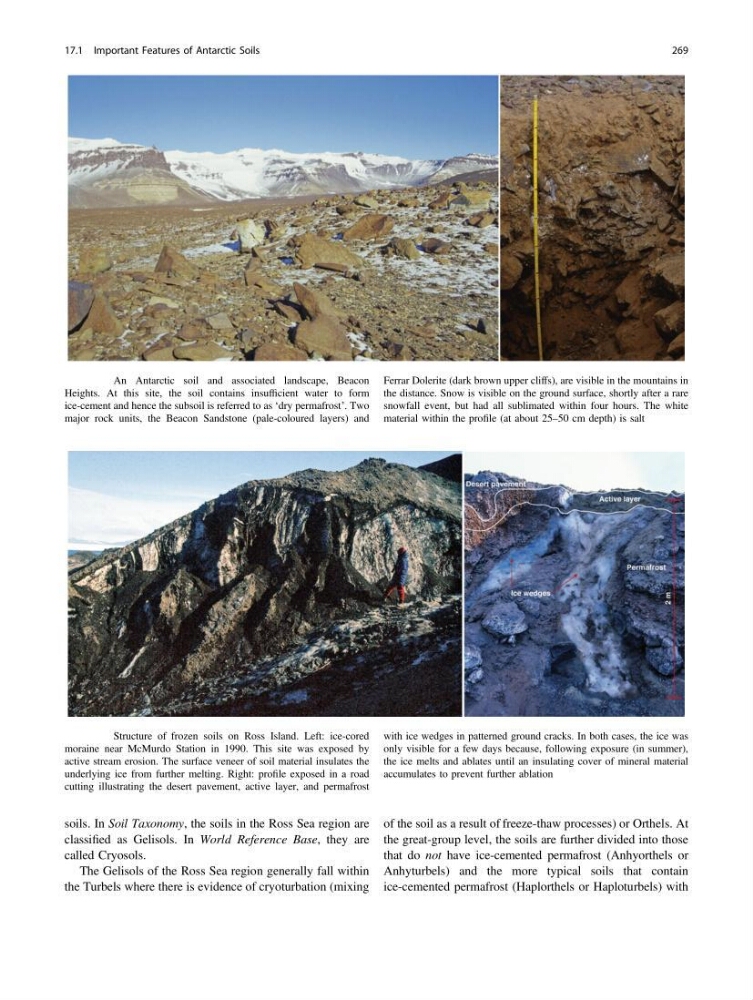
Fig. 17.1 An Antarctic soil and associated landscape, Beacon
Heights. At this site, the soil contains insufficient water to form
ice-cement and hence the subsoil is referred to as ‘dry permafrost’. Two
major rock units, the Beacon Sandstone (pale-coloured layers) and
Ferrar Dolerite (dark brown upper cliffs), are visible in the mountains in
the distance. Snow is visible on the ground surface, shortly after a rare
snowfall event, but had all sublimated within four hours. The white
material within the profile (at about 25–50 cm depth) is salt
Fig. 17.2 Structure of frozen soils on Ross Island. Left: ice-cored
moraine near McMurdo Station in 1990. This site was exposed by
active stream erosion. The surface veneer of soil material insulates the
underlying ice from further melting. Right: profile exposed in a road
cutting illustrating the desert pavement, active layer, and permafrost
with ice wedges in patterned ground cracks. In both cases, the ice was
only visible for a few days because, following exposure (in summer),
the ice melts and ablates until an insulating cover of mineral material
accumulates to prevent further ablation
17.1 Important Features of Antarctic Soils
269
classified as Gelisols. In World Reference Base, they are
called Cryosols.
The Gelisols of the Ross Sea region generally fall within
the Turbels where there is evidence of cryoturbation (mixing
of the soil as a result of freeze-thaw processes) or Orthels. At
the great-group level, the soils are further divided into those
that do not have ice-cemented permafrost (Anhyorthels or
Anhyturbels) and the more typical soils that contain
ice-cemented permafrost (Haplorthels or Haploturbels) with
Fig. 17.1 An Antarctic soil and associated landscape, Beacon
Heights. At this site, the soil contains insufficient water to form
ice-cement and hence the subsoil is referred to as ‘dry permafrost’. Two
major rock units, the Beacon Sandstone (pale-coloured layers) and
Ferrar Dolerite (dark brown upper cliffs), are visible in the mountains in
the distance. Snow is visible on the ground surface, shortly after a rare
snowfall event, but had all sublimated within four hours. The white
material within the profile (at about 25–50 cm depth) is salt
Fig. 17.2 Structure of frozen soils on Ross Island. Left: ice-cored
moraine near McMurdo Station in 1990. This site was exposed by
active stream erosion. The surface veneer of soil material insulates the
underlying ice from further melting. Right: profile exposed in a road
cutting illustrating the desert pavement, active layer, and permafrost
with ice wedges in patterned ground cracks. In both cases, the ice was
only visible for a few days because, following exposure (in summer),
the ice melts and ablates until an insulating cover of mineral material
accumulates to prevent further ablation
17.1 Important Features of Antarctic Soils
269