

velocities are highest) to fine textures in the back swamp
where water velocities have slackened off; and (b) a drainage
gradient from well drained soils on the crest, to poorly
drained soils in the back swamp. Thus, the soils have a wide
range of textures and drainage stages with Recent Soils on
micro-topographical highs and Gley Soils or Organic Soils
in the back swamp areas.
Flood events in New Zealand
In the early days of European settlement in New
Zealand, drowning was described as ‘the New Zealand
death’ such was the frequency of people being caught
up in flood waters when trying to cross swollen rivers.
Major flood events that caused catastrophic damage in
New Zealand include the 1858 flood in the Wellington
region (14 deaths), 1863 in Central Otago (about 200
deaths), 1897 in Hawkes Bay (12 deaths), 1938 in
Hawkes Bay (21 deaths), 1988 Cyclone Bola on the
east coast of North Island (3 deaths), 2014 in
Northland (2 deaths), and 2020 in Southland and
Otago (2 deaths). Many other floods have caused
widespread damage to houses and farmland throughout New Zealand.
All regions of New Zealand are periodically subject
to prolonged, high-intensity, rainfall events that lead to
flooding. During floods, rivers overtop their banks,
depositing alluvium on flood plains on which Recent
Soils develop. The regular fronts that pass across the
South Island drop large volumes of water in the
Southern Alps, and on the West Coast, as the
moisture-laden air is forced up over the mountain
range. Rivers in steeply sloping catchments can rise
rapidly, overtopping their banks both to the east and
west of the Southern Alps. In the northern half of North
Island, subtropical cyclones occasionally venture south
far enough to bring extreme, prolonged, heavy rainfall.
Many flood plains are now protected from regular
flooding by stop banks and flood control programmes,
but periodically such defences are breached in
exceptionally large storms or where weakness is
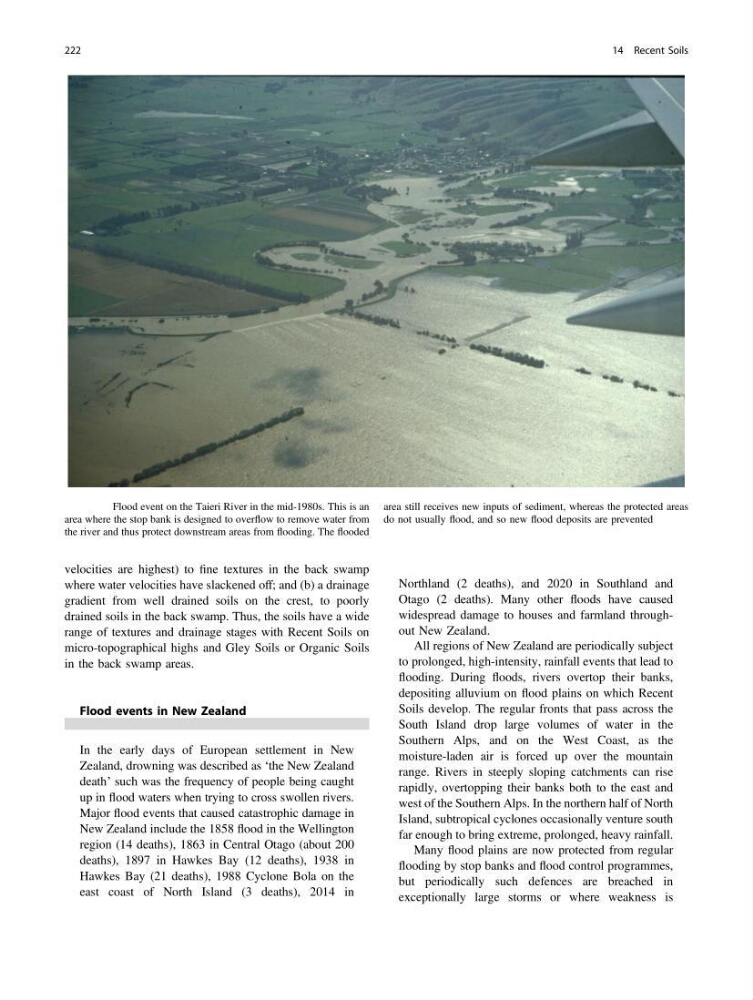
Fig. 14.6 Flood event on the Taieri River in the mid-1980s. This is an
area where the stop bank is designed to overflow to remove water from
the river and thus protect downstream areas from flooding. The flooded
area still receives new inputs of sediment, whereas the protected areas
do not usually flood, and so new flood deposits are prevented
222
14 Recent Soils
where water velocities have slackened off; and (b) a drainage
gradient from well drained soils on the crest, to poorly
drained soils in the back swamp. Thus, the soils have a wide
range of textures and drainage stages with Recent Soils on
micro-topographical highs and Gley Soils or Organic Soils
in the back swamp areas.
Flood events in New Zealand
In the early days of European settlement in New
Zealand, drowning was described as ‘the New Zealand
death’ such was the frequency of people being caught
up in flood waters when trying to cross swollen rivers.
Major flood events that caused catastrophic damage in
New Zealand include the 1858 flood in the Wellington
region (14 deaths), 1863 in Central Otago (about 200
deaths), 1897 in Hawkes Bay (12 deaths), 1938 in
Hawkes Bay (21 deaths), 1988 Cyclone Bola on the
east coast of North Island (3 deaths), 2014 in
Northland (2 deaths), and 2020 in Southland and
Otago (2 deaths). Many other floods have caused
widespread damage to houses and farmland throughout New Zealand.
All regions of New Zealand are periodically subject
to prolonged, high-intensity, rainfall events that lead to
flooding. During floods, rivers overtop their banks,
depositing alluvium on flood plains on which Recent
Soils develop. The regular fronts that pass across the
South Island drop large volumes of water in the
Southern Alps, and on the West Coast, as the
moisture-laden air is forced up over the mountain
range. Rivers in steeply sloping catchments can rise
rapidly, overtopping their banks both to the east and
west of the Southern Alps. In the northern half of North
Island, subtropical cyclones occasionally venture south
far enough to bring extreme, prolonged, heavy rainfall.
Many flood plains are now protected from regular
flooding by stop banks and flood control programmes,
but periodically such defences are breached in
exceptionally large storms or where weakness is
Fig. 14.6 Flood event on the Taieri River in the mid-1980s. This is an
area where the stop bank is designed to overflow to remove water from
the river and thus protect downstream areas from flooding. The flooded
area still receives new inputs of sediment, whereas the protected areas
do not usually flood, and so new flood deposits are prevented
222
14 Recent Soils