

Without human intervention, soil fertility is generally low
in Raw Soils, with nitrogen deficiency usually the primary
limitation. Nitrogen accumulation relies on establishment of
nitrogen-fixing plant species. The accumulation of soil
organic matter, and mineral weathering, gradually build
nutrient and water storage to support a wider range of living
organisms. Over time a Raw Soil will gradually build the
capacity to entrap and store the suite of nutrients needed to
support viable ecosystems (nitrogen, phosphorus, potassium,
sulphur, calcium, magnesium, potassium, sodium, and trace
elements). However, in some Fluvial Raw Soils, the alluvial
materials, if eroded from pre-existing fertile soils, may have
sufficient nutrients, and a texture (containing clays) conducive to moisture storage, so that plants may readily
become established and flourish.
Most definitions of soil require or assume the presence of
soil organic matter or life, but do Raw Soils contain life? We
know that most Raw Soils host at least some microbial life,
and at all but the most extreme sites nematodes, insects,
mosses, lichens, and other plants will quickly become
established in newly exposed materials. However, vegetation
cover in Raw Soils is generally either absent, sparse, or
patchy, and often consists of ephemeral herbaceous plants,
mosses, or lichens. A number of plant, and other, species
that specialise in colonising newly exposed materials depend
on periodic changes in the environment to provide them with
an ecological niche to survive.
Hydrothermal Raw Soils host a suite of microbes that are
adapted to the hot, often acidic, conditions. Such thermophilic microbes have been closely studied as they have
potential for a number of technical applications, particularly
in work led by Roy Daniels and Hugh Morgan.
The mangrove tree is specially adapted to the Fluid Raw
Soils of estuaries in the northern half of the North Island.
Mangrove roots are adapted to the oxygen-depleted substrate
with pneumatophores that extend upwards to reach air, at
least for a few hours during low tide (Fig. 13.6). Mangrove
seeds will float long distances in the sea to eventually wash
up and become established on a tidal mudflat area. Once
established, mangroves tend to slow the rate of water flow,
thus encouraging further settling of ‘mud’ from the water
column. Over time the mangroves build up and entrap sediment and extend out into the tidal zone, with the inland edge
becoming ever more sheltered from waves and erosion, and
gradually building up to a Saline, rather than a Fluid, Raw
Soil.
Along the southern margin of the Firth of Thames the
accumulation of sediment, in collaboration with mangrove
establishment, has extended the shore line out into the former marine area by 800 m between the 1960s and about
2010 (Fig. 13.10). The margins of the mangroves, which
became established outside a stop bank that was built along
the coastline in the early 1960s, is now 2 m higher than the
land on the inside of the stop bank, which provides a good
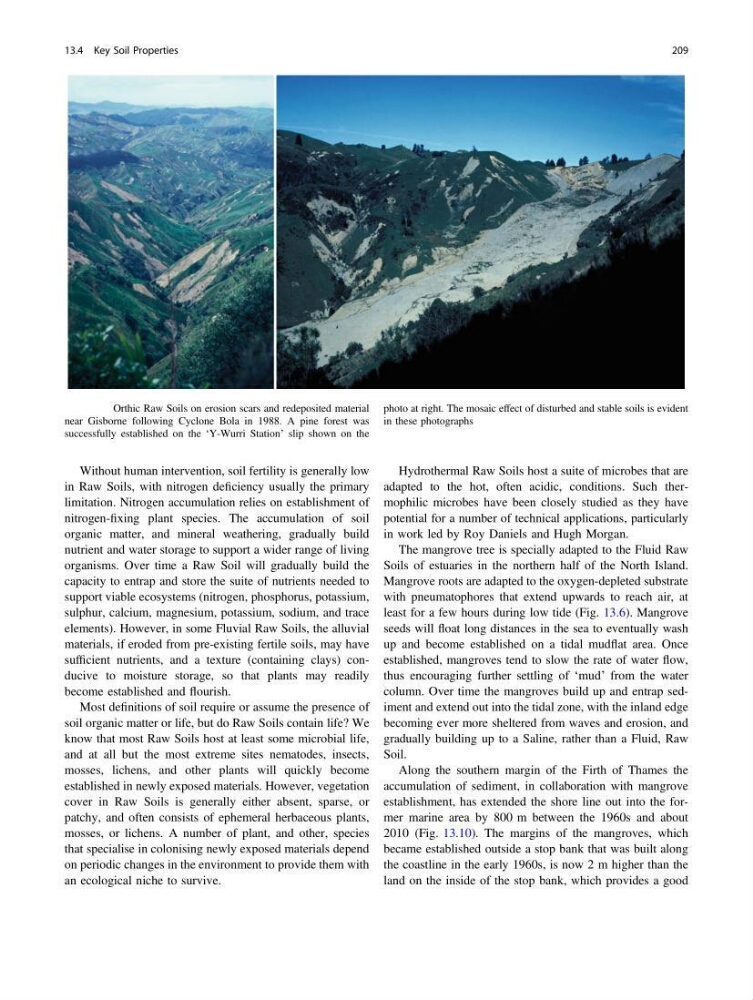
Fig. 13.9 Orthic Raw Soils on erosion scars and redeposited material
near Gisborne following Cyclone Bola in 1988. A pine forest was
successfully established on the ‘Y-Wurri Station’ slip shown on the
photo at right. The mosaic effect of disturbed and stable soils is evident
in these photographs
13.4 Key Soil Properties
209
in Raw Soils, with nitrogen deficiency usually the primary
limitation. Nitrogen accumulation relies on establishment of
nitrogen-fixing plant species. The accumulation of soil
organic matter, and mineral weathering, gradually build
nutrient and water storage to support a wider range of living
organisms. Over time a Raw Soil will gradually build the
capacity to entrap and store the suite of nutrients needed to
support viable ecosystems (nitrogen, phosphorus, potassium,
sulphur, calcium, magnesium, potassium, sodium, and trace
elements). However, in some Fluvial Raw Soils, the alluvial
materials, if eroded from pre-existing fertile soils, may have
sufficient nutrients, and a texture (containing clays) conducive to moisture storage, so that plants may readily
become established and flourish.
Most definitions of soil require or assume the presence of
soil organic matter or life, but do Raw Soils contain life? We
know that most Raw Soils host at least some microbial life,
and at all but the most extreme sites nematodes, insects,
mosses, lichens, and other plants will quickly become
established in newly exposed materials. However, vegetation
cover in Raw Soils is generally either absent, sparse, or
patchy, and often consists of ephemeral herbaceous plants,
mosses, or lichens. A number of plant, and other, species
that specialise in colonising newly exposed materials depend
on periodic changes in the environment to provide them with
an ecological niche to survive.
Hydrothermal Raw Soils host a suite of microbes that are
adapted to the hot, often acidic, conditions. Such thermophilic microbes have been closely studied as they have
potential for a number of technical applications, particularly
in work led by Roy Daniels and Hugh Morgan.
The mangrove tree is specially adapted to the Fluid Raw
Soils of estuaries in the northern half of the North Island.
Mangrove roots are adapted to the oxygen-depleted substrate
with pneumatophores that extend upwards to reach air, at
least for a few hours during low tide (Fig. 13.6). Mangrove
seeds will float long distances in the sea to eventually wash
up and become established on a tidal mudflat area. Once
established, mangroves tend to slow the rate of water flow,
thus encouraging further settling of ‘mud’ from the water
column. Over time the mangroves build up and entrap sediment and extend out into the tidal zone, with the inland edge
becoming ever more sheltered from waves and erosion, and
gradually building up to a Saline, rather than a Fluid, Raw
Soil.
Along the southern margin of the Firth of Thames the
accumulation of sediment, in collaboration with mangrove
establishment, has extended the shore line out into the former marine area by 800 m between the 1960s and about
2010 (Fig. 13.10). The margins of the mangroves, which
became established outside a stop bank that was built along
the coastline in the early 1960s, is now 2 m higher than the
land on the inside of the stop bank, which provides a good
Fig. 13.9 Orthic Raw Soils on erosion scars and redeposited material
near Gisborne following Cyclone Bola in 1988. A pine forest was
successfully established on the ‘Y-Wurri Station’ slip shown on the
photo at right. The mosaic effect of disturbed and stable soils is evident
in these photographs
13.4 Key Soil Properties
209