

7.1.2 Areas of Occurrence
Melanic Soils occupy small areas throughout New Zealand
(Fig. 7.2) and comprise about 1% of New Zealand soils.
Melanic Soils are widely scattered from Northland to
Southland where they occur mainly on the dispersed outcrops of Tertiary age limestones or calcareous sandstones
and marbles, such as the limestones of the east coast from
Hawke’s Bay through to Otago, and on marble at Takaka
Mountain and Mount Owen in northwest Nelson. They also
occur on some basaltic outcrops, particularly in Canterbury
and Otago, and on ultramafic rocks. The main outcrop of
ultramafic rocks is in the Dun Mountain ophiolite belt in
northwest Nelson.
7.1.3 Variation Within the Melanic Soil Order
Five soil groups are recognised within the Melanic Soil
Order (Fig. 7.3):
Vertic Melanic Soils—clayey with high capacity for
shrink-swell,
Perch-gley Melanic Soils—periodic wetness caused by a
perched water table,
Rendzic Melanic Soils—limestone or calcareous rock at
shallow depth,
Mafic Melanic Soils—on dark, base-rich igneous or sedimentary rocks, and
Orthic Melanic Soils—other Melanic Soils.
Intergrading subgroups recognise transitions from the
order to other related soil orders or soil groups. They are
Mottled (to Gley Soils), Vertic (to Vertic Melanic Soils),
Peaty (to Organic Soils), and Magnesic (to Mafic Melanic
Soils). Other subgroups depart in some specific way from the
soil group (Calcareous, Weathered, and Pedal). The subgroup closest to the central concept of the group is identified
as Typic.
7.1.4 Origin of Soil Order Name
The term ‘Melanic’ refers to the characteristic black or very
dark topsoil colours (from the Greek melan, dark-coloured,
black). The term ‘melanic’ was originally used in a soil
name by the South African soil classification to describe
soils similar to New Zealand’s Melanic Soils.
7.2 Soil Profile Genesis
Melanic Soils form as a result of the weathering processes that
occur on limestone, marble, calcareous sandstones, and mafic
rocks that are dominated by calcium or magnesium carbonates
and sulphates. During weathering, such rocks are readily
dissolved with much of the rock mineral material being converted to CO 2 , leaving calcium and magnesium ions dissolved
in water. Thus, there is little remaining mineral material and
hence strongly developed, thick, B horizons do not usually
form. The dark-coloured and deep A horizon forms where
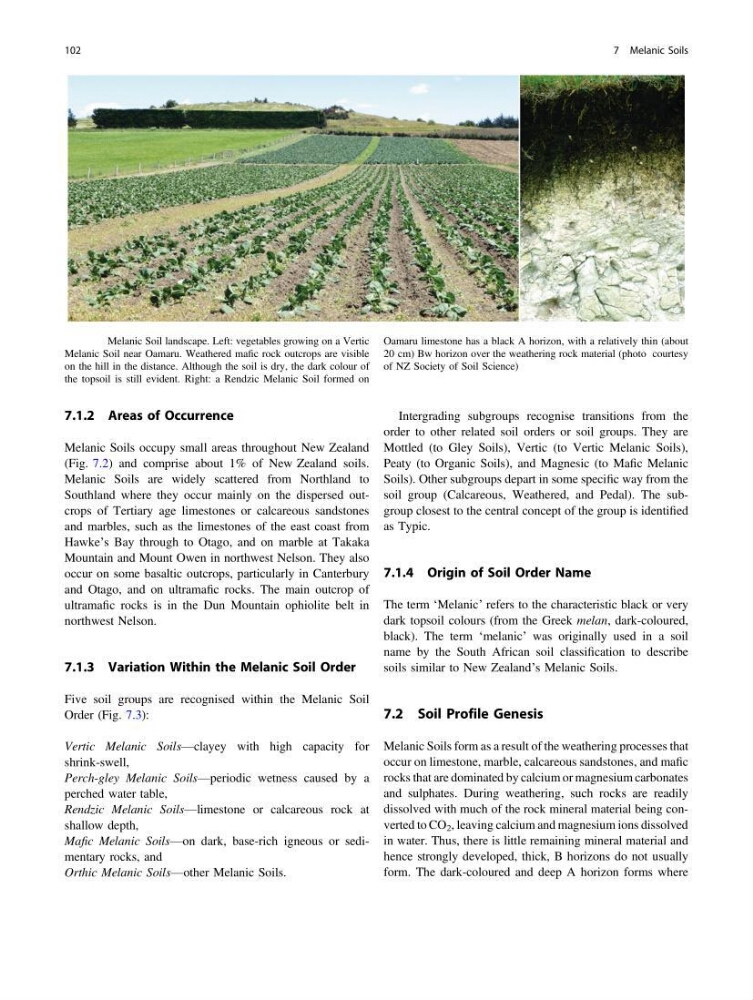
Fig. 7.1 Melanic Soil landscape. Left: vegetables growing on a Vertic
Melanic Soil near Oamaru. Weathered mafic rock outcrops are visible
on the hill in the distance. Although the soil is dry, the dark colour of
the topsoil is still evident. Right: a Rendzic Melanic Soil formed on
Oamaru limestone has a black A horizon, with a relatively thin (about
20 cm) Bw horizon over the weathering rock material (photo courtesy
of NZ Society of Soil Science)
102
7 Melanic Soils
Melanic Soils occupy small areas throughout New Zealand
(Fig. 7.2) and comprise about 1% of New Zealand soils.
Melanic Soils are widely scattered from Northland to
Southland where they occur mainly on the dispersed outcrops of Tertiary age limestones or calcareous sandstones
and marbles, such as the limestones of the east coast from
Hawke’s Bay through to Otago, and on marble at Takaka
Mountain and Mount Owen in northwest Nelson. They also
occur on some basaltic outcrops, particularly in Canterbury
and Otago, and on ultramafic rocks. The main outcrop of
ultramafic rocks is in the Dun Mountain ophiolite belt in
northwest Nelson.
7.1.3 Variation Within the Melanic Soil Order
Five soil groups are recognised within the Melanic Soil
Order (Fig. 7.3):
Vertic Melanic Soils—clayey with high capacity for
shrink-swell,
Perch-gley Melanic Soils—periodic wetness caused by a
perched water table,
Rendzic Melanic Soils—limestone or calcareous rock at
shallow depth,
Mafic Melanic Soils—on dark, base-rich igneous or sedimentary rocks, and
Orthic Melanic Soils—other Melanic Soils.
Intergrading subgroups recognise transitions from the
order to other related soil orders or soil groups. They are
Mottled (to Gley Soils), Vertic (to Vertic Melanic Soils),
Peaty (to Organic Soils), and Magnesic (to Mafic Melanic
Soils). Other subgroups depart in some specific way from the
soil group (Calcareous, Weathered, and Pedal). The subgroup closest to the central concept of the group is identified
as Typic.
7.1.4 Origin of Soil Order Name
The term ‘Melanic’ refers to the characteristic black or very
dark topsoil colours (from the Greek melan, dark-coloured,
black). The term ‘melanic’ was originally used in a soil
name by the South African soil classification to describe
soils similar to New Zealand’s Melanic Soils.
7.2 Soil Profile Genesis
Melanic Soils form as a result of the weathering processes that
occur on limestone, marble, calcareous sandstones, and mafic
rocks that are dominated by calcium or magnesium carbonates
and sulphates. During weathering, such rocks are readily
dissolved with much of the rock mineral material being converted to CO 2 , leaving calcium and magnesium ions dissolved
in water. Thus, there is little remaining mineral material and
hence strongly developed, thick, B horizons do not usually
form. The dark-coloured and deep A horizon forms where
Fig. 7.1 Melanic Soil landscape. Left: vegetables growing on a Vertic
Melanic Soil near Oamaru. Weathered mafic rock outcrops are visible
on the hill in the distance. Although the soil is dry, the dark colour of
the topsoil is still evident. Right: a Rendzic Melanic Soil formed on
Oamaru limestone has a black A horizon, with a relatively thin (about
20 cm) Bw horizon over the weathering rock material (photo courtesy
of NZ Society of Soil Science)
102
7 Melanic Soils