

illimerisation) forming clay rich (argillic, cutanic, or cutanoxidic) horizons. The clay-rich horizons restrict plant
rooting depth and have slow soil permeability which, combined with compaction at the base of the plough layer, can
lead to water saturation in the topsoil after heavy rain. Where
the soils have been continuously cropped they, almost
everywhere, lack a strongly developed dark topsoil.
Although nutrient levels are generally low, with appropriate
fertiliser inputs, the soils remain highly productive.
6.1.2 Areas of Occurrence
Granular Soils cover 1% of New Zealand and occur only in
the northern North Island (Fig. 6.2). Granular Soils are most
common in the lowlands of the northern Waikato and on
rolling land in the western Waikato and South Auckland
regions. They also occur on rolling land on the foothills of
the Hapuakohe Range in the Matamata-Piako District, on
foothills of the Coromandel and Kaimai Ranges near Paeroa,
and on the elevated land in western Waikato around Raglan
and north towards Naike. Granular Soils also occur in
Auckland and Northland, associated with basalt and andesite
lava flows.
6.1.3 Variation Within the Granular Soil Order
Four soil groups are defined within the Granular Soils in the
New Zealand Soil Classification (Fig. 6.3):
Perch-gley Granular Soils—periodic wetness caused by a
perched water table,
Melanic Granular Soils—less acid and higher natural fertility than other soil groups, transitional to Melanic Soils,
Oxidic Granular Soils—transitional to Oxidic Soils, and
Orthic Granular Soils—other Granular Soils.
6.1.4 Origin of the Soil Order Name
The name ‘Granular’ is a reference to the well-formed, fine
polyhedral or spheroidal soil structure that is frequently
present in the soils. The term ‘granular’ was used as part of
the name for these soils (brown granular loams and clays) in
the ‘General Survey of the Soils of North Island’ by N. H.
Taylor and I. J. Pohlen in 1954 and then adopted in their
New Zealand genetic soil classification in 1962. Earlier, the
soil survey of Waipa County, published in 1939, defined the
Hamilton series and included the Hamilton clay loam (an
important Granular Soil) and a related phase within a group
named ‘brown granular clays’.
6.2 Soil Profile Genesis
Marked typically by rolling or gently undulating slopes,
relatively stable land surfaces, and a warm, humid climate,
the parent materials of Granular Soils have been weathered
to clays. Most Granular Soils are formed in the strongly
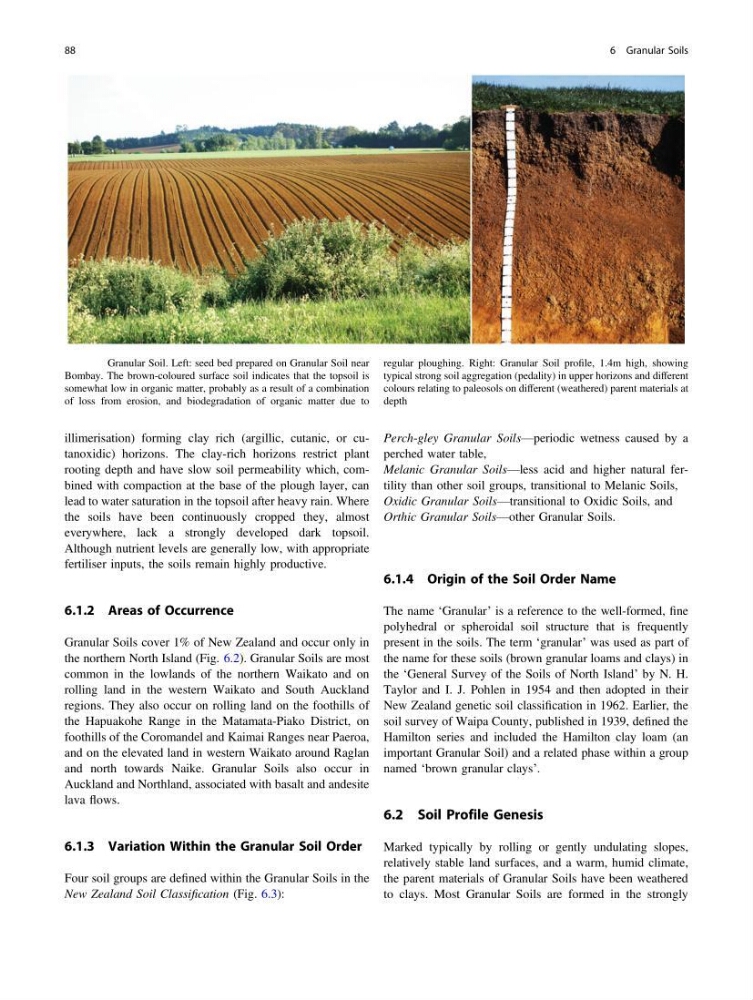
Fig. 6.1 Granular Soil. Left: seed bed prepared on Granular Soil near
Bombay. The brown-coloured surface soil indicates that the topsoil is
somewhat low in organic matter, probably as a result of a combination
of loss from erosion, and biodegradation of organic matter due to
regular ploughing. Right: Granular Soil profile, 1.4m high, showing
typical strong soil aggregation (pedality) in upper horizons and different
colours relating to paleosols on different (weathered) parent materials at
depth
88
6 Granular Soils
rooting depth and have slow soil permeability which, combined with compaction at the base of the plough layer, can
lead to water saturation in the topsoil after heavy rain. Where
the soils have been continuously cropped they, almost
everywhere, lack a strongly developed dark topsoil.
Although nutrient levels are generally low, with appropriate
fertiliser inputs, the soils remain highly productive.
6.1.2 Areas of Occurrence
Granular Soils cover 1% of New Zealand and occur only in
the northern North Island (Fig. 6.2). Granular Soils are most
common in the lowlands of the northern Waikato and on
rolling land in the western Waikato and South Auckland
regions. They also occur on rolling land on the foothills of
the Hapuakohe Range in the Matamata-Piako District, on
foothills of the Coromandel and Kaimai Ranges near Paeroa,
and on the elevated land in western Waikato around Raglan
and north towards Naike. Granular Soils also occur in
Auckland and Northland, associated with basalt and andesite
lava flows.
6.1.3 Variation Within the Granular Soil Order
Four soil groups are defined within the Granular Soils in the
New Zealand Soil Classification (Fig. 6.3):
Perch-gley Granular Soils—periodic wetness caused by a
perched water table,
Melanic Granular Soils—less acid and higher natural fertility than other soil groups, transitional to Melanic Soils,
Oxidic Granular Soils—transitional to Oxidic Soils, and
Orthic Granular Soils—other Granular Soils.
6.1.4 Origin of the Soil Order Name
The name ‘Granular’ is a reference to the well-formed, fine
polyhedral or spheroidal soil structure that is frequently
present in the soils. The term ‘granular’ was used as part of
the name for these soils (brown granular loams and clays) in
the ‘General Survey of the Soils of North Island’ by N. H.
Taylor and I. J. Pohlen in 1954 and then adopted in their
New Zealand genetic soil classification in 1962. Earlier, the
soil survey of Waipa County, published in 1939, defined the
Hamilton series and included the Hamilton clay loam (an
important Granular Soil) and a related phase within a group
named ‘brown granular clays’.
6.2 Soil Profile Genesis
Marked typically by rolling or gently undulating slopes,
relatively stable land surfaces, and a warm, humid climate,
the parent materials of Granular Soils have been weathered
to clays. Most Granular Soils are formed in the strongly
Fig. 6.1 Granular Soil. Left: seed bed prepared on Granular Soil near
Bombay. The brown-coloured surface soil indicates that the topsoil is
somewhat low in organic matter, probably as a result of a combination
of loss from erosion, and biodegradation of organic matter due to
regular ploughing. Right: Granular Soil profile, 1.4m high, showing
typical strong soil aggregation (pedality) in upper horizons and different
colours relating to paleosols on different (weathered) parent materials at
depth
88
6 Granular Soils