

20.1 Introduction
Phytochemicals in plants that produce therapeutic activities are collectively known
as bioactive compounds. These bioactive compounds are predominantly plant
secondary metabolites and nutrients such as vitamins and minerals that may induce
pharmacological activity at high doses are usually excluded from the definition of
bioactive compounds (Bernhoft 2010). Abundant bioactive phytochemicals are
found in vegetables, fruits, seeds, nuts, legumes, leaves, and other parts of plants
(Al Juhaimi et al. 2018; Pachuau et al. 2019; Sagar et al. 2018; SeptembreMalaterre et al. 2018; Xiao and Bai 2019). Phenolic compounds such as flavonoids,
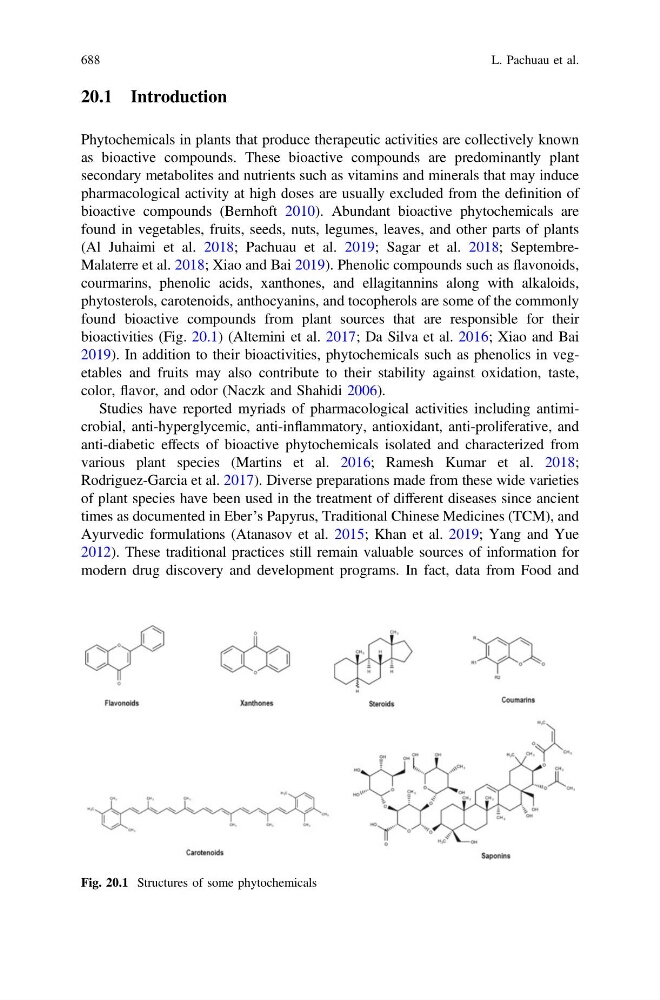
courmarins, phenolic acids, xanthones, and ellagitannins along with alkaloids,
phytosterols, carotenoids, anthocyanins, and tocopherols are some of the commonly
found bioactive compounds from plant sources that are responsible for their
bioactivities (Fig. 20.1) (Altemini et al. 2017; Da Silva et al. 2016; Xiao and Bai
2019). In addition to their bioactivities, phytochemicals such as phenolics in vegetables and fruits may also contribute to their stability against oxidation, taste,
color, flavor, and odor (Naczk and Shahidi 2006).
Studies have reported myriads of pharmacological activities including antimicrobial, anti-hyperglycemic, anti-inflammatory, antioxidant, anti-proliferative, and
anti-diabetic effects of bioactive phytochemicals isolated and characterized from
various plant species (Martins et al. 2016; Ramesh Kumar et al. 2018;
Rodriguez-Garcia et al. 2017). Diverse preparations made from these wide varieties
of plant species have been used in the treatment of different diseases since ancient
times as documented in Eber’s Papyrus, Traditional Chinese Medicines (TCM), and
Ayurvedic formulations (Atanasov et al. 2015; Khan et al. 2019; Yang and Yue
2012). These traditional practices still remain valuable sources of information for
modern drug discovery and development programs. In fact, data from Food and
Fig. 20.1 Structures of some phytochemicals
688
L. Pachuau et al.