

extrinsic pathways by modulation of Bax, caspase 3 and PARP in pancreatic cancer
cells PANC-1 (Subramani et al. 2017).
Gedunin showed anti–metastatic effect through inhibition of sonic hedgehog
signaling. In the study performed by Subramani and colleagues, the migratory
characteristics of HPAC, MIAPaCa-2 and PANC-1 were significantly inhibited
(45–86%) by 15 µM of gedunin in a scratch assay (Subramani et al. 2017).
Additionally, 5 µM gedunin efficiently inhibited rhShh–induced invasion of pancreatic cancer cells by downregulation of proteins involved in Hedgehog/Gli signaling pathway such as PTCH1, PTCH2, Gli1, SUFU and Shh proteins. Another
study by Li et al. (2018) demonstrated that gedunin inhibited cell migration and
invasion at concentration of 15 µM in glioma primary brain tumor cell U-251 MG
by reducing the expression of FAK, MMP-2, MMP-9 and uPA after 48 h of
incubation. Even though gedunin has been well-studied in vitro, its mechanisms of
action have not been studied extensively under in vivo conditions, leaving a huge
gap towards the realization of its clinical translation as an anti-cancer agent.
Apart from gedunin, some studies have been carried out to investigate the
anti-cancer activities of its derivatives. The isoform, 7-deacetyl-7-benzoylgedunin,
exhibited lower anti-cancer efficacy with higher IC 50 (more than 20 µM) as compared to gedunin across the variety of cancerous cell lines. In 2008, Brandt’s
research team has synthesized a series of gedunin derivatives and found out that
none of those were more effective than gedunin against breast cancer cells (MCF-7
and SkBr3) (Brandt et al. 2008). In fact, there is no literature available to explain
why its derivatives cannot outperform gedunin.
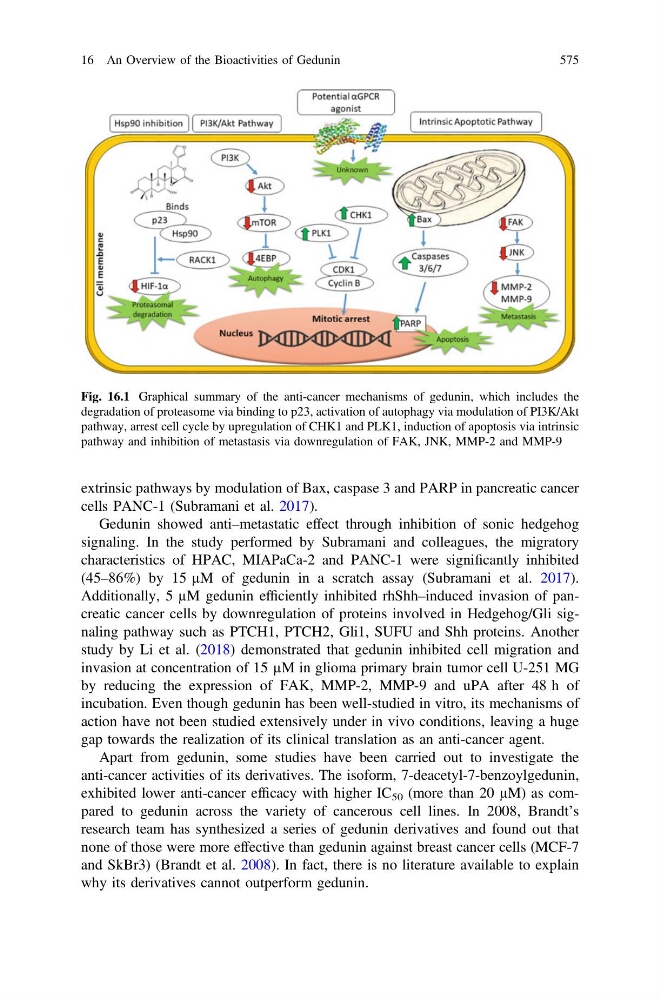
Fig. 16.1 Graphical summary of the anti-cancer mechanisms of gedunin, which includes the
degradation of proteasome via binding to p23, activation of autophagy via modulation of PI3K/Akt
pathway, arrest cell cycle by upregulation of CHK1 and PLK1, induction of apoptosis via intrinsic
pathway and inhibition of metastasis via downregulation of FAK, JNK, MMP-2 and MMP-9
16 An Overview of the Bioactivities of Gedunin
575
cells PANC-1 (Subramani et al. 2017).
Gedunin showed anti–metastatic effect through inhibition of sonic hedgehog
signaling. In the study performed by Subramani and colleagues, the migratory
characteristics of HPAC, MIAPaCa-2 and PANC-1 were significantly inhibited
(45–86%) by 15 µM of gedunin in a scratch assay (Subramani et al. 2017).
Additionally, 5 µM gedunin efficiently inhibited rhShh–induced invasion of pancreatic cancer cells by downregulation of proteins involved in Hedgehog/Gli signaling pathway such as PTCH1, PTCH2, Gli1, SUFU and Shh proteins. Another
study by Li et al. (2018) demonstrated that gedunin inhibited cell migration and
invasion at concentration of 15 µM in glioma primary brain tumor cell U-251 MG
by reducing the expression of FAK, MMP-2, MMP-9 and uPA after 48 h of
incubation. Even though gedunin has been well-studied in vitro, its mechanisms of
action have not been studied extensively under in vivo conditions, leaving a huge
gap towards the realization of its clinical translation as an anti-cancer agent.
Apart from gedunin, some studies have been carried out to investigate the
anti-cancer activities of its derivatives. The isoform, 7-deacetyl-7-benzoylgedunin,
exhibited lower anti-cancer efficacy with higher IC 50 (more than 20 µM) as compared to gedunin across the variety of cancerous cell lines. In 2008, Brandt’s
research team has synthesized a series of gedunin derivatives and found out that
none of those were more effective than gedunin against breast cancer cells (MCF-7
and SkBr3) (Brandt et al. 2008). In fact, there is no literature available to explain
why its derivatives cannot outperform gedunin.
Fig. 16.1 Graphical summary of the anti-cancer mechanisms of gedunin, which includes the
degradation of proteasome via binding to p23, activation of autophagy via modulation of PI3K/Akt
pathway, arrest cell cycle by upregulation of CHK1 and PLK1, induction of apoptosis via intrinsic
pathway and inhibition of metastasis via downregulation of FAK, JNK, MMP-2 and MMP-9
16 An Overview of the Bioactivities of Gedunin
575