

On the other hand, worldwide the use of plants for the treatment of diabetes is
increasing, some of them have been attributed an inhibitory effect on a-Amylase.
Table 15.2 indicates some parts of plants that have been used to regulate glycemic
indexes. According to the review made by Seetaloo et al. (2018), it can be observed
that there is a wide diversity of plants, plant parts, and types of extracts used to
maintain the hypoglycemic state. Additionally, Chinsembu (2019) in his review of
various plants used in the world for the control of diabetes, where alpha-amylase
inhibition is included, concludes that plants are a prelude in a more realistic and
more inclusive to control diabetes a world level.
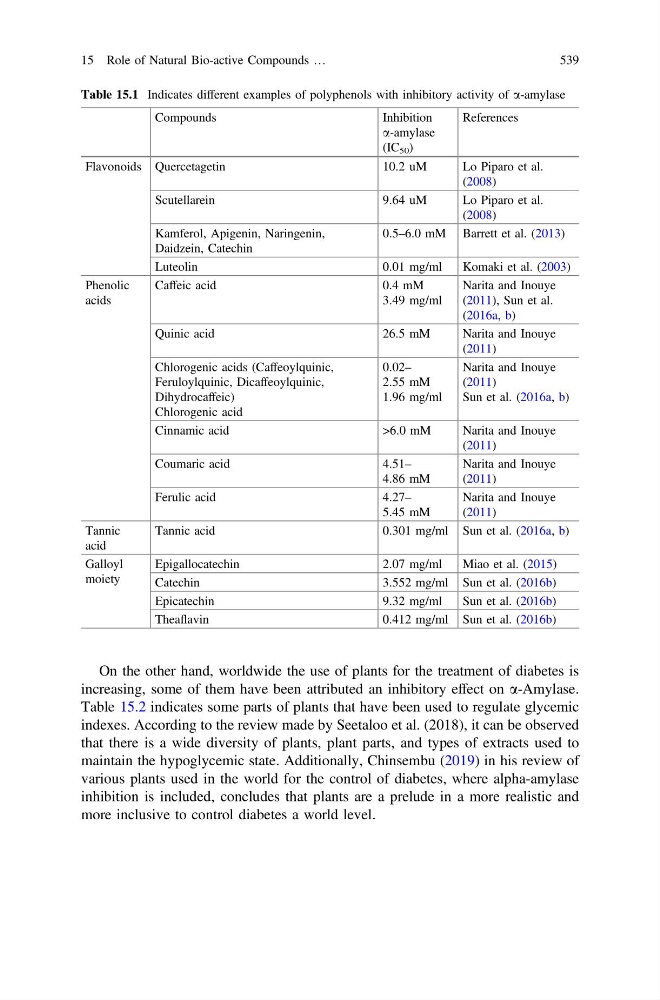
Table 15.1 Indicates different examples of polyphenols with inhibitory activity of a-amylase
Compounds
Inhibition
a-amylase
(IC 50 )
References
Flavonoids Quercetagetin
10.2 uM
Lo Piparo et al.
(2008)
Scutellarein
9.64 uM
Lo Piparo et al.
(2008)
Kamferol, Apigenin, Naringenin,
Daidzein, Catechin
0.5–6.0 mM Barrett et al. (2013)
Luteolin
0.01 mg/ml
Komaki et al. (2003)
Phenolic
acids
Caffeic acid
0.4 mM
3.49 mg/ml
Narita and Inouye
(2011), Sun et al.
(2016a, b)
Quinic acid
26.5 mM
Narita and Inouye
(2011)
Chlorogenic acids (Caffeoylquinic,
Feruloylquinic, Dicaffeoylquinic,
Dihydrocaffeic)
Chlorogenic acid
0.02–
2.55 mM
1.96 mg/ml
Narita and Inouye
(2011)
Sun et al. (2016a, b)
Cinnamic acid
>6.0 mM
Narita and Inouye
(2011)
Coumaric acid
4.51–
4.86 mM
Narita and Inouye
(2011)
Ferulic acid
4.27–
5.45 mM
Narita and Inouye
(2011)
Tannic
acid
Tannic acid
0.301 mg/ml Sun et al. (2016a, b)
Galloyl
moiety
Epigallocatechin
2.07 mg/ml
Miao et al. (2015)
Catechin
3.552 mg/ml Sun et al. (2016b)
Epicatechin
9.32 mg/ml
Sun et al. (2016b)
Theaflavin
0.412 mg/ml Sun et al. (2016b)
15 Role of Natural Bio-active Compounds …
539
increasing, some of them have been attributed an inhibitory effect on a-Amylase.
Table 15.2 indicates some parts of plants that have been used to regulate glycemic
indexes. According to the review made by Seetaloo et al. (2018), it can be observed
that there is a wide diversity of plants, plant parts, and types of extracts used to
maintain the hypoglycemic state. Additionally, Chinsembu (2019) in his review of
various plants used in the world for the control of diabetes, where alpha-amylase
inhibition is included, concludes that plants are a prelude in a more realistic and
more inclusive to control diabetes a world level.
Table 15.1 Indicates different examples of polyphenols with inhibitory activity of a-amylase
Compounds
Inhibition
a-amylase
(IC 50 )
References
Flavonoids Quercetagetin
10.2 uM
Lo Piparo et al.
(2008)
Scutellarein
9.64 uM
Lo Piparo et al.
(2008)
Kamferol, Apigenin, Naringenin,
Daidzein, Catechin
0.5–6.0 mM Barrett et al. (2013)
Luteolin
0.01 mg/ml
Komaki et al. (2003)
Phenolic
acids
Caffeic acid
0.4 mM
3.49 mg/ml
Narita and Inouye
(2011), Sun et al.
(2016a, b)
Quinic acid
26.5 mM
Narita and Inouye
(2011)
Chlorogenic acids (Caffeoylquinic,
Feruloylquinic, Dicaffeoylquinic,
Dihydrocaffeic)
Chlorogenic acid
0.02–
2.55 mM
1.96 mg/ml
Narita and Inouye
(2011)
Sun et al. (2016a, b)
Cinnamic acid
>6.0 mM
Narita and Inouye
(2011)
Coumaric acid
4.51–
4.86 mM
Narita and Inouye
(2011)
Ferulic acid
4.27–
5.45 mM
Narita and Inouye
(2011)
Tannic
acid
Tannic acid
0.301 mg/ml Sun et al. (2016a, b)
Galloyl
moiety
Epigallocatechin
2.07 mg/ml
Miao et al. (2015)
Catechin
3.552 mg/ml Sun et al. (2016b)
Epicatechin
9.32 mg/ml
Sun et al. (2016b)
Theaflavin
0.412 mg/ml Sun et al. (2016b)
15 Role of Natural Bio-active Compounds …
539