

14.3.1.2 Cytotoxic Activities
Jagetia et al. evaluated the cytotoxic potential of echitamine chloride (42, Fig. 14.6)
in cervical carcinoma (HeLa), human liver cancer (HepG 2 ), human myeloid leukemia (HL-60), human oral epidermoid cancer (KB) and human breast cancer
(MCF-7) cell lines (in vitro) and in mice bearing Ehrlich ascites carcinoma
(EAC) (Jagetia et al. 2005). Dose-dependent cytotoxicity was observed in all the
cell lines. Among the various cell lines, KB cells were prone more to cytotoxicity
(Table 14.4). To identify the optimum doses in in vivo conditions, a varying
concentration of 42 (1, 2, 4, 8,12,16 mg/kg) was screened. A 120 days survival was
monitored. A dose-dependent increase in the mean survival time (MST) and the
percentage increase in median life span (% IMLS) were observed. The best
anti-tumor result was observed for 8 and 12 mg/kg of 42, wherein the 1.3-fold MST
increased. Various biochemical parameters (glutathione reduced—GSH, MDA
levels) were also evaluated. A time depended reduction in the GSH content was
observed with 42 (16 mg/kg) till 3 h (2.2 µmol/10
7 cells), further an elevation was
observed till 12 h (2.4 µmol/10
7 cells) after the post-treatment. In contrary, MDA
levels were increased till 6 h (4.7 nmol/10
7 cells) and reverted to the normal
condition after 12 h of pre-treatment (4.2 nmol/10
7 cells). From this study, it is
evident that an increased lipid peroxidation was observed with the treatment of 42,
while GSH concentration was reduced in the tumor cells.
Lanosta-5-ene,24-ethyl-3-O- -Dglucopyranoside ester (33)
Lanosta-5-ene,24-ethyl-3-O-D-glucopyranoside (32)
O
O
CH 2 OH
HO
HO
HO
O
O
O
HOH 2 C
HO
OH
OH
12-Ursene-2,3,18,19-tetrol,28-acetate
(nighascholarene) (34)
O
HO
H
HO
O
HO
HO
Alstoprenyol (35)
HO
OH
H
3 -Hydroxy-28-b-acetoxy-5-olea triterpene (36)
OCH 3
O
HO
H
-Amyrin acetate (37)
O
-Amyrin (38)
HO
O
Lupeol acetate (39)
O
O
3 -Hydroxy-24-nor-urs-4,12,28triene triterpene (40)
H
HO
H
H
H
Ursolic acid (41)
HO
O
OH
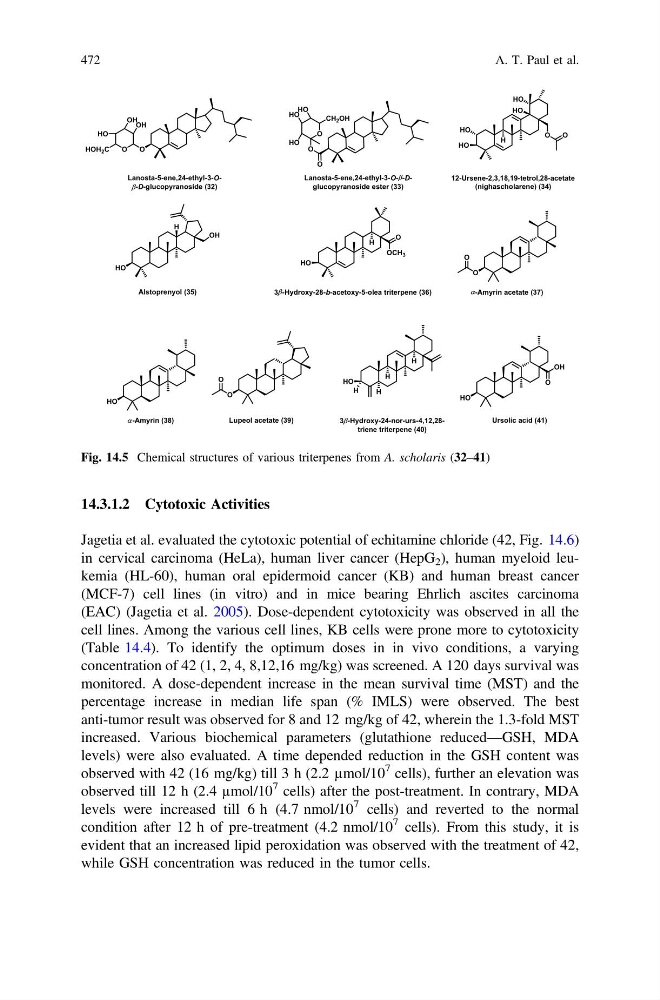
Fig. 14.5 Chemical structures of various triterpenes from A. scholaris (32–41)
472
A. T. Paul et al.
Jagetia et al. evaluated the cytotoxic potential of echitamine chloride (42, Fig. 14.6)
in cervical carcinoma (HeLa), human liver cancer (HepG 2 ), human myeloid leukemia (HL-60), human oral epidermoid cancer (KB) and human breast cancer
(MCF-7) cell lines (in vitro) and in mice bearing Ehrlich ascites carcinoma
(EAC) (Jagetia et al. 2005). Dose-dependent cytotoxicity was observed in all the
cell lines. Among the various cell lines, KB cells were prone more to cytotoxicity
(Table 14.4). To identify the optimum doses in in vivo conditions, a varying
concentration of 42 (1, 2, 4, 8,12,16 mg/kg) was screened. A 120 days survival was
monitored. A dose-dependent increase in the mean survival time (MST) and the
percentage increase in median life span (% IMLS) were observed. The best
anti-tumor result was observed for 8 and 12 mg/kg of 42, wherein the 1.3-fold MST
increased. Various biochemical parameters (glutathione reduced—GSH, MDA
levels) were also evaluated. A time depended reduction in the GSH content was
observed with 42 (16 mg/kg) till 3 h (2.2 µmol/10
7 cells), further an elevation was
observed till 12 h (2.4 µmol/10
7 cells) after the post-treatment. In contrary, MDA
levels were increased till 6 h (4.7 nmol/10
7 cells) and reverted to the normal
condition after 12 h of pre-treatment (4.2 nmol/10
7 cells). From this study, it is
evident that an increased lipid peroxidation was observed with the treatment of 42,
while GSH concentration was reduced in the tumor cells.
Lanosta-5-ene,24-ethyl-3-O- -Dglucopyranoside ester (33)
Lanosta-5-ene,24-ethyl-3-O-D-glucopyranoside (32)
O
O
CH 2 OH
HO
HO
HO
O
O
O
HOH 2 C
HO
OH
OH
12-Ursene-2,3,18,19-tetrol,28-acetate
(nighascholarene) (34)
O
HO
H
HO
O
HO
HO
Alstoprenyol (35)
HO
OH
H
3 -Hydroxy-28-b-acetoxy-5-olea triterpene (36)
OCH 3
O
HO
H
-Amyrin acetate (37)
O
-Amyrin (38)
HO
O
Lupeol acetate (39)
O
O
3 -Hydroxy-24-nor-urs-4,12,28triene triterpene (40)
H
HO
H
H
H
Ursolic acid (41)
HO
O
OH
Fig. 14.5 Chemical structures of various triterpenes from A. scholaris (32–41)
472
A. T. Paul et al.