

13.8 Antioxidant Activity
Antioxidants are scavenging the ROS, including free radicals, and thereby protecting
cells from cellular stress. They also slow down the prostaglandin synthesis, stimulate
the drug-metabolizing enzymes, and exhibit other biological activities such as DNA
defense, enzyme-induced hepatotoxicity, and cancer imitation inhibition. The
explanation of antioxidant activity was the availability of hydroxyl group
(OH) linked to the aromatic ring (Aeschbach et al. 1994). During the carvacrol
molecule’s reaction with free radicals, it donates hydrogen atoms to an unpaired
electron and generates another radical that is produced by a molecule resonance
structure. Carvacrol can interfere with the cell phospholipid membrane or
low-density lipoprotein and minimize the synthesis of lipid peroxidation and nitric
oxide, contributing to oxidative degradation of cell membranes (Karimian et al.
2011; Teissedre and Waterhouse 2000). Nitric oxide is created by the spontaneous
decomposition of sodium nitroprusside, which has been effectively scavenged by
carvacrol (Aeschbach et al. 1994). Differences in vitro and in vivo studies have
confirmed that carvacrol has strong antioxidant properties. As an antioxidant, carvacrol can lower stress by enhancing the antioxidant activity of enzymes like
superoxide dismutases (SOD), catalase (CAT), and glutathione peroxidase
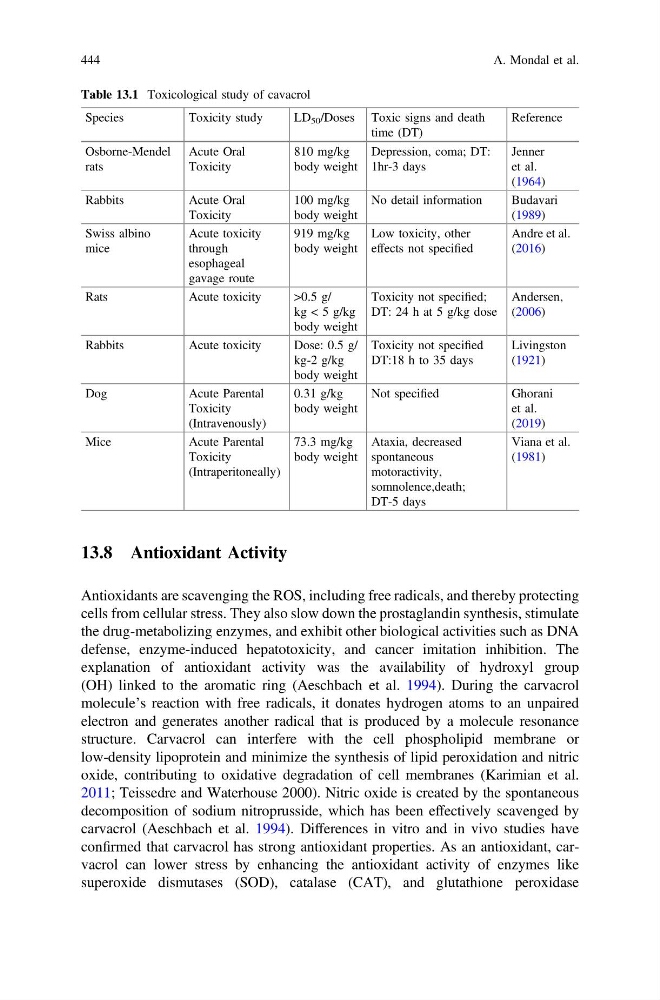
Table 13.1 Toxicological study of cavacrol
Species
Toxicity study
LD 50 /Doses Toxic signs and death
time (DT)
Reference
Osborne-Mendel
rats
Acute Oral
Toxicity
810 mg/kg
body weight
Depression, coma; DT:
1hr-3 days
Jenner
et al.
(1964)
Rabbits
Acute Oral
Toxicity
100 mg/kg
body weight
No detail information
Budavari
(1989)
Swiss albino
mice
Acute toxicity
through
esophageal
gavage route
919 mg/kg
body weight
Low toxicity, other
effects not specified
Andre et al.
(2016)
Rats
Acute toxicity
>0.5 g/
kg < 5 g/kg
body weight
Toxicity not specified;
DT: 24 h at 5 g/kg dose
Andersen,
(2006)
Rabbits
Acute toxicity
Dose: 0.5 g/
kg-2 g/kg
body weight
Toxicity not specified
DT:18 h to 35 days
Livingston
(1921)
Dog
Acute Parental
Toxicity
(Intravenously)
0.31 g/kg
body weight
Not specified
Ghorani
et al.
(2019)
Mice
Acute Parental
Toxicity
(Intraperitoneally)
73.3 mg/kg
body weight
Ataxia, decreased
spontaneous
motoractivity,
somnolence,death;
DT-5 days
Viana et al.
(1981)
444
A. Mondal et al.
Antioxidants are scavenging the ROS, including free radicals, and thereby protecting
cells from cellular stress. They also slow down the prostaglandin synthesis, stimulate
the drug-metabolizing enzymes, and exhibit other biological activities such as DNA
defense, enzyme-induced hepatotoxicity, and cancer imitation inhibition. The
explanation of antioxidant activity was the availability of hydroxyl group
(OH) linked to the aromatic ring (Aeschbach et al. 1994). During the carvacrol
molecule’s reaction with free radicals, it donates hydrogen atoms to an unpaired
electron and generates another radical that is produced by a molecule resonance
structure. Carvacrol can interfere with the cell phospholipid membrane or
low-density lipoprotein and minimize the synthesis of lipid peroxidation and nitric
oxide, contributing to oxidative degradation of cell membranes (Karimian et al.
2011; Teissedre and Waterhouse 2000). Nitric oxide is created by the spontaneous
decomposition of sodium nitroprusside, which has been effectively scavenged by
carvacrol (Aeschbach et al. 1994). Differences in vitro and in vivo studies have
confirmed that carvacrol has strong antioxidant properties. As an antioxidant, carvacrol can lower stress by enhancing the antioxidant activity of enzymes like
superoxide dismutases (SOD), catalase (CAT), and glutathione peroxidase
Table 13.1 Toxicological study of cavacrol
Species
Toxicity study
LD 50 /Doses Toxic signs and death
time (DT)
Reference
Osborne-Mendel
rats
Acute Oral
Toxicity
810 mg/kg
body weight
Depression, coma; DT:
1hr-3 days
Jenner
et al.
(1964)
Rabbits
Acute Oral
Toxicity
100 mg/kg
body weight
No detail information
Budavari
(1989)
Swiss albino
mice
Acute toxicity
through
esophageal
gavage route
919 mg/kg
body weight
Low toxicity, other
effects not specified
Andre et al.
(2016)
Rats
Acute toxicity
>0.5 g/
kg < 5 g/kg
body weight
Toxicity not specified;
DT: 24 h at 5 g/kg dose
Andersen,
(2006)
Rabbits
Acute toxicity
Dose: 0.5 g/
kg-2 g/kg
body weight
Toxicity not specified
DT:18 h to 35 days
Livingston
(1921)
Dog
Acute Parental
Toxicity
(Intravenously)
0.31 g/kg
body weight
Not specified
Ghorani
et al.
(2019)
Mice
Acute Parental
Toxicity
(Intraperitoneally)
73.3 mg/kg
body weight
Ataxia, decreased
spontaneous
motoractivity,
somnolence,death;
DT-5 days
Viana et al.
(1981)
444
A. Mondal et al.