

propan-1-ol, 2-hydroxy methyl-5-(1-methyl ethyl) phenol, 2-(4-hydroxy
methyl-3-hydroxy phenyl) propan-1-ol, 2-(3-hydroxy-4-methyl phenyl) propionic
acid, and 2-hydroxy-4-(1-methyl ethyl) benzoic acid (Austgulen et al. 1987).
Another experiment was done by Michiels et al. (2008), utilizing gastric fermentation simulation technique on pig. Carvacrol was not degraded in jejunum simulations; rather 29% degradation occurs in the cecum. When piglets were
administered with a dose of 13 mg/kg body weight, it was completely absorbed in
the stomach and the proximal section of the small intestine where it showed a
half-life of 2.05 h in the whole digestive tract (Michiels et al. 2008).
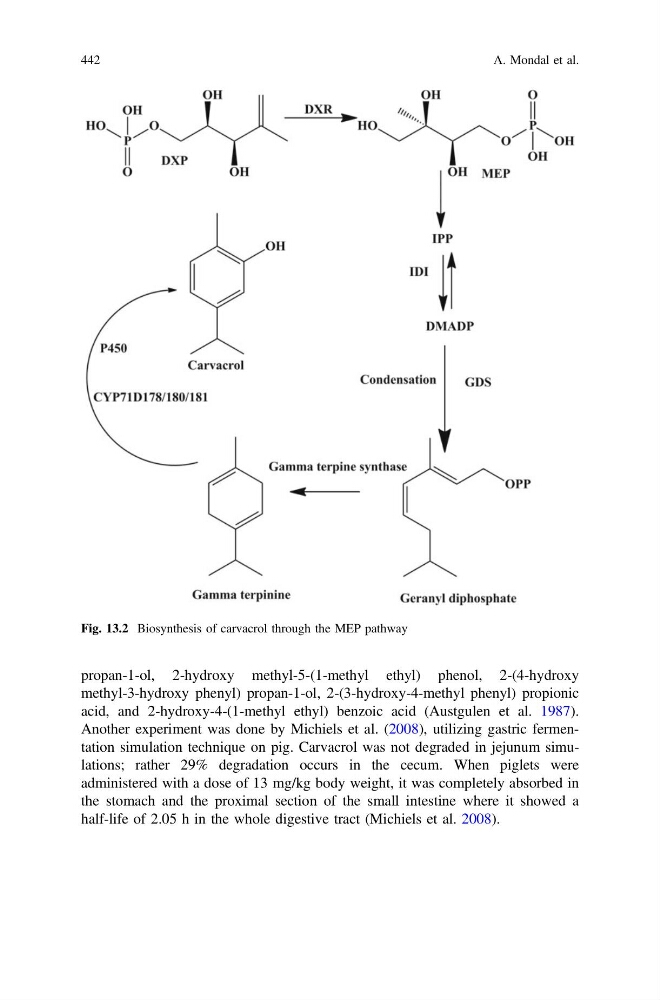
Fig. 13.2 Biosynthesis of carvacrol through the MEP pathway
442
A. Mondal et al.
methyl-3-hydroxy phenyl) propan-1-ol, 2-(3-hydroxy-4-methyl phenyl) propionic
acid, and 2-hydroxy-4-(1-methyl ethyl) benzoic acid (Austgulen et al. 1987).
Another experiment was done by Michiels et al. (2008), utilizing gastric fermentation simulation technique on pig. Carvacrol was not degraded in jejunum simulations; rather 29% degradation occurs in the cecum. When piglets were
administered with a dose of 13 mg/kg body weight, it was completely absorbed in
the stomach and the proximal section of the small intestine where it showed a
half-life of 2.05 h in the whole digestive tract (Michiels et al. 2008).
Fig. 13.2 Biosynthesis of carvacrol through the MEP pathway
442
A. Mondal et al.