

b-glucosidase during processing period. (Matsuura et al. 1989; Matsuura et al.
1988). Argüello-García et al. (2018) studied the efficacy of thioallyl compounds of
garlic to measure their potential against Giardia duodenalis Trophozoites. Allicin
presented the maximum antigiardial efficacy. Allicin had a cytolytic mechanism in
trophozoites with successive loss of diesterase enzyme and oxidoreductase activities. These findings were similar to the fresh aqueous extract (AGE). The partial cell
cycle arrest was observed at the G2 phase without any oxidative stress. The
intragastric administration of AGE or allicin lessened the number of parasites and
removed trophozoites in the experimental animals of giardiasis. Giardipain-1 (a
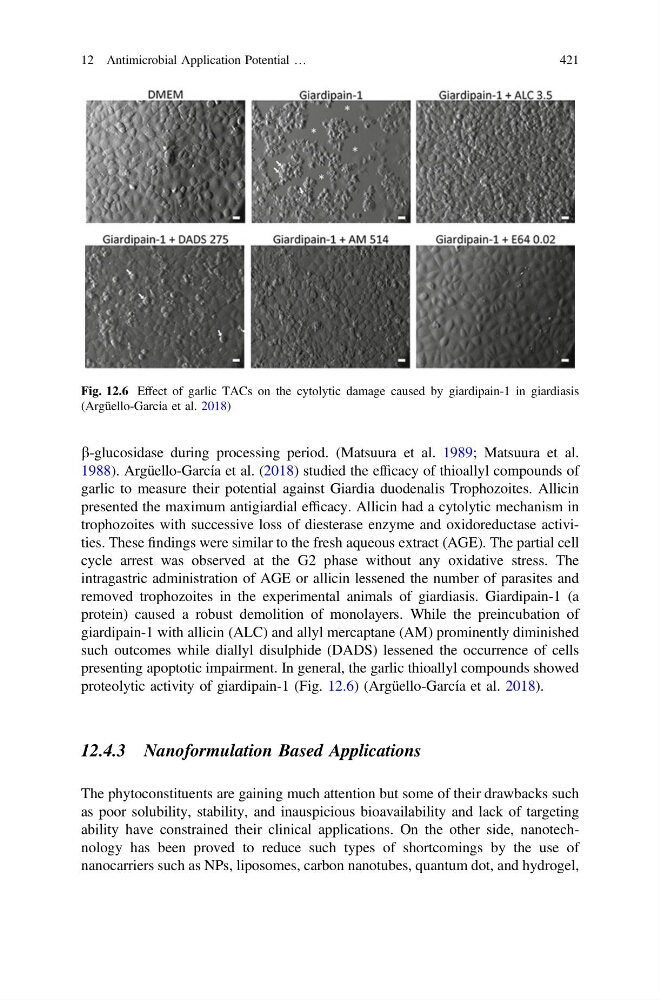
protein) caused a robust demolition of monolayers. While the preincubation of
giardipain-1 with allicin (ALC) and allyl mercaptane (AM) prominently diminished
such outcomes while diallyl disulphide (DADS) lessened the occurrence of cells
presenting apoptotic impairment. In general, the garlic thioallyl compounds showed
proteolytic activity of giardipain-1 (Fig. 12.6) (Argüello-García et al. 2018).
12.4.3 Nanoformulation Based Applications
The phytoconstituents are gaining much attention but some of their drawbacks such
as poor solubility, stability, and inauspicious bioavailability and lack of targeting
ability have constrained their clinical applications. On the other side, nanotechnology has been proved to reduce such types of shortcomings by the use of
nanocarriers such as NPs, liposomes, carbon nanotubes, quantum dot, and hydrogel,
Fig. 12.6 Effect of garlic TACs on the cytolytic damage caused by giardipain-1 in giardiasis
(Argüello-García et al. 2018)
12 Antimicrobial Application Potential …
421
1988). Argüello-García et al. (2018) studied the efficacy of thioallyl compounds of
garlic to measure their potential against Giardia duodenalis Trophozoites. Allicin
presented the maximum antigiardial efficacy. Allicin had a cytolytic mechanism in
trophozoites with successive loss of diesterase enzyme and oxidoreductase activities. These findings were similar to the fresh aqueous extract (AGE). The partial cell
cycle arrest was observed at the G2 phase without any oxidative stress. The
intragastric administration of AGE or allicin lessened the number of parasites and
removed trophozoites in the experimental animals of giardiasis. Giardipain-1 (a
protein) caused a robust demolition of monolayers. While the preincubation of
giardipain-1 with allicin (ALC) and allyl mercaptane (AM) prominently diminished
such outcomes while diallyl disulphide (DADS) lessened the occurrence of cells
presenting apoptotic impairment. In general, the garlic thioallyl compounds showed
proteolytic activity of giardipain-1 (Fig. 12.6) (Argüello-García et al. 2018).
12.4.3 Nanoformulation Based Applications
The phytoconstituents are gaining much attention but some of their drawbacks such
as poor solubility, stability, and inauspicious bioavailability and lack of targeting
ability have constrained their clinical applications. On the other side, nanotechnology has been proved to reduce such types of shortcomings by the use of
nanocarriers such as NPs, liposomes, carbon nanotubes, quantum dot, and hydrogel,
Fig. 12.6 Effect of garlic TACs on the cytolytic damage caused by giardipain-1 in giardiasis
(Argüello-García et al. 2018)
12 Antimicrobial Application Potential …
421