

target site. Nanocarriers have the potential to carry a significant amount of herbal
drug to their target site. These carriers also cross all barriers such as acidic pH of
stomach and liver metabolites because of the small size of nanocarriers, these
enhance permeability and retention effects which cause very lesser side effects (Jain
and Jain 2014, 2017). Nanocarriers can easily be altered according to need, and to
enhance the blood circulation so that their bioavailability, stability, and solubility of
lipophilic compounds can be augmented. Nanocarriers such as liposomes, micelles,
nanogels, niosomes, solid-lipid nanoparticles (NPs), carbon nanotubes, polymeric
NPs, dendrimers and cyclodextrins are one of the substitutes that deliver the therapeutic concentration of phytoconstituents of garlic and turmeric (Jain et al. 2013,
2020; Jain and Jain 2013, 2016b; Paramanya et al. 2020; Saraf et al. 2020; Subramani
et al. 2017; Prajapati and Jain 2020).
12.2 Turmeric
Turmeric or Haridra, i.e., Curcuma Longa is a tropical herb and belongs to the
family Zingiberaceae family (Zorofchian Moghadamtousi et al. 2014). It acts like a
magic bullet in ayurvedic and homeopathic medicine uses externally as well as
internally both (Negi et al. 1999). Several studies have reported that Curcuma longa
rhizome is broad-spectrum antimicrobial activity including antifungal, antiviral,
antibacterial, and antimalarial activities as well as in swellings, stopping pain,
cleaning wounds, helping coloration of the skin and also called “Charaka Samhita”
as protect skin from itching and also protect from leprosy, urinary disorder,
Antimicrobial action
Antimicrobial action
Supportive Compounds
Supportive Compounds
Turmeric
Active against
Curcumin
Demothoxycurcumin
Bisdemethoxycurcumin
Active against
Ajoene
Allicin
Diallyl sulphide
Diallyl disulphide
Bacteria
Virus
Virus
Fungus
Bacteria
Parasite
Parasite
Fungus
Garlic extract and its constituents hinder the
reproduction of bacteria and viruses which makes
it a alternative choice of antibiotics.
Helps in ROS production, which causes the
apoptosis in microbes.
The hydrophobic interaction causes breakdown of
cell wall.
Curcumin can reinstate bacterial susceptibility,
impeding development of biofilm.
It also inhibits in vitro production of aflatoxin.
Garlic
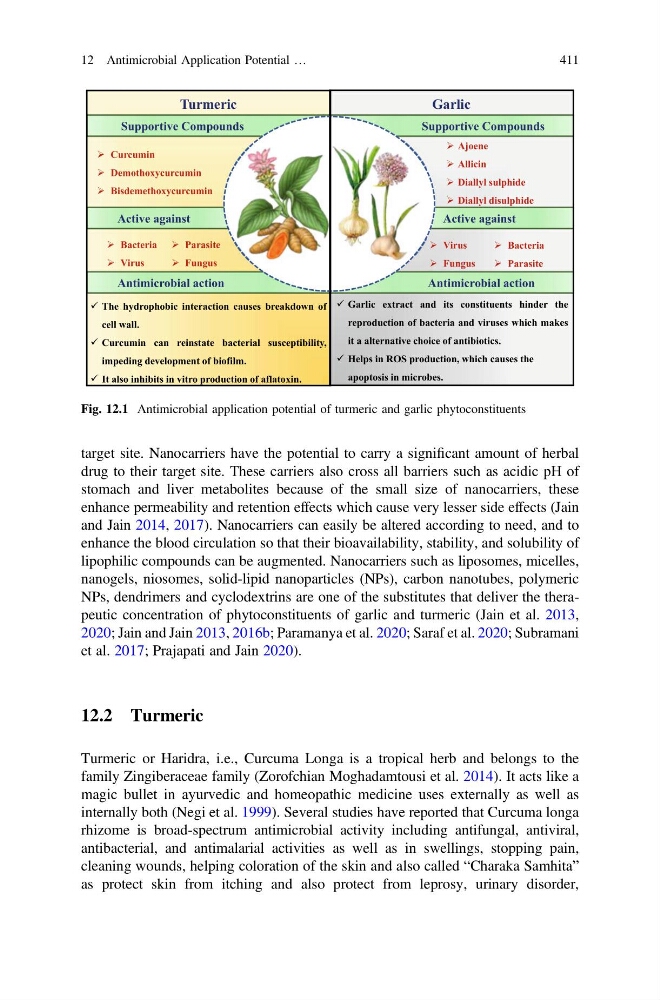
Fig. 12.1 Antimicrobial application potential of turmeric and garlic phytoconstituents
12 Antimicrobial Application Potential …
411
drug to their target site. These carriers also cross all barriers such as acidic pH of
stomach and liver metabolites because of the small size of nanocarriers, these
enhance permeability and retention effects which cause very lesser side effects (Jain
and Jain 2014, 2017). Nanocarriers can easily be altered according to need, and to
enhance the blood circulation so that their bioavailability, stability, and solubility of
lipophilic compounds can be augmented. Nanocarriers such as liposomes, micelles,
nanogels, niosomes, solid-lipid nanoparticles (NPs), carbon nanotubes, polymeric
NPs, dendrimers and cyclodextrins are one of the substitutes that deliver the therapeutic concentration of phytoconstituents of garlic and turmeric (Jain et al. 2013,
2020; Jain and Jain 2013, 2016b; Paramanya et al. 2020; Saraf et al. 2020; Subramani
et al. 2017; Prajapati and Jain 2020).
12.2 Turmeric
Turmeric or Haridra, i.e., Curcuma Longa is a tropical herb and belongs to the
family Zingiberaceae family (Zorofchian Moghadamtousi et al. 2014). It acts like a
magic bullet in ayurvedic and homeopathic medicine uses externally as well as
internally both (Negi et al. 1999). Several studies have reported that Curcuma longa
rhizome is broad-spectrum antimicrobial activity including antifungal, antiviral,
antibacterial, and antimalarial activities as well as in swellings, stopping pain,
cleaning wounds, helping coloration of the skin and also called “Charaka Samhita”
as protect skin from itching and also protect from leprosy, urinary disorder,
Antimicrobial action
Antimicrobial action
Supportive Compounds
Supportive Compounds
Turmeric
Active against
Curcumin
Demothoxycurcumin
Bisdemethoxycurcumin
Active against
Ajoene
Allicin
Diallyl sulphide
Diallyl disulphide
Bacteria
Virus
Virus
Fungus
Bacteria
Parasite
Parasite
Fungus
Garlic extract and its constituents hinder the
reproduction of bacteria and viruses which makes
it a alternative choice of antibiotics.
Helps in ROS production, which causes the
apoptosis in microbes.
The hydrophobic interaction causes breakdown of
cell wall.
Curcumin can reinstate bacterial susceptibility,
impeding development of biofilm.
It also inhibits in vitro production of aflatoxin.
Garlic
Fig. 12.1 Antimicrobial application potential of turmeric and garlic phytoconstituents
12 Antimicrobial Application Potential …
411