

hydrolysis, glycosides provide glycone or sugar part and aglycone or non-sugar part
(Kaur 2010, Cheeke 2001).
Glycone part is responsible to show the solubility character of the glycosides
whereas the aglycone part shows the therapeutic activity. Glycosides exhibit.
Several varieties of pharmacological activities such as purgative, antidepressant,
cardiotonic, nervine tonic, demulcent, sedative, counterirritant, rubefacient, hepatoprotective, diuretic, antifungal, etc.
On the basis of the chemical nature of the aglycone part, glycosides are divided
as follows:
1. Anthraquinone glycosides, e.g., aloe leaves, rhubarb
2. Steroidal glycosides or cardiac glycosides, e.g., digitalis leaves, squill
3. Coumarin glycosides, e.g. cantharides, psoralea
4. Chromone glycosides, e.g., hypericum
5. Cyanogenic glycosides, e.g., bitter almond, wild cherry bark
6. Flavonoid glycosides, e.g., silymarin, ginkgo
7. Phenolic glycosides, e.g., bearberry
8. Saponin glycosides, e.g., Ginseng, dioscorea, gokhru, licorice
9. Aldehyde glycosides, e.g., vanilla pods
10. Steviol glycosides, e.g., stevia
11. Iridoid glycosides, e.g., nux vomica seed
12. Thioglycosides, e.g., black mustard
13. Steroidal glycol-alkaloids, e.g., solanum.
The biological sources, chemical structure and pharmacological activities of
various kinds of glycosides (Table 10.9), are given below (Kokate et al. 2005;
Hossain et al. 2019).
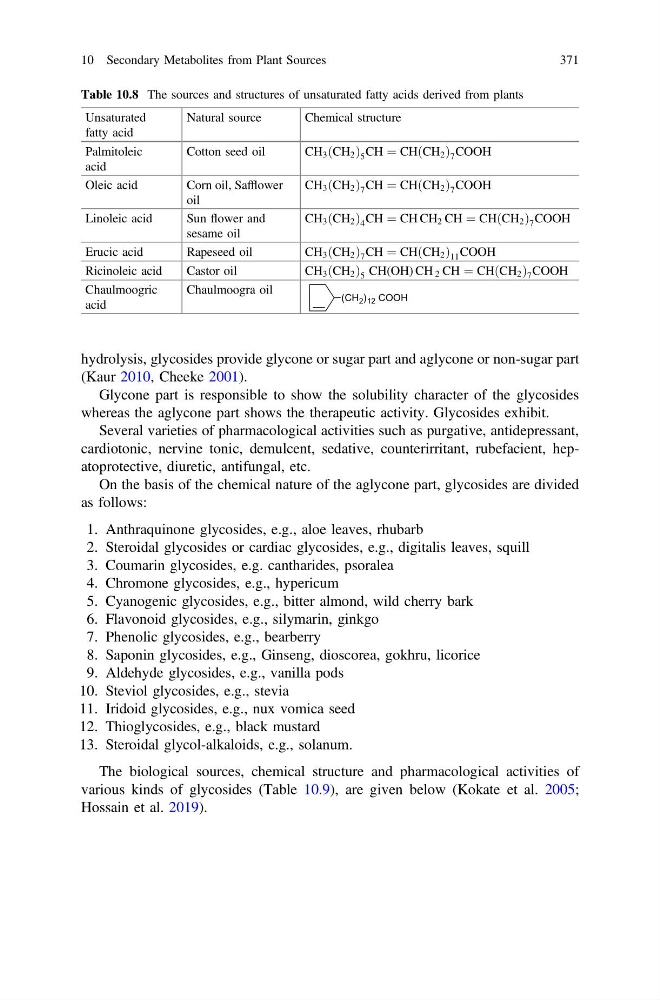
Table 10.8 The sources and structures of unsaturated fatty acids derived from plants
Unsaturated
fatty acid
Natural source
Chemical structure
Palmitoleic
acid
Cotton seed oil
CH 3 ðCH 2 Þ 5 CH ¼ CHðCH 2 Þ 7 COOH
Oleic acid
Corn oil, Safflower
oil
CH 3 ðCH 2 Þ 7 CH ¼ CHðCH 2 Þ 7 COOH
Linoleic acid
Sun flower and
sesame oil
CH 3 ðCH 2 Þ 4 CH ¼ CH CH 2 CH ¼ CHðCH 2 Þ 7 COOH
Erucic acid
Rapeseed oil
CH 3 ðCH 2 Þ 7 CH ¼ CHðCH 2 Þ 11 COOH
Ricinoleic acid
Castor oil
CH 3 ðCH 2 Þ 5 CH(OH) CH 2 CH ¼ CHðCH 2 Þ 7 COOH
Chaulmoogric
acid
Chaulmoogra oil
(CH 2 ) 12 COOH
10 Secondary Metabolites from Plant Sources
371
(Kaur 2010, Cheeke 2001).
Glycone part is responsible to show the solubility character of the glycosides
whereas the aglycone part shows the therapeutic activity. Glycosides exhibit.
Several varieties of pharmacological activities such as purgative, antidepressant,
cardiotonic, nervine tonic, demulcent, sedative, counterirritant, rubefacient, hepatoprotective, diuretic, antifungal, etc.
On the basis of the chemical nature of the aglycone part, glycosides are divided
as follows:
1. Anthraquinone glycosides, e.g., aloe leaves, rhubarb
2. Steroidal glycosides or cardiac glycosides, e.g., digitalis leaves, squill
3. Coumarin glycosides, e.g. cantharides, psoralea
4. Chromone glycosides, e.g., hypericum
5. Cyanogenic glycosides, e.g., bitter almond, wild cherry bark
6. Flavonoid glycosides, e.g., silymarin, ginkgo
7. Phenolic glycosides, e.g., bearberry
8. Saponin glycosides, e.g., Ginseng, dioscorea, gokhru, licorice
9. Aldehyde glycosides, e.g., vanilla pods
10. Steviol glycosides, e.g., stevia
11. Iridoid glycosides, e.g., nux vomica seed
12. Thioglycosides, e.g., black mustard
13. Steroidal glycol-alkaloids, e.g., solanum.
The biological sources, chemical structure and pharmacological activities of
various kinds of glycosides (Table 10.9), are given below (Kokate et al. 2005;
Hossain et al. 2019).
Table 10.8 The sources and structures of unsaturated fatty acids derived from plants
Unsaturated
fatty acid
Natural source
Chemical structure
Palmitoleic
acid
Cotton seed oil
CH 3 ðCH 2 Þ 5 CH ¼ CHðCH 2 Þ 7 COOH
Oleic acid
Corn oil, Safflower
oil
CH 3 ðCH 2 Þ 7 CH ¼ CHðCH 2 Þ 7 COOH
Linoleic acid
Sun flower and
sesame oil
CH 3 ðCH 2 Þ 4 CH ¼ CH CH 2 CH ¼ CHðCH 2 Þ 7 COOH
Erucic acid
Rapeseed oil
CH 3 ðCH 2 Þ 7 CH ¼ CHðCH 2 Þ 11 COOH
Ricinoleic acid
Castor oil
CH 3 ðCH 2 Þ 5 CH(OH) CH 2 CH ¼ CHðCH 2 Þ 7 COOH
Chaulmoogric
acid
Chaulmoogra oil
(CH 2 ) 12 COOH
10 Secondary Metabolites from Plant Sources
371