

and Kaur 2018; Khameneh et al. 2019). In general, antibacterial drugs will be more
effective at definite concentrations and after it reaches to the precise site of action.
Efflux pumps may function by acting as an efflux or transfer system, where
antibacterial drugs are quickly pushed out of cells than the time required for drug
molecule to get diffused into the bacterial cell. This condition will subsequently
lead to a condition, where the intra-bacterial concentration will be much lesser as
compared to the concentration required for effective actions. For instance, the
cytoplasm consists of ribosomes required for proteins. When protein synthesis
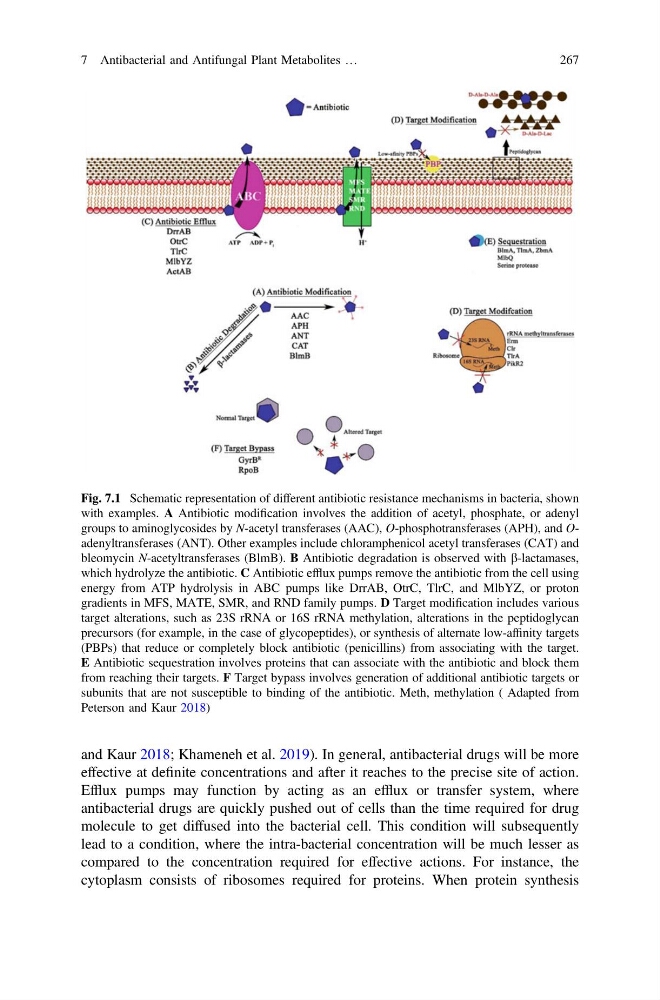
Fig. 7.1 Schematic representation of different antibiotic resistance mechanisms in bacteria, shown
with examples. A Antibiotic modification involves the addition of acetyl, phosphate, or adenyl
groups to aminoglycosides by N-acetyl transferases (AAC), O-phosphotransferases (APH), and Oadenyltransferases (ANT). Other examples include chloramphenicol acetyl transferases (CAT) and
bleomycin N-acetyltransferases (BlmB). B Antibiotic degradation is observed with b-lactamases,
which hydrolyze the antibiotic. C Antibiotic efflux pumps remove the antibiotic from the cell using
energy from ATP hydrolysis in ABC pumps like DrrAB, OtrC, TlrC, and MlbYZ, or proton
gradients in MFS, MATE, SMR, and RND family pumps. D Target modification includes various
target alterations, such as 23S rRNA or 16S rRNA methylation, alterations in the peptidoglycan
precursors (for example, in the case of glycopeptides), or synthesis of alternate low-affinity targets
(PBPs) that reduce or completely block antibiotic (penicillins) from associating with the target.
E Antibiotic sequestration involves proteins that can associate with the antibiotic and block them
from reaching their targets. F Target bypass involves generation of additional antibiotic targets or
subunits that are not susceptible to binding of the antibiotic. Meth, methylation ( Adapted from
Peterson and Kaur 2018)
7 Antibacterial and Antifungal Plant Metabolites …
267
effective at definite concentrations and after it reaches to the precise site of action.
Efflux pumps may function by acting as an efflux or transfer system, where
antibacterial drugs are quickly pushed out of cells than the time required for drug
molecule to get diffused into the bacterial cell. This condition will subsequently
lead to a condition, where the intra-bacterial concentration will be much lesser as
compared to the concentration required for effective actions. For instance, the
cytoplasm consists of ribosomes required for proteins. When protein synthesis
Fig. 7.1 Schematic representation of different antibiotic resistance mechanisms in bacteria, shown
with examples. A Antibiotic modification involves the addition of acetyl, phosphate, or adenyl
groups to aminoglycosides by N-acetyl transferases (AAC), O-phosphotransferases (APH), and Oadenyltransferases (ANT). Other examples include chloramphenicol acetyl transferases (CAT) and
bleomycin N-acetyltransferases (BlmB). B Antibiotic degradation is observed with b-lactamases,
which hydrolyze the antibiotic. C Antibiotic efflux pumps remove the antibiotic from the cell using
energy from ATP hydrolysis in ABC pumps like DrrAB, OtrC, TlrC, and MlbYZ, or proton
gradients in MFS, MATE, SMR, and RND family pumps. D Target modification includes various
target alterations, such as 23S rRNA or 16S rRNA methylation, alterations in the peptidoglycan
precursors (for example, in the case of glycopeptides), or synthesis of alternate low-affinity targets
(PBPs) that reduce or completely block antibiotic (penicillins) from associating with the target.
E Antibiotic sequestration involves proteins that can associate with the antibiotic and block them
from reaching their targets. F Target bypass involves generation of additional antibiotic targets or
subunits that are not susceptible to binding of the antibiotic. Meth, methylation ( Adapted from
Peterson and Kaur 2018)
7 Antibacterial and Antifungal Plant Metabolites …
267