

4.2 Role of Phytochemicals in Cancer Prevention
via Antioxidant Activity
A free radical is molecules (or atom) comprising one or more unpaired electrons in
outer orbit that make them unstable and extremely reactive, which leads them to
steals electrons from other molecules to achieve stability. Subsequently, the
attacked molecule converts to a free radical itself to start the chain reaction cascade,
which eventually injuries the healthy cell (Mukherji and Singh 1984). Free radicals
consist of reactive oxygen species, and reactive nitrogen species are made in the
human body naturally via numerous endogenous systems according to diverse
physiochemical or pathological circumstances (Valko et al. 2007). Free radicals are
created in the human body either from usual important metabolic routes or from
outside sources such as exposure to irradiation, ozone, pollutants, and various toxic
chemicals (Bagchi and Puri 1998). However, the generated free radicals can be
dangerous at the excessive level and lead to the damages to the main apparatuses
and biomolecules of cells such as DNA, proteins and cell membranes. The various
injuries caused by excessive level free radicals to human cells, particularly the
damage to DNA, may lead to the development of cancer and other diseases (Dreher
and Junod 1996). Antioxidants also identified as “free radical scavengers” are
chemicals such as phytochemicals that neutralize the extremely reactive free radicals by donating an electron to the free radical or via quenching chain-initiating
catalyst to avoid them from instigating harm to the healthy cell, which can lead to
the development of cancer. Hence, the plants’ phytochemicals react as a natural
antioxidant to block the harmful action of free radicals preventing the development
of cancer in humans (Rohman et al. 2006). Plants’ phytochemicals are the most
commonly known antioxidants, which include ascorbate, tocopherols, polyphenols
and terpenoids (Dimitrios 2006).
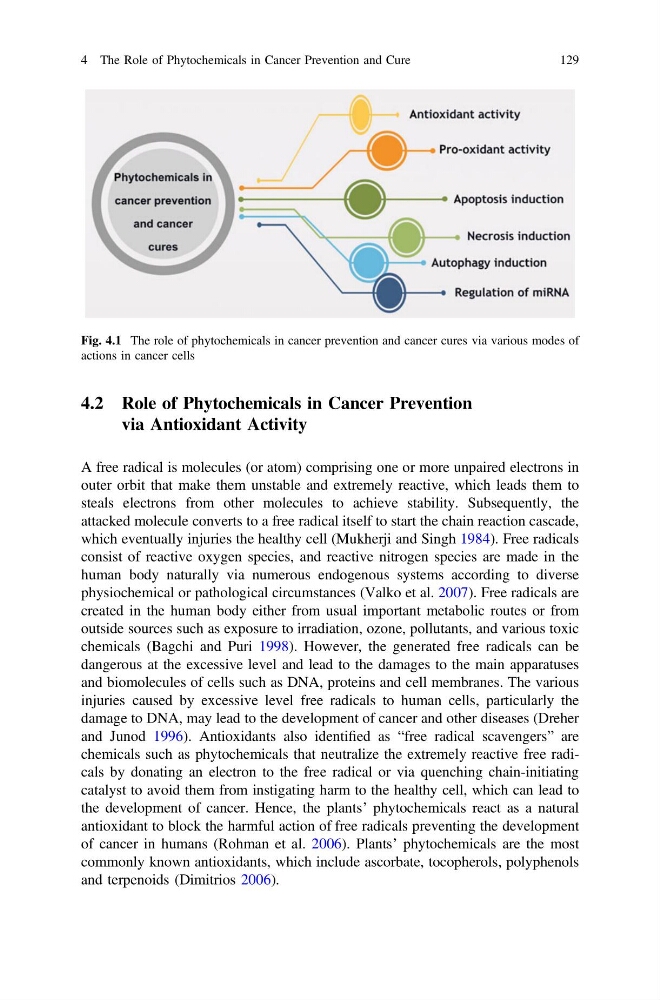
Fig. 4.1 The role of phytochemicals in cancer prevention and cancer cures via various modes of
actions in cancer cells
4 The Role of Phytochemicals in Cancer Prevention and Cure
129
via Antioxidant Activity
A free radical is molecules (or atom) comprising one or more unpaired electrons in
outer orbit that make them unstable and extremely reactive, which leads them to
steals electrons from other molecules to achieve stability. Subsequently, the
attacked molecule converts to a free radical itself to start the chain reaction cascade,
which eventually injuries the healthy cell (Mukherji and Singh 1984). Free radicals
consist of reactive oxygen species, and reactive nitrogen species are made in the
human body naturally via numerous endogenous systems according to diverse
physiochemical or pathological circumstances (Valko et al. 2007). Free radicals are
created in the human body either from usual important metabolic routes or from
outside sources such as exposure to irradiation, ozone, pollutants, and various toxic
chemicals (Bagchi and Puri 1998). However, the generated free radicals can be
dangerous at the excessive level and lead to the damages to the main apparatuses
and biomolecules of cells such as DNA, proteins and cell membranes. The various
injuries caused by excessive level free radicals to human cells, particularly the
damage to DNA, may lead to the development of cancer and other diseases (Dreher
and Junod 1996). Antioxidants also identified as “free radical scavengers” are
chemicals such as phytochemicals that neutralize the extremely reactive free radicals by donating an electron to the free radical or via quenching chain-initiating
catalyst to avoid them from instigating harm to the healthy cell, which can lead to
the development of cancer. Hence, the plants’ phytochemicals react as a natural
antioxidant to block the harmful action of free radicals preventing the development
of cancer in humans (Rohman et al. 2006). Plants’ phytochemicals are the most
commonly known antioxidants, which include ascorbate, tocopherols, polyphenols
and terpenoids (Dimitrios 2006).
Fig. 4.1 The role of phytochemicals in cancer prevention and cancer cures via various modes of
actions in cancer cells
4 The Role of Phytochemicals in Cancer Prevention and Cure
129