

80
J. F. Pusateri et al.
Table 2 Typical ranges of
critical kiln temperatures (°C)
Dust catcher inlet
Up-kiln
Discharge
750–1000
700–900
1000–1150
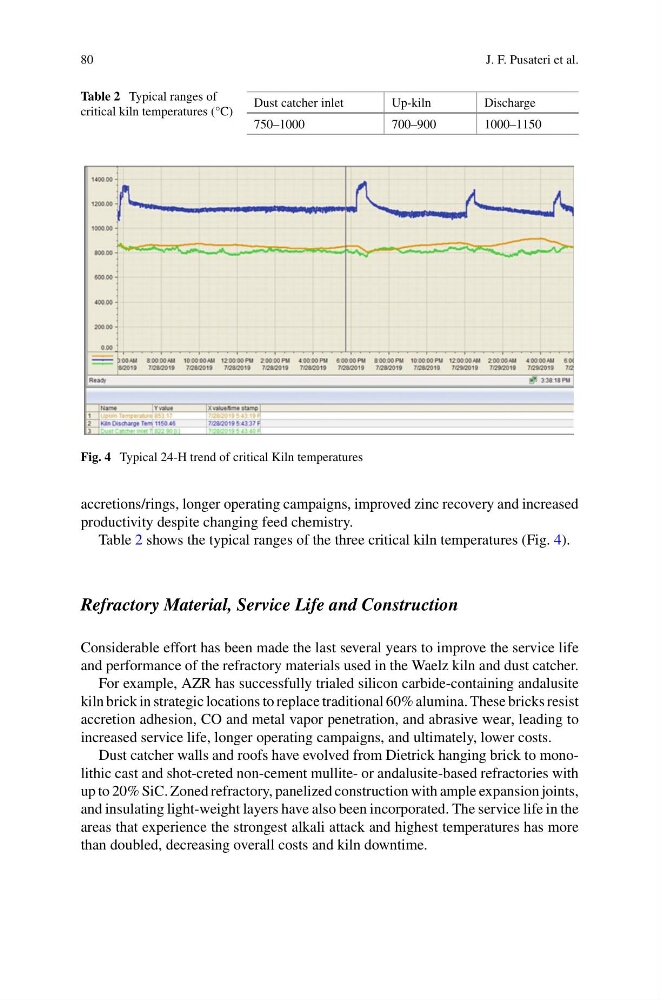
Fig. 4 Typical 24-H trend of critical Kiln temperatures
accretions/rings, longer operating campaigns, improved zinc recovery and increased
productivity despite changing feed chemistry.
Table 2 shows the typical ranges of the three critical kiln temperatures (Fig. 4).
Refractory Material, Service Life and Construction
Considerable effort has been made the last several years to improve the service life
and performance of the refractory materials used in the Waelz kiln and dust catcher.
For example, AZR has successfully trialed silicon carbide-containing andalusite
kiln brick in strategic locations to replace traditional 60% alumina. These bricks resist
accretion adhesion, CO and metal vapor penetration, and abrasive wear, leading to
increased service life, longer operating campaigns, and ultimately, lower costs.
Dust catcher walls and roofs have evolved from Dietrick hanging brick to monolithic cast and shot-creted non-cement mullite- or andalusite-based refractories with
up to 20% SiC. Zoned refractory, panelized construction with ample expansion joints,
and insulating light-weight layers have also been incorporated. The service life in the
areas that experience the strongest alkali attack and highest temperatures has more
than doubled, decreasing overall costs and kiln downtime.
J. F. Pusateri et al.
Table 2 Typical ranges of
critical kiln temperatures (°C)
Dust catcher inlet
Up-kiln
Discharge
750–1000
700–900
1000–1150
Fig. 4 Typical 24-H trend of critical Kiln temperatures
accretions/rings, longer operating campaigns, improved zinc recovery and increased
productivity despite changing feed chemistry.
Table 2 shows the typical ranges of the three critical kiln temperatures (Fig. 4).
Refractory Material, Service Life and Construction
Considerable effort has been made the last several years to improve the service life
and performance of the refractory materials used in the Waelz kiln and dust catcher.
For example, AZR has successfully trialed silicon carbide-containing andalusite
kiln brick in strategic locations to replace traditional 60% alumina. These bricks resist
accretion adhesion, CO and metal vapor penetration, and abrasive wear, leading to
increased service life, longer operating campaigns, and ultimately, lower costs.
Dust catcher walls and roofs have evolved from Dietrick hanging brick to monolithic cast and shot-creted non-cement mullite- or andalusite-based refractories with
up to 20% SiC. Zoned refractory, panelized construction with ample expansion joints,
and insulating light-weight layers have also been incorporated. The service life in the
areas that experience the strongest alkali attack and highest temperatures has more
than doubled, decreasing overall costs and kiln downtime.