

832
C. C. S. de Oliveira et al.
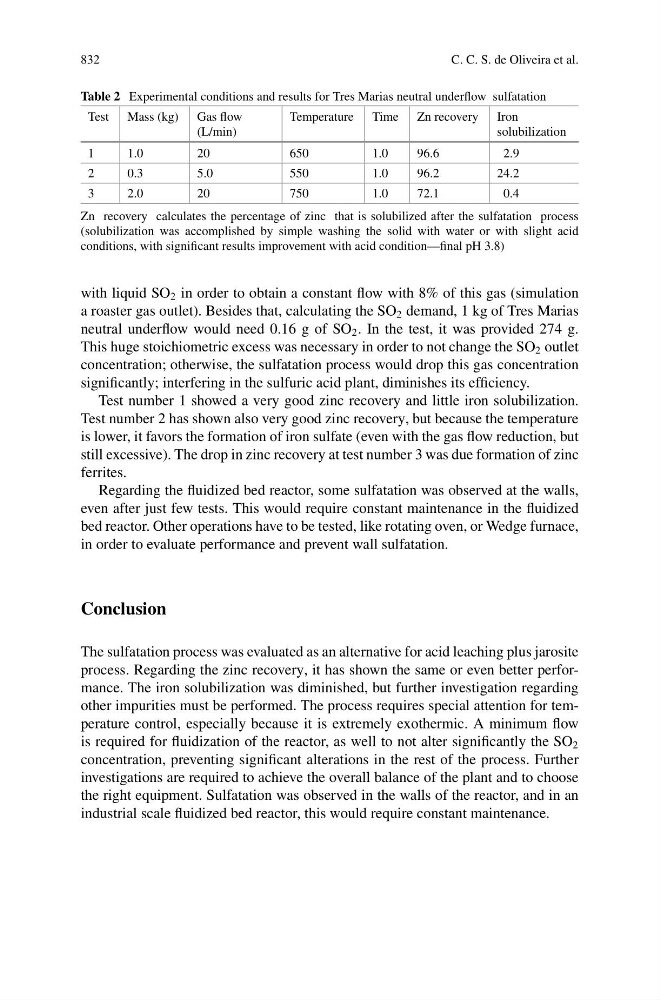
Table 2 Experimental conditions and results for Tres Marias neutral underflow sulfatation
Test Mass (kg) Gas flow
(L/min)
Temperature Time Zn recovery Iron
solubilization
1
1.0
20
650
1.0
96.6
2.9
2
0.3
5.0
550
1.0
96.2
24.2
3
2.0
20
750
1.0
72.1
0.4
Zn recovery calculates the percentage of zinc that is solubilized after the sulfatation process
(solubilization was accomplished by simple washing the solid with water or with slight acid
conditions, with significant results improvement with acid condition—final pH 3.8)
with liquid SO 2 in order to obtain a constant flow with 8% of this gas (simulation
a roaster gas outlet). Besides that, calculating the SO 2 demand, 1 kg of Tres Marias
neutral underflow would need 0.16 g of SO 2 . In the test, it was provided 274 g.
This huge stoichiometric excess was necessary in order to not change the SO 2 outlet
concentration; otherwise, the sulfatation process would drop this gas concentration
significantly; interfering in the sulfuric acid plant, diminishes its efficiency.
Test number 1 showed a very good zinc recovery and little iron solubilization.
Test number 2 has shown also very good zinc recovery, but because the temperature
is lower, it favors the formation of iron sulfate (even with the gas flow reduction, but
still excessive). The drop in zinc recovery at test number 3 was due formation of zinc
ferrites.
Regarding the fluidized bed reactor, some sulfatation was observed at the walls,
even after just few tests. This would require constant maintenance in the fluidized
bed reactor. Other operations have to be tested, like rotating oven, or Wedge furnace,
in order to evaluate performance and prevent wall sulfatation.
Conclusion
The sulfatation process was evaluated as an alternative for acid leaching plus jarosite
process. Regarding the zinc recovery, it has shown the same or even better performance. The iron solubilization was diminished, but further investigation regarding
other impurities must be performed. The process requires special attention for temperature control, especially because it is extremely exothermic. A minimum flow
is required for fluidization of the reactor, as well to not alter significantly the SO 2
concentration, preventing significant alterations in the rest of the process. Further
investigations are required to achieve the overall balance of the plant and to choose
the right equipment. Sulfatation was observed in the walls of the reactor, and in an
industrial scale fluidized bed reactor, this would require constant maintenance.