

Advanced Technologies Reliant on the Properties of Lead
779
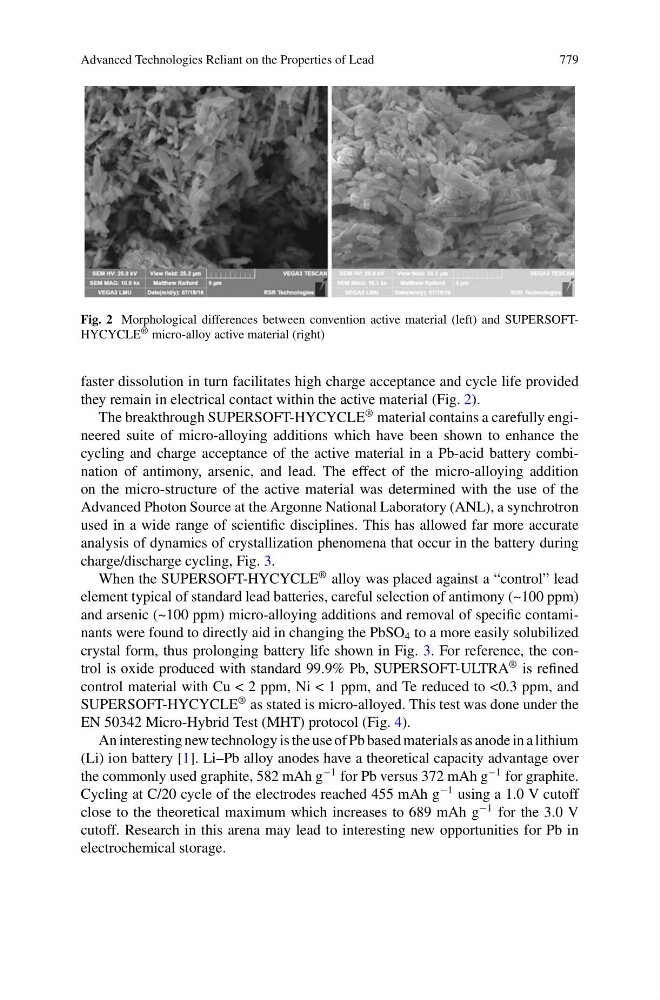
Fig. 2 Morphological differences between convention active material (left) and SUPERSOFTHYCYCLE ® micro-alloy active material (right)
faster dissolution in turn facilitates high charge acceptance and cycle life provided
they remain in electrical contact within the active material (Fig. 2).
The breakthrough SUPERSOFT-HYCYCLE
® material contains a carefully engineered suite of micro-alloying additions which have been shown to enhance the
cycling and charge acceptance of the active material in a Pb-acid battery combination of antimony, arsenic, and lead. The effect of the micro-alloying addition
on the micro-structure of the active material was determined with the use of the
Advanced Photon Source at the Argonne National Laboratory (ANL), a synchrotron
used in a wide range of scientific disciplines. This has allowed far more accurate
analysis of dynamics of crystallization phenomena that occur in the battery during
charge/discharge cycling, Fig. 3.
When the SUPERSOFT-HYCYCLE
® alloy was placed against a “control” lead
element typical of standard lead batteries, careful selection of antimony (~100 ppm)
and arsenic (~100 ppm) micro-alloying additions and removal of specific contaminants were found to directly aid in changing the PbSO 4 to a more easily solubilized
crystal form, thus prolonging battery life shown in Fig. 3. For reference, the control is oxide produced with standard 99.9% Pb, SUPERSOFT-ULTRA
® is refined
control material with Cu < 2 ppm, Ni < 1 ppm, and Te reduced to <0.3 ppm, and
SUPERSOFT-HYCYCLE
® as stated is micro-alloyed. This test was done under the
EN 50342 Micro-Hybrid Test (MHT) protocol (Fig. 4).
An interesting new technology is the use of Pb based materials as anode in a lithium
(Li) ion battery [1]. Li–Pb alloy anodes have a theoretical capacity advantage over
the commonly used graphite, 582 mAh g
−1 for Pb versus 372 mAh g
−1 for graphite.
Cycling at C/20 cycle of the electrodes reached 455 mAh g
−1 using a 1.0 V cutoff
close to the theoretical maximum which increases to 689 mAh g
−1 for the 3.0 V
cutoff. Research in this arena may lead to interesting new opportunities for Pb in
electrochemical storage.