

766
K. Miwa et al.
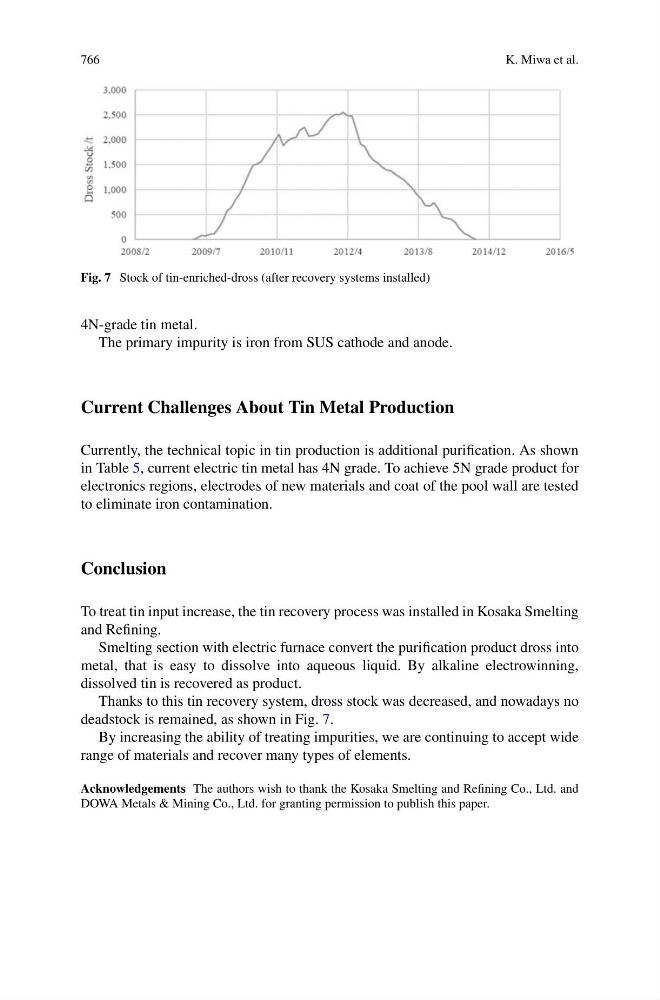
Fig. 7 Stock of tin-enriched-dross (after recovery systems installed)
4N-grade tin metal.
The primary impurity is iron from SUS cathode and anode.
Current Challenges About Tin Metal Production
Currently, the technical topic in tin production is additional purification. As shown
in Table 5, current electric tin metal has 4N grade. To achieve 5N grade product for
electronics regions, electrodes of new materials and coat of the pool wall are tested
to eliminate iron contamination.
Conclusion
To treat tin input increase, the tin recovery process was installed in Kosaka Smelting
and Refining.
Smelting section with electric furnace convert the purification product dross into
metal, that is easy to dissolve into aqueous liquid. By alkaline electrowinning,
dissolved tin is recovered as product.
Thanks to this tin recovery system, dross stock was decreased, and nowadays no
deadstock is remained, as shown in Fig. 7.
By increasing the ability of treating impurities, we are continuing to accept wide
range of materials and recover many types of elements.
Acknowledgements The authors wish to thank the Kosaka Smelting and Refining Co., Ltd. and
DOWA Metals & Mining Co., Ltd. for granting permission to publish this paper.