

Studies on the Formation of Intermetallic Compound Layers …
665
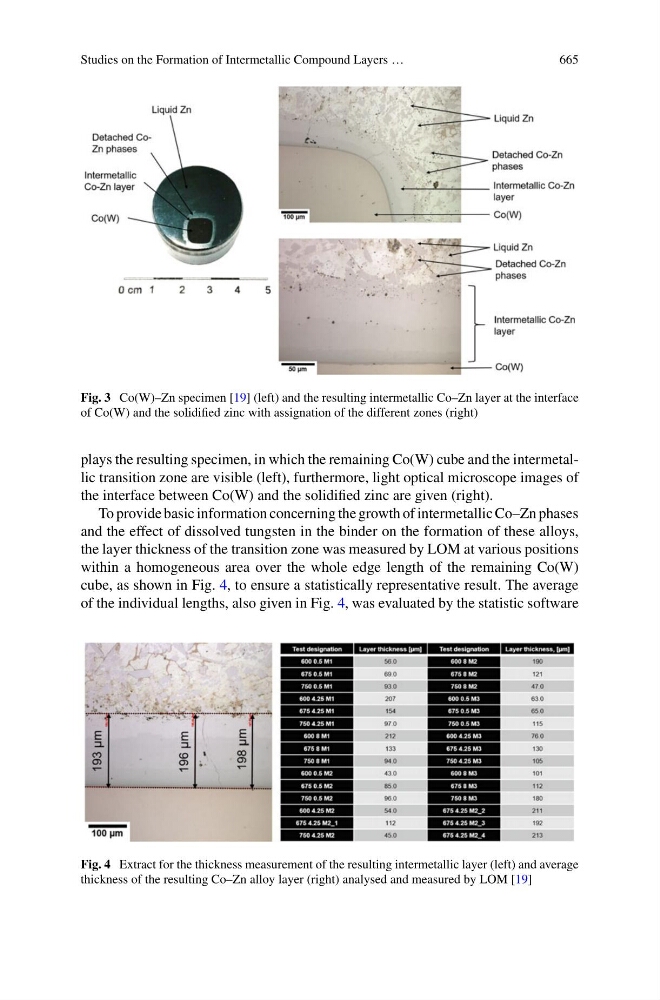
Fig. 3 Co(W)–Zn specimen [19] (left) and the resulting intermetallic Co–Zn layer at the interface
of Co(W) and the solidified zinc with assignation of the different zones (right)
plays the resulting specimen, in which the remaining Co(W) cube and the intermetallic transition zone are visible (left), furthermore, light optical microscope images of
the interface between Co(W) and the solidified zinc are given (right).
To provide basic information concerning the growth of intermetallic Co–Zn phases
and the effect of dissolved tungsten in the binder on the formation of these alloys,
the layer thickness of the transition zone was measured by LOM at various positions
within a homogeneous area over the whole edge length of the remaining Co(W)
cube, as shown in Fig. 4, to ensure a statistically representative result. The average
of the individual lengths, also given in Fig. 4, was evaluated by the statistic software
Fig. 4 Extract for the thickness measurement of the resulting intermetallic layer (left) and average
thickness of the resulting Co–Zn alloy layer (right) analysed and measured by LOM [19]