

A Novel Collector 5–(Butylthio)–1,3,4–Thiadiazole–2–Thiol …
645
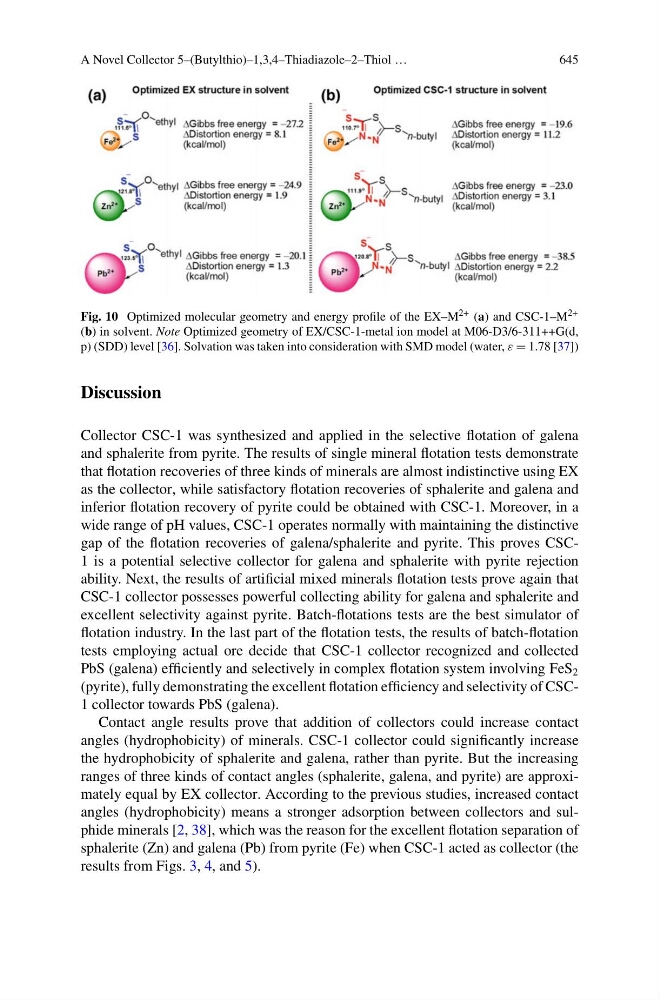
Fig. 10 Optimized molecular geometry and energy profile of the EX–M 2+ (a) and CSC-1–M 2+
(b) in solvent. Note Optimized geometry of EX/CSC-1-metal ion model at M06-D3/6-311++G(d,
p) (SDD) level [36]. Solvation was taken into consideration with SMD model (water, ε = 1.78 [37])
Discussion
Collector CSC-1 was synthesized and applied in the selective flotation of galena
and sphalerite from pyrite. The results of single mineral flotation tests demonstrate
that flotation recoveries of three kinds of minerals are almost indistinctive using EX
as the collector, while satisfactory flotation recoveries of sphalerite and galena and
inferior flotation recovery of pyrite could be obtained with CSC-1. Moreover, in a
wide range of pH values, CSC-1 operates normally with maintaining the distinctive
gap of the flotation recoveries of galena/sphalerite and pyrite. This proves CSC1 is a potential selective collector for galena and sphalerite with pyrite rejection
ability. Next, the results of artificial mixed minerals flotation tests prove again that
CSC-1 collector possesses powerful collecting ability for galena and sphalerite and
excellent selectivity against pyrite. Batch-flotations tests are the best simulator of
flotation industry. In the last part of the flotation tests, the results of batch-flotation
tests employing actual ore decide that CSC-1 collector recognized and collected
PbS (galena) efficiently and selectively in complex flotation system involving FeS 2
(pyrite), fully demonstrating the excellent flotation efficiency and selectivity of CSC1 collector towards PbS (galena).
Contact angle results prove that addition of collectors could increase contact
angles (hydrophobicity) of minerals. CSC-1 collector could significantly increase
the hydrophobicity of sphalerite and galena, rather than pyrite. But the increasing
ranges of three kinds of contact angles (sphalerite, galena, and pyrite) are approximately equal by EX collector. According to the previous studies, increased contact
angles (hydrophobicity) means a stronger adsorption between collectors and sulphide minerals [2, 38], which was the reason for the excellent flotation separation of
sphalerite (Zn) and galena (Pb) from pyrite (Fe) when CSC-1 acted as collector (the
results from Figs. 3, 4, and 5).
645
Fig. 10 Optimized molecular geometry and energy profile of the EX–M 2+ (a) and CSC-1–M 2+
(b) in solvent. Note Optimized geometry of EX/CSC-1-metal ion model at M06-D3/6-311++G(d,
p) (SDD) level [36]. Solvation was taken into consideration with SMD model (water, ε = 1.78 [37])
Discussion
Collector CSC-1 was synthesized and applied in the selective flotation of galena
and sphalerite from pyrite. The results of single mineral flotation tests demonstrate
that flotation recoveries of three kinds of minerals are almost indistinctive using EX
as the collector, while satisfactory flotation recoveries of sphalerite and galena and
inferior flotation recovery of pyrite could be obtained with CSC-1. Moreover, in a
wide range of pH values, CSC-1 operates normally with maintaining the distinctive
gap of the flotation recoveries of galena/sphalerite and pyrite. This proves CSC1 is a potential selective collector for galena and sphalerite with pyrite rejection
ability. Next, the results of artificial mixed minerals flotation tests prove again that
CSC-1 collector possesses powerful collecting ability for galena and sphalerite and
excellent selectivity against pyrite. Batch-flotations tests are the best simulator of
flotation industry. In the last part of the flotation tests, the results of batch-flotation
tests employing actual ore decide that CSC-1 collector recognized and collected
PbS (galena) efficiently and selectively in complex flotation system involving FeS 2
(pyrite), fully demonstrating the excellent flotation efficiency and selectivity of CSC1 collector towards PbS (galena).
Contact angle results prove that addition of collectors could increase contact
angles (hydrophobicity) of minerals. CSC-1 collector could significantly increase
the hydrophobicity of sphalerite and galena, rather than pyrite. But the increasing
ranges of three kinds of contact angles (sphalerite, galena, and pyrite) are approximately equal by EX collector. According to the previous studies, increased contact
angles (hydrophobicity) means a stronger adsorption between collectors and sulphide minerals [2, 38], which was the reason for the excellent flotation separation of
sphalerite (Zn) and galena (Pb) from pyrite (Fe) when CSC-1 acted as collector (the
results from Figs. 3, 4, and 5).