

628
C. Wang et al.
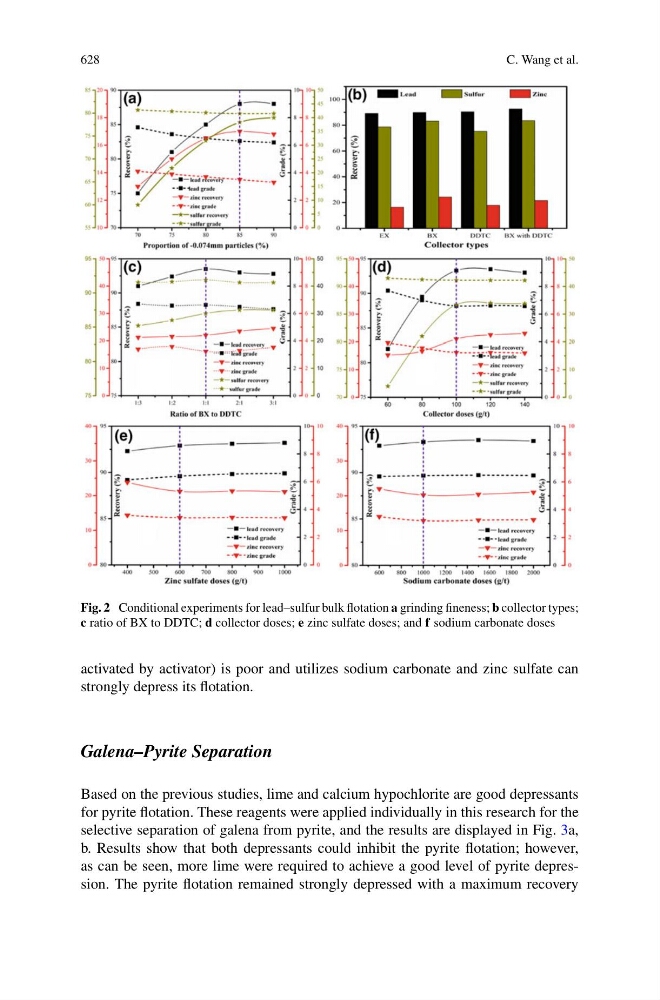
Fig. 2 Conditional experiments for lead–sulfur bulk flotation a grinding fineness; b collector types;
c ratio of BX to DDTC; d collector doses; e zinc sulfate doses; and f sodium carbonate doses
activated by activator) is poor and utilizes sodium carbonate and zinc sulfate can
strongly depress its flotation.
Galena–Pyrite Separation
Based on the previous studies, lime and calcium hypochlorite are good depressants
for pyrite flotation. These reagents were applied individually in this research for the
selective separation of galena from pyrite, and the results are displayed in Fig. 3a,
b. Results show that both depressants could inhibit the pyrite flotation; however,
as can be seen, more lime were required to achieve a good level of pyrite depression. The pyrite flotation remained strongly depressed with a maximum recovery
C. Wang et al.
Fig. 2 Conditional experiments for lead–sulfur bulk flotation a grinding fineness; b collector types;
c ratio of BX to DDTC; d collector doses; e zinc sulfate doses; and f sodium carbonate doses
activated by activator) is poor and utilizes sodium carbonate and zinc sulfate can
strongly depress its flotation.
Galena–Pyrite Separation
Based on the previous studies, lime and calcium hypochlorite are good depressants
for pyrite flotation. These reagents were applied individually in this research for the
selective separation of galena from pyrite, and the results are displayed in Fig. 3a,
b. Results show that both depressants could inhibit the pyrite flotation; however,
as can be seen, more lime were required to achieve a good level of pyrite depression. The pyrite flotation remained strongly depressed with a maximum recovery