

Refractory Corrosion Comparison Through …
609
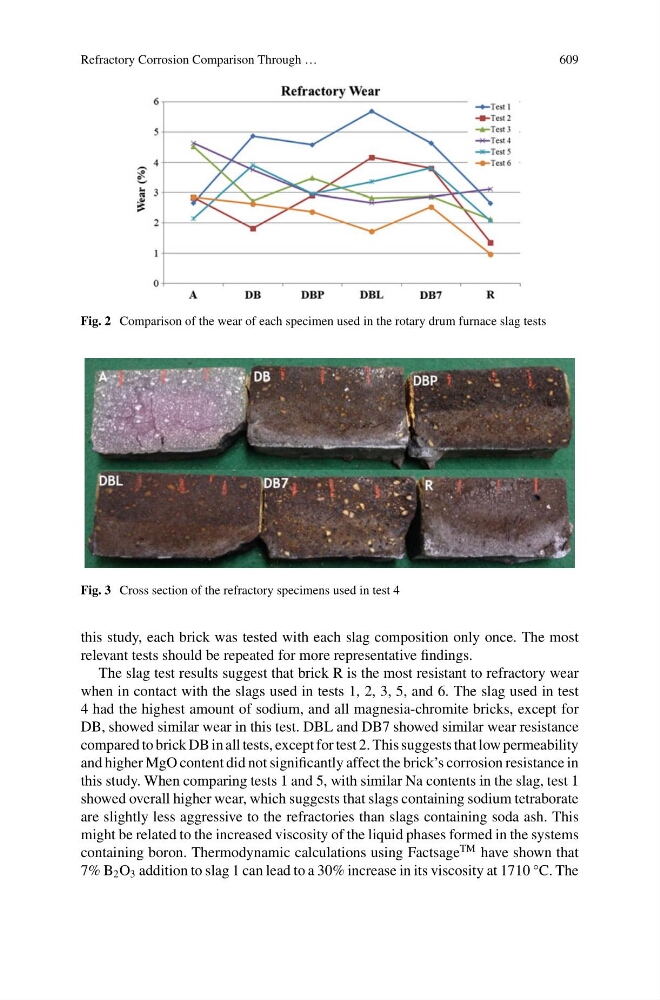
Fig. 2 Comparison of the wear of each specimen used in the rotary drum furnace slag tests
Fig. 3 Cross section of the refractory specimens used in test 4
this study, each brick was tested with each slag composition only once. The most
relevant tests should be repeated for more representative findings.
The slag test results suggest that brick R is the most resistant to refractory wear
when in contact with the slags used in tests 1, 2, 3, 5, and 6. The slag used in test
4 had the highest amount of sodium, and all magnesia-chromite bricks, except for
DB, showed similar wear in this test. DBL and DB7 showed similar wear resistance
compared to brick DB in all tests, except for test 2. This suggests that low permeability
and higher MgO content did not significantly affect the brick’s corrosion resistance in
this study. When comparing tests 1 and 5, with similar Na contents in the slag, test 1
showed overall higher wear, which suggests that slags containing sodium tetraborate
are slightly less aggressive to the refractories than slags containing soda ash. This
might be related to the increased viscosity of the liquid phases formed in the systems
containing boron. Thermodynamic calculations using Factsage
TM have shown that
7% B 2 O 3 addition to slag 1 can lead to a 30% increase in its viscosity at 1710 °C. The
609
Fig. 2 Comparison of the wear of each specimen used in the rotary drum furnace slag tests
Fig. 3 Cross section of the refractory specimens used in test 4
this study, each brick was tested with each slag composition only once. The most
relevant tests should be repeated for more representative findings.
The slag test results suggest that brick R is the most resistant to refractory wear
when in contact with the slags used in tests 1, 2, 3, 5, and 6. The slag used in test
4 had the highest amount of sodium, and all magnesia-chromite bricks, except for
DB, showed similar wear in this test. DBL and DB7 showed similar wear resistance
compared to brick DB in all tests, except for test 2. This suggests that low permeability
and higher MgO content did not significantly affect the brick’s corrosion resistance in
this study. When comparing tests 1 and 5, with similar Na contents in the slag, test 1
showed overall higher wear, which suggests that slags containing sodium tetraborate
are slightly less aggressive to the refractories than slags containing soda ash. This
might be related to the increased viscosity of the liquid phases formed in the systems
containing boron. Thermodynamic calculations using Factsage
TM have shown that
7% B 2 O 3 addition to slag 1 can lead to a 30% increase in its viscosity at 1710 °C. The