

Recent Improvements at Hosokura Lead Smelter and Refinery
599
Wastewater
containing fluorine at
high concentration
Thickener
in lead smelter
Other wastewaters
from lead smelter
around 50 mg/L
General wastewater treatment plant
Other wastewaters
from mines and dams
around 10 mg/L
to river
less than 6 mg/L
Reaction tank
for fluorine
wastewater
Reaction tank
for other
wastewaters
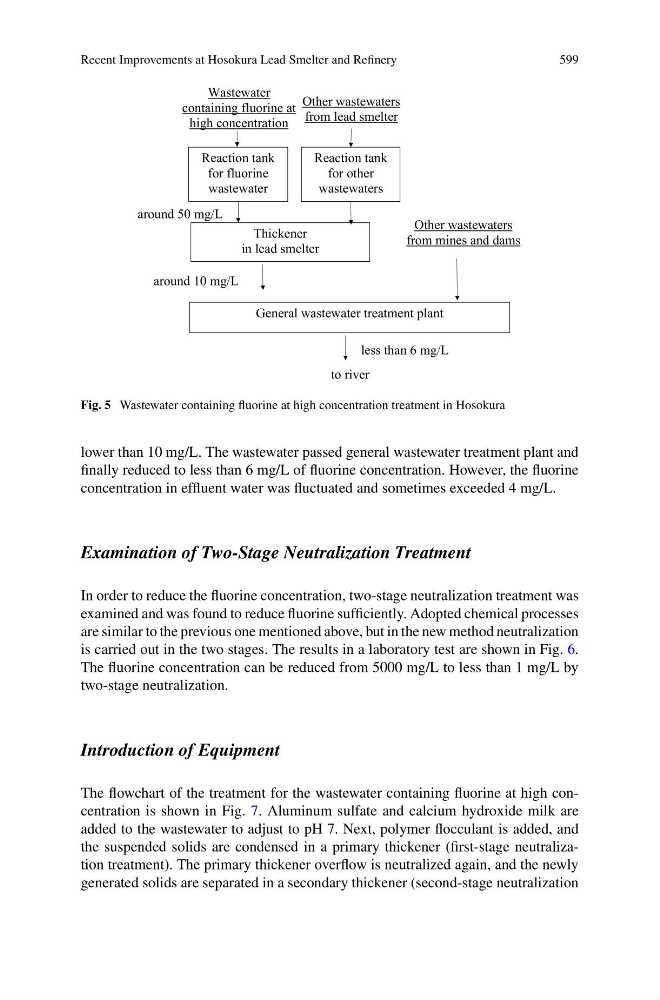
Fig. 5 Wastewater containing fluorine at high concentration treatment in Hosokura
lower than 10 mg/L. The wastewater passed general wastewater treatment plant and
finally reduced to less than 6 mg/L of fluorine concentration. However, the fluorine
concentration in effluent water was fluctuated and sometimes exceeded 4 mg/L.
Examination of Two-Stage Neutralization Treatment
In order to reduce the fluorine concentration, two-stage neutralization treatment was
examined and was found to reduce fluorine sufficiently. Adopted chemical processes
are similar to the previous one mentioned above, but in the new method neutralization
is carried out in the two stages. The results in a laboratory test are shown in Fig. 6.
The fluorine concentration can be reduced from 5000 mg/L to less than 1 mg/L by
two-stage neutralization.
Introduction of Equipment
The flowchart of the treatment for the wastewater containing fluorine at high concentration is shown in Fig. 7. Aluminum sulfate and calcium hydroxide milk are
added to the wastewater to adjust to pH 7. Next, polymer flocculant is added, and
the suspended solids are condensed in a primary thickener (first-stage neutralization treatment). The primary thickener overflow is neutralized again, and the newly
generated solids are separated in a secondary thickener (second-stage neutralization
599
Wastewater
containing fluorine at
high concentration
Thickener
in lead smelter
Other wastewaters
from lead smelter
around 50 mg/L
General wastewater treatment plant
Other wastewaters
from mines and dams
around 10 mg/L
to river
less than 6 mg/L
Reaction tank
for fluorine
wastewater
Reaction tank
for other
wastewaters
Fig. 5 Wastewater containing fluorine at high concentration treatment in Hosokura
lower than 10 mg/L. The wastewater passed general wastewater treatment plant and
finally reduced to less than 6 mg/L of fluorine concentration. However, the fluorine
concentration in effluent water was fluctuated and sometimes exceeded 4 mg/L.
Examination of Two-Stage Neutralization Treatment
In order to reduce the fluorine concentration, two-stage neutralization treatment was
examined and was found to reduce fluorine sufficiently. Adopted chemical processes
are similar to the previous one mentioned above, but in the new method neutralization
is carried out in the two stages. The results in a laboratory test are shown in Fig. 6.
The fluorine concentration can be reduced from 5000 mg/L to less than 1 mg/L by
two-stage neutralization.
Introduction of Equipment
The flowchart of the treatment for the wastewater containing fluorine at high concentration is shown in Fig. 7. Aluminum sulfate and calcium hydroxide milk are
added to the wastewater to adjust to pH 7. Next, polymer flocculant is added, and
the suspended solids are condensed in a primary thickener (first-stage neutralization treatment). The primary thickener overflow is neutralized again, and the newly
generated solids are separated in a secondary thickener (second-stage neutralization