

598
H. Nakano et al.
Anode
slime
Short rotaly
furnace
Exhaust gas
Gas cooler
Bag house
De-fluorine
scrubber
De-sulfate
scrubber
Atmosphere
Flourine wastewater
(pH3, F 5,000mg/L)
Flourine wastewater
(pH10, F 300mg/L)
H 2 SiF 6
SiF 4 + 2HF
→
↑
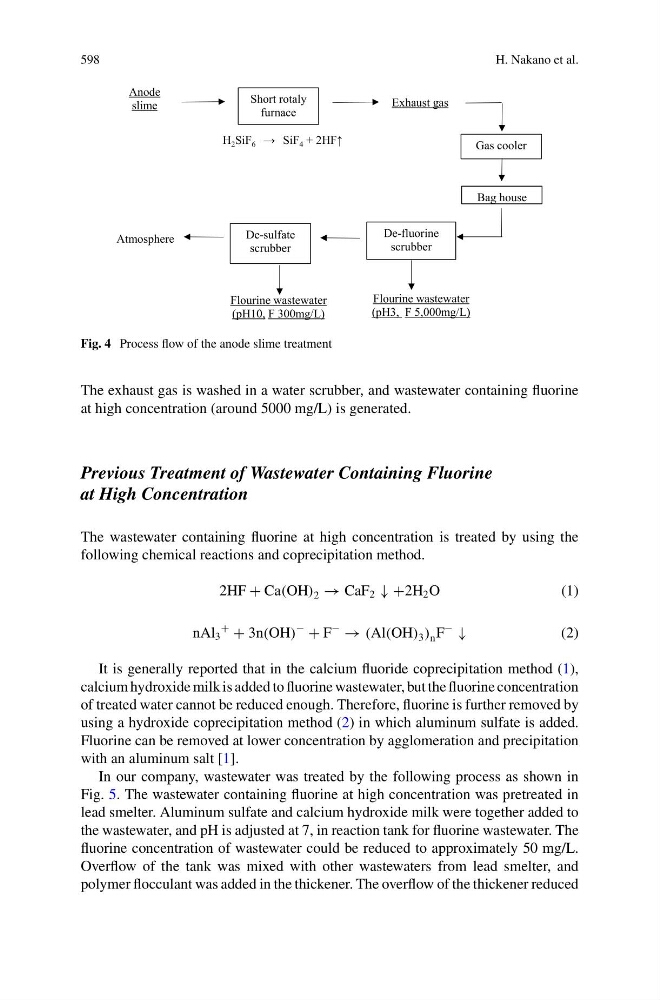
Fig. 4 Process flow of the anode slime treatment
The exhaust gas is washed in a water scrubber, and wastewater containing fluorine
at high concentration (around 5000 mg/L) is generated.
Previous Treatment of Wastewater Containing Fluorine
at High Concentration
The wastewater containing fluorine at high concentration is treated by using the
following chemical reactions and coprecipitation method.
2HF + Ca(OH) 2 → CaF 2 ↓ +2H 2 O
( 1 )
nAl 3
+
+ 3n(OH)
−
+ F
−
→ (Al(OH) 3 ) n F
−
↓
(2)
It is generally reported that in the calcium fluoride coprecipitation method (1),
calcium hydroxide milk is added to fluorine wastewater, but the fluorine concentration
of treated water cannot be reduced enough. Therefore, fluorine is further removed by
using a hydroxide coprecipitation method (2) in which aluminum sulfate is added.
Fluorine can be removed at lower concentration by agglomeration and precipitation
with an aluminum salt [1].
In our company, wastewater was treated by the following process as shown in
Fig. 5. The wastewater containing fluorine at high concentration was pretreated in
lead smelter. Aluminum sulfate and calcium hydroxide milk were together added to
the wastewater, and pH is adjusted at 7, in reaction tank for fluorine wastewater. The
fluorine concentration of wastewater could be reduced to approximately 50 mg/L.
Overflow of the tank was mixed with other wastewaters from lead smelter, and
polymer flocculant was added in the thickener. The overflow of the thickener reduced
H. Nakano et al.
Anode
slime
Short rotaly
furnace
Exhaust gas
Gas cooler
Bag house
De-fluorine
scrubber
De-sulfate
scrubber
Atmosphere
Flourine wastewater
(pH3, F 5,000mg/L)
Flourine wastewater
(pH10, F 300mg/L)
H 2 SiF 6
SiF 4 + 2HF
→
↑
Fig. 4 Process flow of the anode slime treatment
The exhaust gas is washed in a water scrubber, and wastewater containing fluorine
at high concentration (around 5000 mg/L) is generated.
Previous Treatment of Wastewater Containing Fluorine
at High Concentration
The wastewater containing fluorine at high concentration is treated by using the
following chemical reactions and coprecipitation method.
2HF + Ca(OH) 2 → CaF 2 ↓ +2H 2 O
( 1 )
nAl 3
+
+ 3n(OH)
−
+ F
−
→ (Al(OH) 3 ) n F
−
↓
(2)
It is generally reported that in the calcium fluoride coprecipitation method (1),
calcium hydroxide milk is added to fluorine wastewater, but the fluorine concentration
of treated water cannot be reduced enough. Therefore, fluorine is further removed by
using a hydroxide coprecipitation method (2) in which aluminum sulfate is added.
Fluorine can be removed at lower concentration by agglomeration and precipitation
with an aluminum salt [1].
In our company, wastewater was treated by the following process as shown in
Fig. 5. The wastewater containing fluorine at high concentration was pretreated in
lead smelter. Aluminum sulfate and calcium hydroxide milk were together added to
the wastewater, and pH is adjusted at 7, in reaction tank for fluorine wastewater. The
fluorine concentration of wastewater could be reduced to approximately 50 mg/L.
Overflow of the tank was mixed with other wastewaters from lead smelter, and
polymer flocculant was added in the thickener. The overflow of the thickener reduced