

572
Y. Sakata
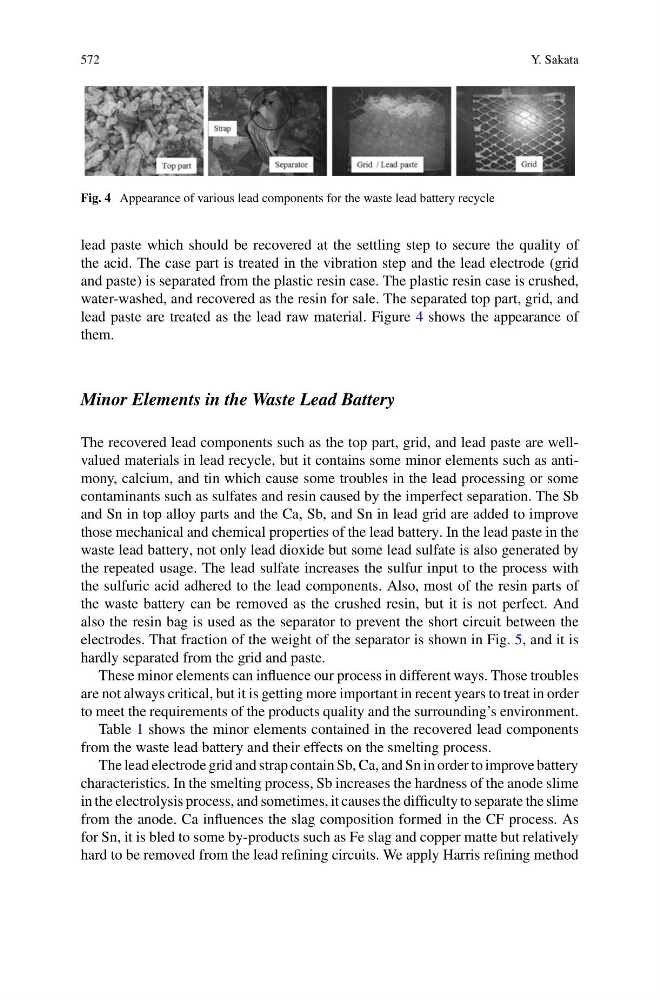
Fig. 4 Appearance of various lead components for the waste lead battery recycle
lead paste which should be recovered at the settling step to secure the quality of
the acid. The case part is treated in the vibration step and the lead electrode (grid
and paste) is separated from the plastic resin case. The plastic resin case is crushed,
water-washed, and recovered as the resin for sale. The separated top part, grid, and
lead paste are treated as the lead raw material. Figure 4 shows the appearance of
them.
Minor Elements in the Waste Lead Battery
The recovered lead components such as the top part, grid, and lead paste are wellvalued materials in lead recycle, but it contains some minor elements such as antimony, calcium, and tin which cause some troubles in the lead processing or some
contaminants such as sulfates and resin caused by the imperfect separation. The Sb
and Sn in top alloy parts and the Ca, Sb, and Sn in lead grid are added to improve
those mechanical and chemical properties of the lead battery. In the lead paste in the
waste lead battery, not only lead dioxide but some lead sulfate is also generated by
the repeated usage. The lead sulfate increases the sulfur input to the process with
the sulfuric acid adhered to the lead components. Also, most of the resin parts of
the waste battery can be removed as the crushed resin, but it is not perfect. And
also the resin bag is used as the separator to prevent the short circuit between the
electrodes. That fraction of the weight of the separator is shown in Fig. 5, and it is
hardly separated from the grid and paste.
These minor elements can influence our process in different ways. Those troubles
are not always critical, but it is getting more important in recent years to treat in order
to meet the requirements of the products quality and the surrounding’s environment.
Table 1 shows the minor elements contained in the recovered lead components
from the waste lead battery and their effects on the smelting process.
The lead electrode grid and strap contain Sb, Ca, and Sn in order to improve battery
characteristics. In the smelting process, Sb increases the hardness of the anode slime
in the electrolysis process, and sometimes, it causes the difficulty to separate the slime
from the anode. Ca influences the slag composition formed in the CF process. As
for Sn, it is bled to some by-products such as Fe slag and copper matte but relatively
hard to be removed from the lead refining circuits. We apply Harris refining method
Y. Sakata
Fig. 4 Appearance of various lead components for the waste lead battery recycle
lead paste which should be recovered at the settling step to secure the quality of
the acid. The case part is treated in the vibration step and the lead electrode (grid
and paste) is separated from the plastic resin case. The plastic resin case is crushed,
water-washed, and recovered as the resin for sale. The separated top part, grid, and
lead paste are treated as the lead raw material. Figure 4 shows the appearance of
them.
Minor Elements in the Waste Lead Battery
The recovered lead components such as the top part, grid, and lead paste are wellvalued materials in lead recycle, but it contains some minor elements such as antimony, calcium, and tin which cause some troubles in the lead processing or some
contaminants such as sulfates and resin caused by the imperfect separation. The Sb
and Sn in top alloy parts and the Ca, Sb, and Sn in lead grid are added to improve
those mechanical and chemical properties of the lead battery. In the lead paste in the
waste lead battery, not only lead dioxide but some lead sulfate is also generated by
the repeated usage. The lead sulfate increases the sulfur input to the process with
the sulfuric acid adhered to the lead components. Also, most of the resin parts of
the waste battery can be removed as the crushed resin, but it is not perfect. And
also the resin bag is used as the separator to prevent the short circuit between the
electrodes. That fraction of the weight of the separator is shown in Fig. 5, and it is
hardly separated from the grid and paste.
These minor elements can influence our process in different ways. Those troubles
are not always critical, but it is getting more important in recent years to treat in order
to meet the requirements of the products quality and the surrounding’s environment.
Table 1 shows the minor elements contained in the recovered lead components
from the waste lead battery and their effects on the smelting process.
The lead electrode grid and strap contain Sb, Ca, and Sn in order to improve battery
characteristics. In the smelting process, Sb increases the hardness of the anode slime
in the electrolysis process, and sometimes, it causes the difficulty to separate the slime
from the anode. Ca influences the slag composition formed in the CF process. As
for Sn, it is bled to some by-products such as Fe slag and copper matte but relatively
hard to be removed from the lead refining circuits. We apply Harris refining method