

492
S. Grund and E. van Genderen
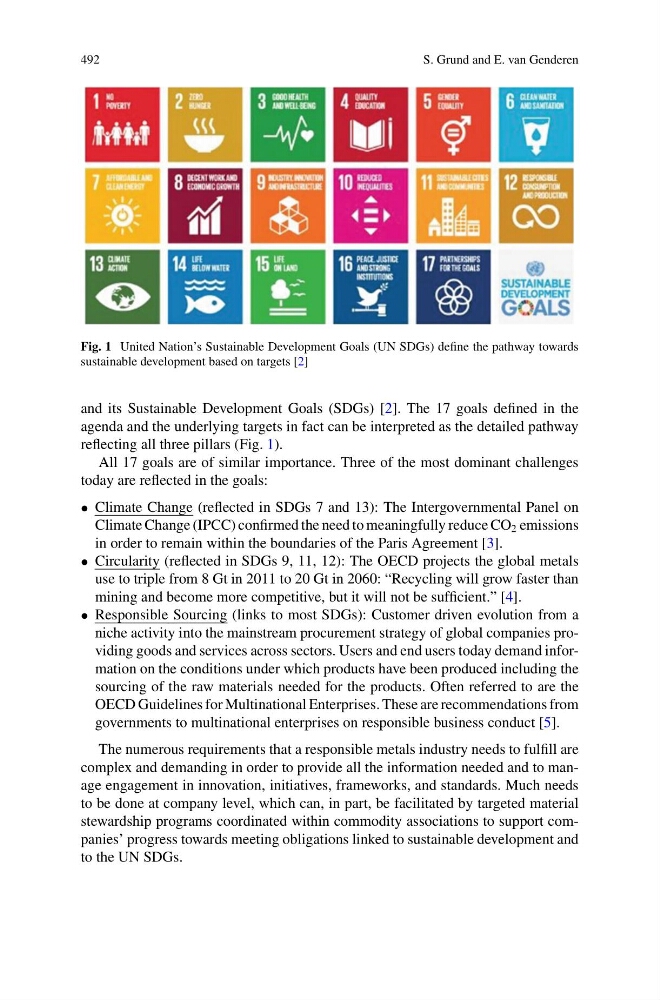
Fig. 1 United Nation’s Sustainable Development Goals (UN SDGs) define the pathway towards
sustainable development based on targets [2]
and its Sustainable Development Goals (SDGs) [2]. The 17 goals defined in the
agenda and the underlying targets in fact can be interpreted as the detailed pathway
reflecting all three pillars (Fig. 1).
All 17 goals are of similar importance. Three of the most dominant challenges
today are reflected in the goals:
• Climate Change (reflected in SDGs 7 and 13): The Intergovernmental Panel on
Climate Change (IPCC) confirmed the need to meaningfully reduce CO 2 emissions
in order to remain within the boundaries of the Paris Agreement [3].
• Circularity (reflected in SDGs 9, 11, 12): The OECD projects the global metals
use to triple from 8 Gt in 2011 to 20 Gt in 2060: “Recycling will grow faster than
mining and become more competitive, but it will not be sufficient.” [4].
• Responsible Sourcing (links to most SDGs): Customer driven evolution from a
niche activity into the mainstream procurement strategy of global companies providing goods and services across sectors. Users and end users today demand information on the conditions under which products have been produced including the
sourcing of the raw materials needed for the products. Often referred to are the
OECD Guidelines for Multinational Enterprises. These are recommendations from
governments to multinational enterprises on responsible business conduct [5].
The numerous requirements that a responsible metals industry needs to fulfill are
complex and demanding in order to provide all the information needed and to manage engagement in innovation, initiatives, frameworks, and standards. Much needs
to be done at company level, which can, in part, be facilitated by targeted material
stewardship programs coordinated within commodity associations to support companies’ progress towards meeting obligations linked to sustainable development and
to the UN SDGs.
S. Grund and E. van Genderen
Fig. 1 United Nation’s Sustainable Development Goals (UN SDGs) define the pathway towards
sustainable development based on targets [2]
and its Sustainable Development Goals (SDGs) [2]. The 17 goals defined in the
agenda and the underlying targets in fact can be interpreted as the detailed pathway
reflecting all three pillars (Fig. 1).
All 17 goals are of similar importance. Three of the most dominant challenges
today are reflected in the goals:
• Climate Change (reflected in SDGs 7 and 13): The Intergovernmental Panel on
Climate Change (IPCC) confirmed the need to meaningfully reduce CO 2 emissions
in order to remain within the boundaries of the Paris Agreement [3].
• Circularity (reflected in SDGs 9, 11, 12): The OECD projects the global metals
use to triple from 8 Gt in 2011 to 20 Gt in 2060: “Recycling will grow faster than
mining and become more competitive, but it will not be sufficient.” [4].
• Responsible Sourcing (links to most SDGs): Customer driven evolution from a
niche activity into the mainstream procurement strategy of global companies providing goods and services across sectors. Users and end users today demand information on the conditions under which products have been produced including the
sourcing of the raw materials needed for the products. Often referred to are the
OECD Guidelines for Multinational Enterprises. These are recommendations from
governments to multinational enterprises on responsible business conduct [5].
The numerous requirements that a responsible metals industry needs to fulfill are
complex and demanding in order to provide all the information needed and to manage engagement in innovation, initiatives, frameworks, and standards. Much needs
to be done at company level, which can, in part, be facilitated by targeted material
stewardship programs coordinated within commodity associations to support companies’ progress towards meeting obligations linked to sustainable development and
to the UN SDGs.