

482
Z. Qi and Z. F. Yuan
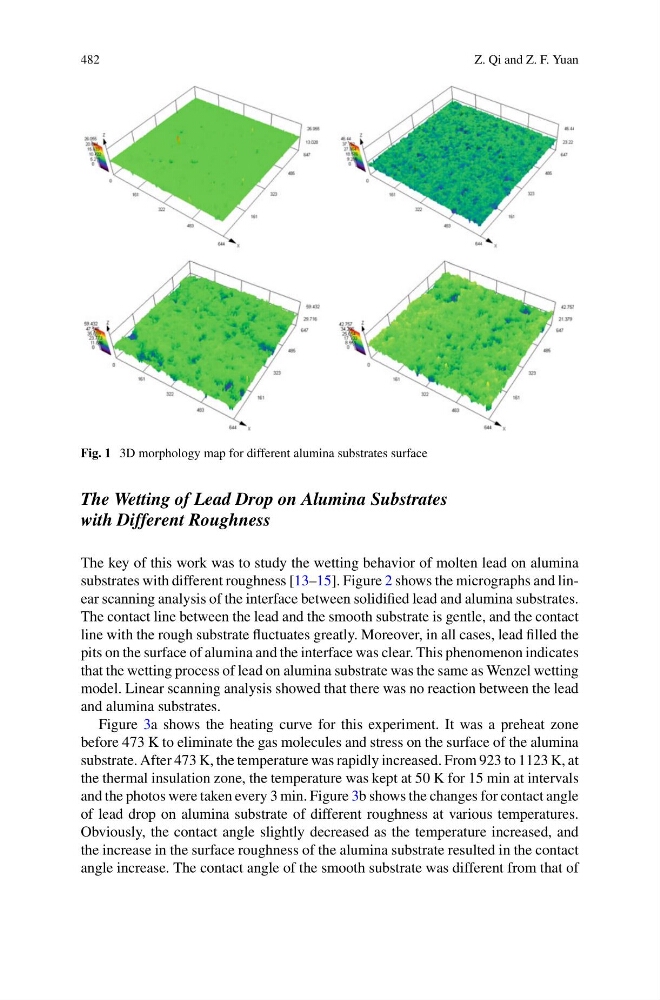
Fig. 1 3D morphology map for different alumina substrates surface
The Wetting of Lead Drop on Alumina Substrates
with Different Roughness
The key of this work was to study the wetting behavior of molten lead on alumina
substrates with different roughness [13–15]. Figure 2 shows the micrographs and linear scanning analysis of the interface between solidified lead and alumina substrates.
The contact line between the lead and the smooth substrate is gentle, and the contact
line with the rough substrate fluctuates greatly. Moreover, in all cases, lead filled the
pits on the surface of alumina and the interface was clear. This phenomenon indicates
that the wetting process of lead on alumina substrate was the same as Wenzel wetting
model. Linear scanning analysis showed that there was no reaction between the lead
and alumina substrates.
Figure 3a shows the heating curve for this experiment. It was a preheat zone
before 473 K to eliminate the gas molecules and stress on the surface of the alumina
substrate. After 473 K, the temperature was rapidly increased. From 923 to 1123 K, at
the thermal insulation zone, the temperature was kept at 50 K for 15 min at intervals
and the photos were taken every 3 min. Figure 3b shows the changes for contact angle
of lead drop on alumina substrate of different roughness at various temperatures.
Obviously, the contact angle slightly decreased as the temperature increased, and
the increase in the surface roughness of the alumina substrate resulted in the contact
angle increase. The contact angle of the smooth substrate was different from that of
Z. Qi and Z. F. Yuan
Fig. 1 3D morphology map for different alumina substrates surface
The Wetting of Lead Drop on Alumina Substrates
with Different Roughness
The key of this work was to study the wetting behavior of molten lead on alumina
substrates with different roughness [13–15]. Figure 2 shows the micrographs and linear scanning analysis of the interface between solidified lead and alumina substrates.
The contact line between the lead and the smooth substrate is gentle, and the contact
line with the rough substrate fluctuates greatly. Moreover, in all cases, lead filled the
pits on the surface of alumina and the interface was clear. This phenomenon indicates
that the wetting process of lead on alumina substrate was the same as Wenzel wetting
model. Linear scanning analysis showed that there was no reaction between the lead
and alumina substrates.
Figure 3a shows the heating curve for this experiment. It was a preheat zone
before 473 K to eliminate the gas molecules and stress on the surface of the alumina
substrate. After 473 K, the temperature was rapidly increased. From 923 to 1123 K, at
the thermal insulation zone, the temperature was kept at 50 K for 15 min at intervals
and the photos were taken every 3 min. Figure 3b shows the changes for contact angle
of lead drop on alumina substrate of different roughness at various temperatures.
Obviously, the contact angle slightly decreased as the temperature increased, and
the increase in the surface roughness of the alumina substrate resulted in the contact
angle increase. The contact angle of the smooth substrate was different from that of