

Characterization and Processing of Residues …
441
Table 2 Typical compositions of resulting lead alloy and slag phase
Slag
SiO 2
FeO
CaO
ZnO
Pb(O)
Al 2 O 3
Na 2 O/K 2 O
%
21.4–29.6 58.2–65.9 1.8–3.7 1.0–2.8
0.8–3.1 2.7–3.9 1.3–3.1
Metal Pb
Cu
Ag
Au
Sn
As
%
91.4–96.9 2.5–8.2
0.1–0.6 0–60 ppm <0.1
<0.1
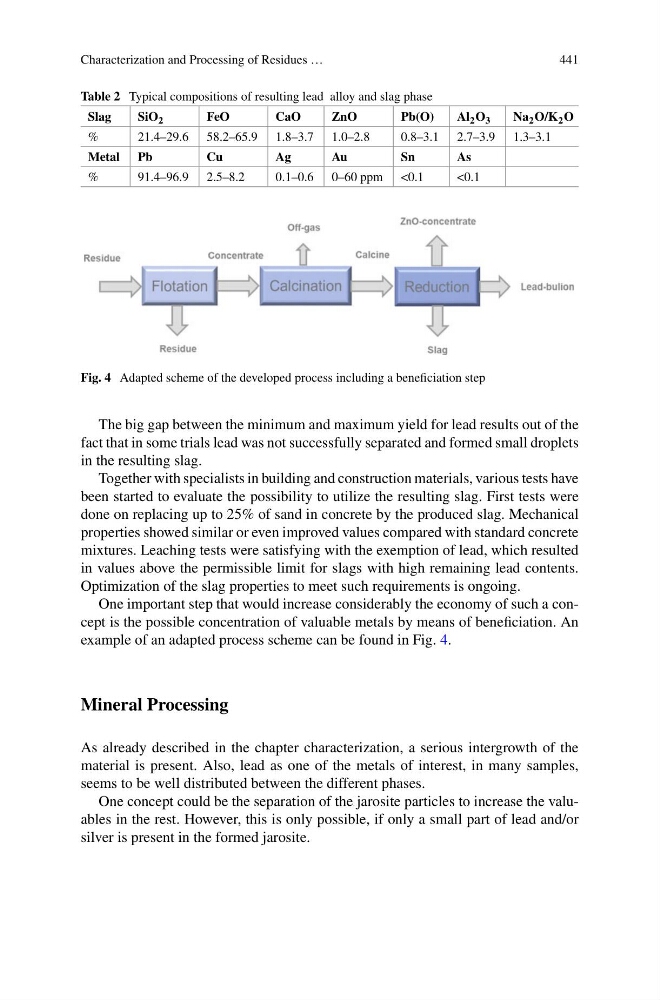
Fig. 4 Adapted scheme of the developed process including a beneficiation step
The big gap between the minimum and maximum yield for lead results out of the
fact that in some trials lead was not successfully separated and formed small droplets
in the resulting slag.
Together with specialists in building and construction materials, various tests have
been started to evaluate the possibility to utilize the resulting slag. First tests were
done on replacing up to 25% of sand in concrete by the produced slag. Mechanical
properties showed similar or even improved values compared with standard concrete
mixtures. Leaching tests were satisfying with the exemption of lead, which resulted
in values above the permissible limit for slags with high remaining lead contents.
Optimization of the slag properties to meet such requirements is ongoing.
One important step that would increase considerably the economy of such a concept is the possible concentration of valuable metals by means of beneficiation. An
example of an adapted process scheme can be found in Fig. 4.
Mineral Processing
As already described in the chapter characterization, a serious intergrowth of the
material is present. Also, lead as one of the metals of interest, in many samples,
seems to be well distributed between the different phases.
One concept could be the separation of the jarosite particles to increase the valuables in the rest. However, this is only possible, if only a small part of lead and/or
silver is present in the formed jarosite.
441
Table 2 Typical compositions of resulting lead alloy and slag phase
Slag
SiO 2
FeO
CaO
ZnO
Pb(O)
Al 2 O 3
Na 2 O/K 2 O
%
21.4–29.6 58.2–65.9 1.8–3.7 1.0–2.8
0.8–3.1 2.7–3.9 1.3–3.1
Metal Pb
Cu
Ag
Au
Sn
As
%
91.4–96.9 2.5–8.2
0.1–0.6 0–60 ppm <0.1
<0.1
Fig. 4 Adapted scheme of the developed process including a beneficiation step
The big gap between the minimum and maximum yield for lead results out of the
fact that in some trials lead was not successfully separated and formed small droplets
in the resulting slag.
Together with specialists in building and construction materials, various tests have
been started to evaluate the possibility to utilize the resulting slag. First tests were
done on replacing up to 25% of sand in concrete by the produced slag. Mechanical
properties showed similar or even improved values compared with standard concrete
mixtures. Leaching tests were satisfying with the exemption of lead, which resulted
in values above the permissible limit for slags with high remaining lead contents.
Optimization of the slag properties to meet such requirements is ongoing.
One important step that would increase considerably the economy of such a concept is the possible concentration of valuable metals by means of beneficiation. An
example of an adapted process scheme can be found in Fig. 4.
Mineral Processing
As already described in the chapter characterization, a serious intergrowth of the
material is present. Also, lead as one of the metals of interest, in many samples,
seems to be well distributed between the different phases.
One concept could be the separation of the jarosite particles to increase the valuables in the rest. However, this is only possible, if only a small part of lead and/or
silver is present in the formed jarosite.