

240
S. Nagraj et al.
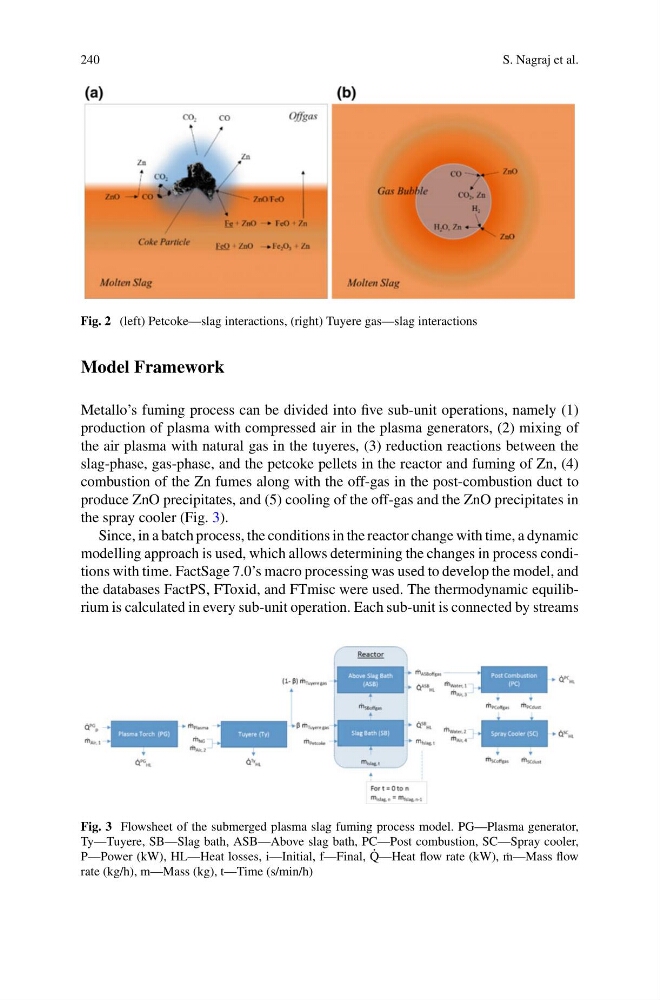
Fig. 2 (left) Petcoke—slag interactions, (right) Tuyere gas—slag interactions
Model Framework
Metallo’s fuming process can be divided into five sub-unit operations, namely (1)
production of plasma with compressed air in the plasma generators, (2) mixing of
the air plasma with natural gas in the tuyeres, (3) reduction reactions between the
slag-phase, gas-phase, and the petcoke pellets in the reactor and fuming of Zn, (4)
combustion of the Zn fumes along with the off-gas in the post-combustion duct to
produce ZnO precipitates, and (5) cooling of the off-gas and the ZnO precipitates in
the spray cooler (Fig. 3).
Since, in a batch process, the conditions in the reactor change with time, a dynamic
modelling approach is used, which allows determining the changes in process conditions with time. FactSage 7.0’s macro processing was used to develop the model, and
the databases FactPS, FToxid, and FTmisc were used. The thermodynamic equilibrium is calculated in every sub-unit operation. Each sub-unit is connected by streams
Fig. 3 Flowsheet of the submerged plasma slag fuming process model. PG—Plasma generator,
Ty—Tuyere, SB—Slag bath, ASB—Above slag bath, PC—Post combustion, SC—Spray cooler,
P—Power (kW), HL—Heat losses, i—Initial, f—Final, ˙
Q—Heat flow rate (kW), ˙
m—Mass flow
rate (kg/h), m—Mass (kg), t—Time (s/min/h)
S. Nagraj et al.
Fig. 2 (left) Petcoke—slag interactions, (right) Tuyere gas—slag interactions
Model Framework
Metallo’s fuming process can be divided into five sub-unit operations, namely (1)
production of plasma with compressed air in the plasma generators, (2) mixing of
the air plasma with natural gas in the tuyeres, (3) reduction reactions between the
slag-phase, gas-phase, and the petcoke pellets in the reactor and fuming of Zn, (4)
combustion of the Zn fumes along with the off-gas in the post-combustion duct to
produce ZnO precipitates, and (5) cooling of the off-gas and the ZnO precipitates in
the spray cooler (Fig. 3).
Since, in a batch process, the conditions in the reactor change with time, a dynamic
modelling approach is used, which allows determining the changes in process conditions with time. FactSage 7.0’s macro processing was used to develop the model, and
the databases FactPS, FToxid, and FTmisc were used. The thermodynamic equilibrium is calculated in every sub-unit operation. Each sub-unit is connected by streams
Fig. 3 Flowsheet of the submerged plasma slag fuming process model. PG—Plasma generator,
Ty—Tuyere, SB—Slag bath, ASB—Above slag bath, PC—Post combustion, SC—Spray cooler,
P—Power (kW), HL—Heat losses, i—Initial, f—Final, ˙
Q—Heat flow rate (kW), ˙
m—Mass flow
rate (kg/h), m—Mass (kg), t—Time (s/min/h)