

To Polarize or Not to Polarize: Practical Advice on How …
117
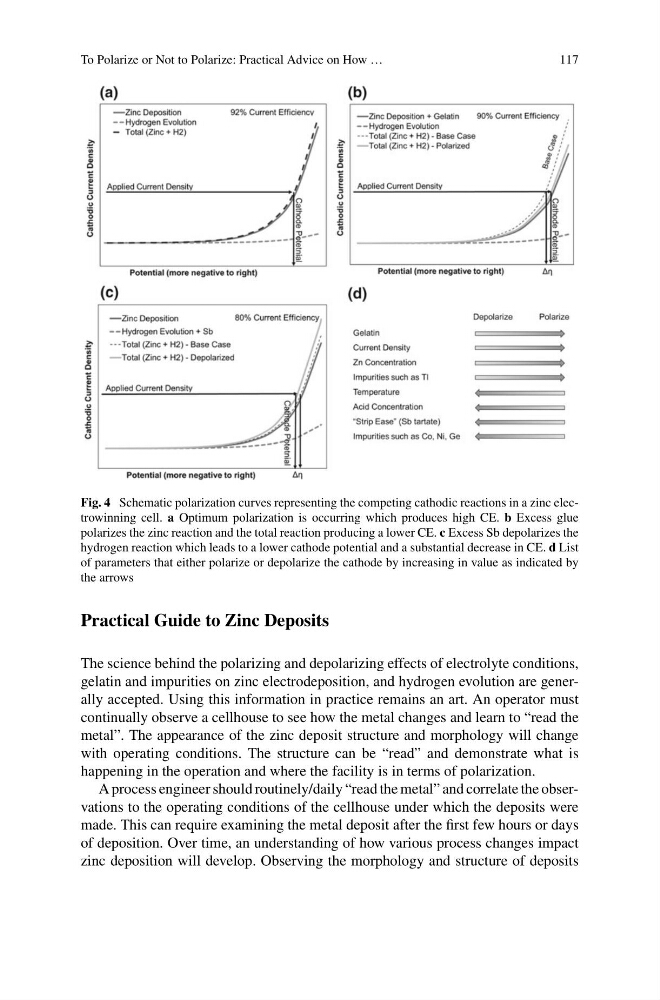
Fig. 4 Schematic polarization curves representing the competing cathodic reactions in a zinc electrowinning cell. a Optimum polarization is occurring which produces high CE. b Excess glue
polarizes the zinc reaction and the total reaction producing a lower CE. c Excess Sb depolarizes the
hydrogen reaction which leads to a lower cathode potential and a substantial decrease in CE. d List
of parameters that either polarize or depolarize the cathode by increasing in value as indicated by
the arrows
Practical Guide to Zinc Deposits
The science behind the polarizing and depolarizing effects of electrolyte conditions,
gelatin and impurities on zinc electrodeposition, and hydrogen evolution are generally accepted. Using this information in practice remains an art. An operator must
continually observe a cellhouse to see how the metal changes and learn to “read the
metal”. The appearance of the zinc deposit structure and morphology will change
with operating conditions. The structure can be “read” and demonstrate what is
happening in the operation and where the facility is in terms of polarization.
A process engineer should routinely/daily “read the metal” and correlate the observations to the operating conditions of the cellhouse under which the deposits were
made. This can require examining the metal deposit after the first few hours or days
of deposition. Over time, an understanding of how various process changes impact
zinc deposition will develop. Observing the morphology and structure of deposits
117
Fig. 4 Schematic polarization curves representing the competing cathodic reactions in a zinc electrowinning cell. a Optimum polarization is occurring which produces high CE. b Excess glue
polarizes the zinc reaction and the total reaction producing a lower CE. c Excess Sb depolarizes the
hydrogen reaction which leads to a lower cathode potential and a substantial decrease in CE. d List
of parameters that either polarize or depolarize the cathode by increasing in value as indicated by
the arrows
Practical Guide to Zinc Deposits
The science behind the polarizing and depolarizing effects of electrolyte conditions,
gelatin and impurities on zinc electrodeposition, and hydrogen evolution are generally accepted. Using this information in practice remains an art. An operator must
continually observe a cellhouse to see how the metal changes and learn to “read the
metal”. The appearance of the zinc deposit structure and morphology will change
with operating conditions. The structure can be “read” and demonstrate what is
happening in the operation and where the facility is in terms of polarization.
A process engineer should routinely/daily “read the metal” and correlate the observations to the operating conditions of the cellhouse under which the deposits were
made. This can require examining the metal deposit after the first few hours or days
of deposition. Over time, an understanding of how various process changes impact
zinc deposition will develop. Observing the morphology and structure of deposits