

5.2 Thermokinetic Characteristics of LiCl
65
hygroscopic properties of salts such as LiCl and CaCl 2 allow them to be used in
dehumidification systems.
However, in molten salt-based technologies, the hygroscopic attribute of LiCl is
typically considered as greatly unappealing. Thereupon, the molten salt processes
using salts such as LiCl or CaCl 2 are generally carried out under attentively controlled dry atmospheres, and this adds considerably to the cost at an industrial scale.
Regardless, investigations carried out by the author of this book have shown that
the hygroscopic property of LiCl could be used in the preparation of a variation
of advanced materials. This shall be addressed later on. However, before this, the
thermokinetic behavior of LiCl is described.
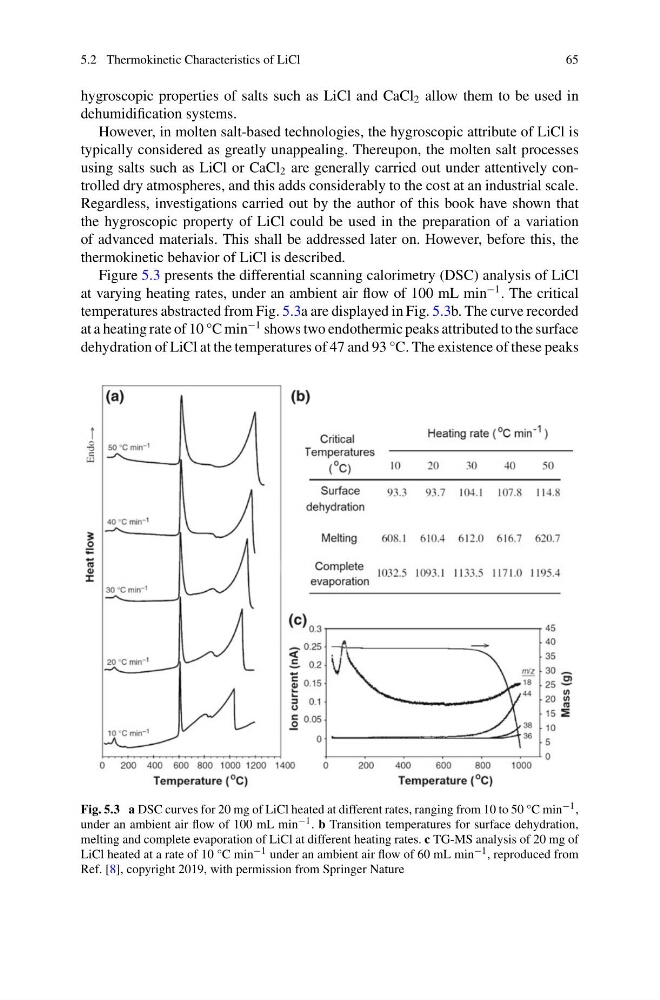
Figure 5.3 presents the differential scanning calorimetry (DSC) analysis of LiCl
at varying heating rates, under an ambient air flow of 100 mL min
−1 . The critical
temperatures abstracted from Fig. 5.3a are displayed in Fig. 5.3b. The curve recorded
at a heating rate of 10 °C min
−1 shows two endothermic peaks attributed to the surface
dehydration of LiCl at the temperatures of 47 and 93 °C. The existence of these peaks
Fig. 5.3 a DSC curves for 20 mg of LiCl heated at different rates, ranging from 10 to 50 °C min −1 ,
under an ambient air flow of 100 mL min −1 . b Transition temperatures for surface dehydration,
melting and complete evaporation of LiCl at different heating rates. c TG-MS analysis of 20 mg of
LiCl heated at a rate of 10 °C min −1 under an ambient air flow of 60 mL min −1 , reproduced from
Ref. [8], copyright 2019, with permission from Springer Nature
65
hygroscopic properties of salts such as LiCl and CaCl 2 allow them to be used in
dehumidification systems.
However, in molten salt-based technologies, the hygroscopic attribute of LiCl is
typically considered as greatly unappealing. Thereupon, the molten salt processes
using salts such as LiCl or CaCl 2 are generally carried out under attentively controlled dry atmospheres, and this adds considerably to the cost at an industrial scale.
Regardless, investigations carried out by the author of this book have shown that
the hygroscopic property of LiCl could be used in the preparation of a variation
of advanced materials. This shall be addressed later on. However, before this, the
thermokinetic behavior of LiCl is described.
Figure 5.3 presents the differential scanning calorimetry (DSC) analysis of LiCl
at varying heating rates, under an ambient air flow of 100 mL min
−1 . The critical
temperatures abstracted from Fig. 5.3a are displayed in Fig. 5.3b. The curve recorded
at a heating rate of 10 °C min
−1 shows two endothermic peaks attributed to the surface
dehydration of LiCl at the temperatures of 47 and 93 °C. The existence of these peaks
Fig. 5.3 a DSC curves for 20 mg of LiCl heated at different rates, ranging from 10 to 50 °C min −1 ,
under an ambient air flow of 100 mL min −1 . b Transition temperatures for surface dehydration,
melting and complete evaporation of LiCl at different heating rates. c TG-MS analysis of 20 mg of
LiCl heated at a rate of 10 °C min −1 under an ambient air flow of 60 mL min −1 , reproduced from
Ref. [8], copyright 2019, with permission from Springer Nature