

2.3 Electrochemical Exfoliation of Graphite
13
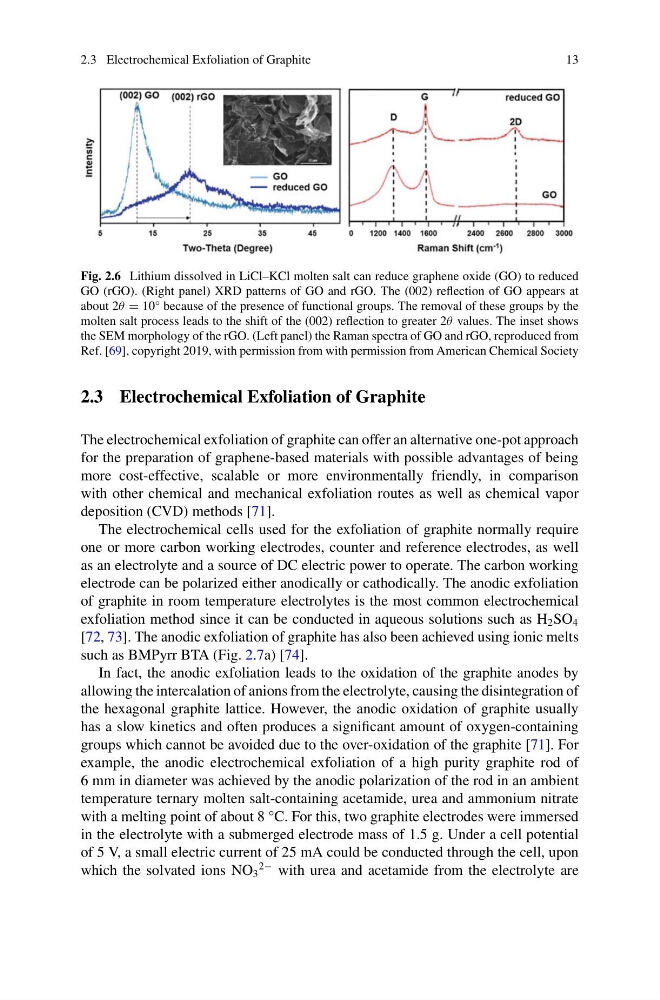
Fig. 2.6 Lithium dissolved in LiCl–KCl molten salt can reduce graphene oxide (GO) to reduced
GO (rGO). (Right panel) XRD patterns of GO and rGO. The (002) reflection of GO appears at
about 2θ = 10° because of the presence of functional groups. The removal of these groups by the
molten salt process leads to the shift of the (002) reflection to greater 2θ values. The inset shows
the SEM morphology of the rGO. (Left panel) the Raman spectra of GO and rGO, reproduced from
Ref. [69], copyright 2019, with permission from with permission from American Chemical Society
2.3 Electrochemical Exfoliation of Graphite
The electrochemical exfoliation of graphite can offer an alternative one-pot approach
for the preparation of graphene-based materials with possible advantages of being
more cost-effective, scalable or more environmentally friendly, in comparison
with other chemical and mechanical exfoliation routes as well as chemical vapor
deposition (CVD) methods [71].
The electrochemical cells used for the exfoliation of graphite normally require
one or more carbon working electrodes, counter and reference electrodes, as well
as an electrolyte and a source of DC electric power to operate. The carbon working
electrode can be polarized either anodically or cathodically. The anodic exfoliation
of graphite in room temperature electrolytes is the most common electrochemical
exfoliation method since it can be conducted in aqueous solutions such as H 2 SO 4
[72, 73]. The anodic exfoliation of graphite has also been achieved using ionic melts
such as BMPyrr BTA (Fig. 2.7a) [74].
In fact, the anodic exfoliation leads to the oxidation of the graphite anodes by
allowing the intercalation of anions from the electrolyte, causing the disintegration of
the hexagonal graphite lattice. However, the anodic oxidation of graphite usually
has a slow kinetics and often produces a significant amount of oxygen-containing
groups which cannot be avoided due to the over-oxidation of the graphite [71]. For
example, the anodic electrochemical exfoliation of a high purity graphite rod of
6 mm in diameter was achieved by the anodic polarization of the rod in an ambient
temperature ternary molten salt-containing acetamide, urea and ammonium nitrate
with a melting point of about 8 °C. For this, two graphite electrodes were immersed
in the electrolyte with a submerged electrode mass of 1.5 g. Under a cell potential
of 5 V, a small electric current of 25 mA could be conducted through the cell, upon
which the solvated ions NO 3
2− with urea and acetamide from the electrolyte are
13
Fig. 2.6 Lithium dissolved in LiCl–KCl molten salt can reduce graphene oxide (GO) to reduced
GO (rGO). (Right panel) XRD patterns of GO and rGO. The (002) reflection of GO appears at
about 2θ = 10° because of the presence of functional groups. The removal of these groups by the
molten salt process leads to the shift of the (002) reflection to greater 2θ values. The inset shows
the SEM morphology of the rGO. (Left panel) the Raman spectra of GO and rGO, reproduced from
Ref. [69], copyright 2019, with permission from with permission from American Chemical Society
2.3 Electrochemical Exfoliation of Graphite
The electrochemical exfoliation of graphite can offer an alternative one-pot approach
for the preparation of graphene-based materials with possible advantages of being
more cost-effective, scalable or more environmentally friendly, in comparison
with other chemical and mechanical exfoliation routes as well as chemical vapor
deposition (CVD) methods [71].
The electrochemical cells used for the exfoliation of graphite normally require
one or more carbon working electrodes, counter and reference electrodes, as well
as an electrolyte and a source of DC electric power to operate. The carbon working
electrode can be polarized either anodically or cathodically. The anodic exfoliation
of graphite in room temperature electrolytes is the most common electrochemical
exfoliation method since it can be conducted in aqueous solutions such as H 2 SO 4
[72, 73]. The anodic exfoliation of graphite has also been achieved using ionic melts
such as BMPyrr BTA (Fig. 2.7a) [74].
In fact, the anodic exfoliation leads to the oxidation of the graphite anodes by
allowing the intercalation of anions from the electrolyte, causing the disintegration of
the hexagonal graphite lattice. However, the anodic oxidation of graphite usually
has a slow kinetics and often produces a significant amount of oxygen-containing
groups which cannot be avoided due to the over-oxidation of the graphite [71]. For
example, the anodic electrochemical exfoliation of a high purity graphite rod of
6 mm in diameter was achieved by the anodic polarization of the rod in an ambient
temperature ternary molten salt-containing acetamide, urea and ammonium nitrate
with a melting point of about 8 °C. For this, two graphite electrodes were immersed
in the electrolyte with a submerged electrode mass of 1.5 g. Under a cell potential
of 5 V, a small electric current of 25 mA could be conducted through the cell, upon
which the solvated ions NO 3
2− with urea and acetamide from the electrolyte are