

2.2 Reactive Molten Salt Synthesis of Carbon Nanostructures
11
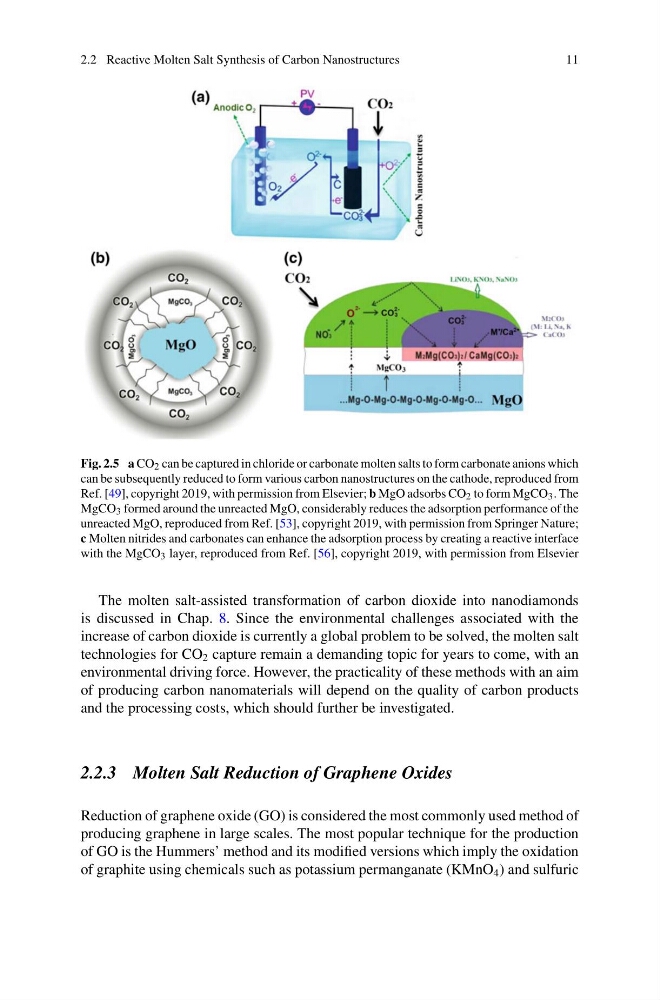
Fig. 2.5 a CO 2 can be captured in chloride or carbonate molten salts to form carbonate anions which
can be subsequently reduced to form various carbon nanostructures on the cathode, reproduced from
Ref. [49], copyright 2019, with permission from Elsevier; b MgO adsorbs CO 2 to form MgCO 3 . The
MgCO 3 formed around the unreacted MgO, considerably reduces the adsorption performance of the
unreacted MgO, reproduced from Ref. [53], copyright 2019, with permission from Springer Nature;
c Molten nitrides and carbonates can enhance the adsorption process by creating a reactive interface
with the MgCO 3 layer, reproduced from Ref. [56], copyright 2019, with permission from Elsevier
The molten salt-assisted transformation of carbon dioxide into nanodiamonds
is discussed in Chap. 8. Since the environmental challenges associated with the
increase of carbon dioxide is currently a global problem to be solved, the molten salt
technologies for CO 2 capture remain a demanding topic for years to come, with an
environmental driving force. However, the practicality of these methods with an aim
of producing carbon nanomaterials will depend on the quality of carbon products
and the processing costs, which should further be investigated.
2.2.3 Molten Salt Reduction of Graphene Oxides
Reduction of graphene oxide (GO) is considered the most commonly used method of
producing graphene in large scales. The most popular technique for the production
of GO is the Hummers’ method and its modified versions which imply the oxidation
of graphite using chemicals such as potassium permanganate (KMnO 4 ) and sulfuric
11
Fig. 2.5 a CO 2 can be captured in chloride or carbonate molten salts to form carbonate anions which
can be subsequently reduced to form various carbon nanostructures on the cathode, reproduced from
Ref. [49], copyright 2019, with permission from Elsevier; b MgO adsorbs CO 2 to form MgCO 3 . The
MgCO 3 formed around the unreacted MgO, considerably reduces the adsorption performance of the
unreacted MgO, reproduced from Ref. [53], copyright 2019, with permission from Springer Nature;
c Molten nitrides and carbonates can enhance the adsorption process by creating a reactive interface
with the MgCO 3 layer, reproduced from Ref. [56], copyright 2019, with permission from Elsevier
The molten salt-assisted transformation of carbon dioxide into nanodiamonds
is discussed in Chap. 8. Since the environmental challenges associated with the
increase of carbon dioxide is currently a global problem to be solved, the molten salt
technologies for CO 2 capture remain a demanding topic for years to come, with an
environmental driving force. However, the practicality of these methods with an aim
of producing carbon nanomaterials will depend on the quality of carbon products
and the processing costs, which should further be investigated.
2.2.3 Molten Salt Reduction of Graphene Oxides
Reduction of graphene oxide (GO) is considered the most commonly used method of
producing graphene in large scales. The most popular technique for the production
of GO is the Hummers’ method and its modified versions which imply the oxidation
of graphite using chemicals such as potassium permanganate (KMnO 4 ) and sulfuric