

128
7 Molten Salt Conversion of Plastics into Highly Conductive …
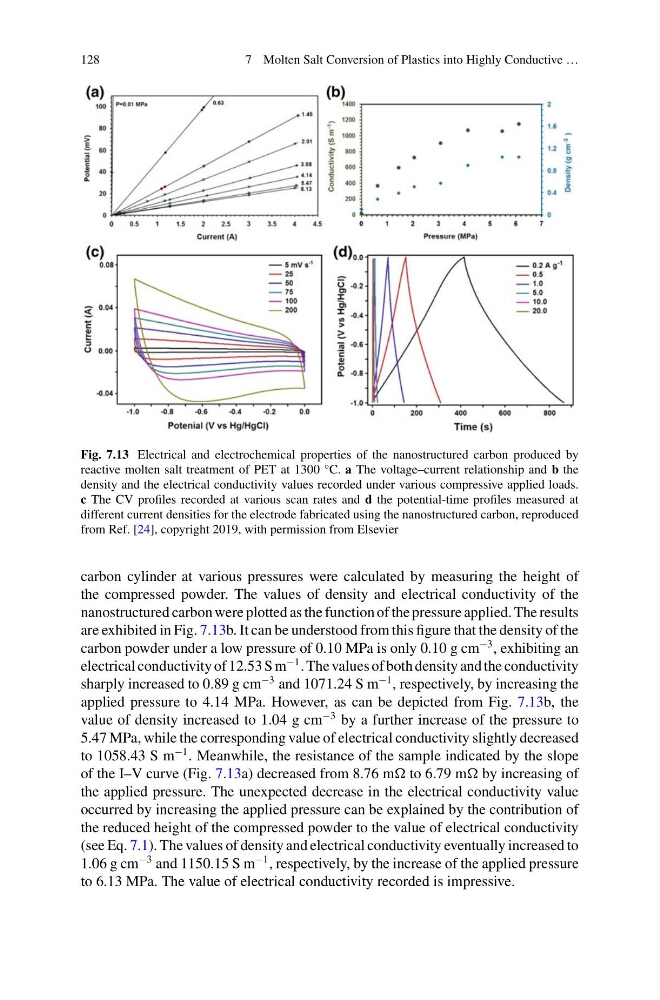
Fig. 7.13 Electrical and electrochemical properties of the nanostructured carbon produced by
reactive molten salt treatment of PET at 1300 °C. a The voltage–current relationship and b the
density and the electrical conductivity values recorded under various compressive applied loads.
c The CV profiles recorded at various scan rates and d the potential-time profiles measured at
different current densities for the electrode fabricated using the nanostructured carbon, reproduced
from Ref. [24], copyright 2019, with permission from Elsevier
carbon cylinder at various pressures were calculated by measuring the height of
the compressed powder. The values of density and electrical conductivity of the
nanostructured carbon were plotted as the function of the pressure applied. The results
are exhibited in Fig. 7.13b. It can be understood from this figure that the density of the
carbon powder under a low pressure of 0.10 MPa is only 0.10 g cm
−3 , exhibiting an
electrical conductivity of 12.53 S m
−1 . The values of both density and the conductivity
sharply increased to 0.89 g cm
−3 and 1071.24 S m
−1 , respectively, by increasing the
applied pressure to 4.14 MPa. However, as can be depicted from Fig. 7.13b, the
value of density increased to 1.04 g cm
−3 by a further increase of the pressure to
5.47 MPa, while the corresponding value of electrical conductivity slightly decreased
to 1058.43 S m
−1 . Meanwhile, the resistance of the sample indicated by the slope
of the I–V curve (Fig. 7.13a) decreased from 8.76 m to 6.79 m by increasing of
the applied pressure. The unexpected decrease in the electrical conductivity value
occurred by increasing the applied pressure can be explained by the contribution of
the reduced height of the compressed powder to the value of electrical conductivity
(see Eq. 7.1). The values of density and electrical conductivity eventually increased to
1.06 g cm
−3 and 1150.15 S m
−1 , respectively, by the increase of the applied pressure
to 6.13 MPa. The value of electrical conductivity recorded is impressive.
7 Molten Salt Conversion of Plastics into Highly Conductive …
Fig. 7.13 Electrical and electrochemical properties of the nanostructured carbon produced by
reactive molten salt treatment of PET at 1300 °C. a The voltage–current relationship and b the
density and the electrical conductivity values recorded under various compressive applied loads.
c The CV profiles recorded at various scan rates and d the potential-time profiles measured at
different current densities for the electrode fabricated using the nanostructured carbon, reproduced
from Ref. [24], copyright 2019, with permission from Elsevier
carbon cylinder at various pressures were calculated by measuring the height of
the compressed powder. The values of density and electrical conductivity of the
nanostructured carbon were plotted as the function of the pressure applied. The results
are exhibited in Fig. 7.13b. It can be understood from this figure that the density of the
carbon powder under a low pressure of 0.10 MPa is only 0.10 g cm
−3 , exhibiting an
electrical conductivity of 12.53 S m
−1 . The values of both density and the conductivity
sharply increased to 0.89 g cm
−3 and 1071.24 S m
−1 , respectively, by increasing the
applied pressure to 4.14 MPa. However, as can be depicted from Fig. 7.13b, the
value of density increased to 1.04 g cm
−3 by a further increase of the pressure to
5.47 MPa, while the corresponding value of electrical conductivity slightly decreased
to 1058.43 S m
−1 . Meanwhile, the resistance of the sample indicated by the slope
of the I–V curve (Fig. 7.13a) decreased from 8.76 m to 6.79 m by increasing of
the applied pressure. The unexpected decrease in the electrical conductivity value
occurred by increasing the applied pressure can be explained by the contribution of
the reduced height of the compressed powder to the value of electrical conductivity
(see Eq. 7.1). The values of density and electrical conductivity eventually increased to
1.06 g cm
−3 and 1150.15 S m
−1 , respectively, by the increase of the applied pressure
to 6.13 MPa. The value of electrical conductivity recorded is impressive.