

Microstructurally Engineered Ceramics for Environmental …
519
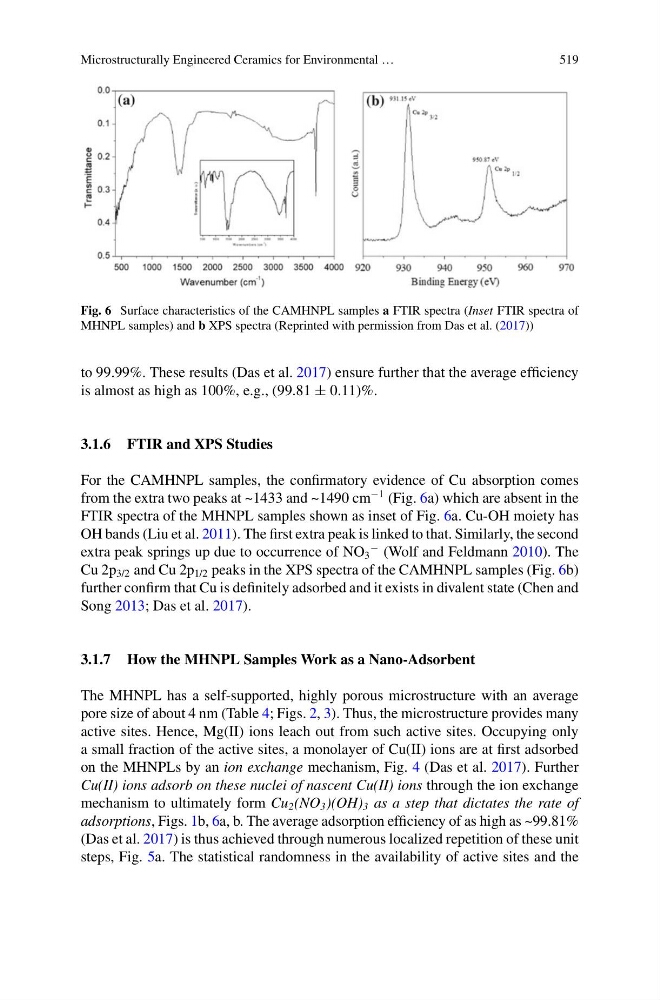
Fig. 6 Surface characteristics of the CAMHNPL samples a FTIR spectra (Inset FTIR spectra of
MHNPL samples) and b XPS spectra (Reprinted with permission from Das et al. (2017))
to 99.99%. These results (Das et al. 2017) ensure further that the average efficiency
is almost as high as 100%, e.g., (99.81 ± 0.11)%.
3.1.6 FTIR and XPS Studies
For the CAMHNPL samples, the confirmatory evidence of Cu absorption comes
from the extra two peaks at ~1433 and ~1490 cm
−1 (Fig. 6a) which are absent in the
FTIR spectra of the MHNPL samples shown as inset of Fig. 6a. Cu-OH moiety has
OH bands (Liu et al. 2011). The first extra peak is linked to that. Similarly, the second
extra peak springs up due to occurrence of NO 3
− (Wolf and Feldmann 2010). The
Cu 2p 3/2 and Cu 2p 1/2 peaks in the XPS spectra of the CAMHNPL samples (Fig. 6b)
further confirm that Cu is definitely adsorbed and it exists in divalent state (Chen and
Song 2013; Das et al. 2017).
3.1.7 How the MHNPL Samples Work as a Nano-Adsorbent
The MHNPL has a self-supported, highly porous microstructure with an average
pore size of about 4 nm (Table 4; Figs. 2, 3). Thus, the microstructure provides many
active sites. Hence, Mg(II) ions leach out from such active sites. Occupying only
a small fraction of the active sites, a monolayer of Cu(II) ions are at first adsorbed
on the MHNPLs by an ion exchange mechanism, Fig. 4 (Das et al. 2017). Further
Cu(II) ions adsorb on these nuclei of nascent Cu(II) ions through the ion exchange
mechanism to ultimately form Cu 2 (NO 3 )(OH) 3 as a step that dictates the rate of
adsorptions, Figs. 1b, 6a, b. The average adsorption efficiency of as high as ~99.81%
(Das et al. 2017) is thus achieved through numerous localized repetition of these unit
steps, Fig. 5a. The statistical randomness in the availability of active sites and the
519
Fig. 6 Surface characteristics of the CAMHNPL samples a FTIR spectra (Inset FTIR spectra of
MHNPL samples) and b XPS spectra (Reprinted with permission from Das et al. (2017))
to 99.99%. These results (Das et al. 2017) ensure further that the average efficiency
is almost as high as 100%, e.g., (99.81 ± 0.11)%.
3.1.6 FTIR and XPS Studies
For the CAMHNPL samples, the confirmatory evidence of Cu absorption comes
from the extra two peaks at ~1433 and ~1490 cm
−1 (Fig. 6a) which are absent in the
FTIR spectra of the MHNPL samples shown as inset of Fig. 6a. Cu-OH moiety has
OH bands (Liu et al. 2011). The first extra peak is linked to that. Similarly, the second
extra peak springs up due to occurrence of NO 3
− (Wolf and Feldmann 2010). The
Cu 2p 3/2 and Cu 2p 1/2 peaks in the XPS spectra of the CAMHNPL samples (Fig. 6b)
further confirm that Cu is definitely adsorbed and it exists in divalent state (Chen and
Song 2013; Das et al. 2017).
3.1.7 How the MHNPL Samples Work as a Nano-Adsorbent
The MHNPL has a self-supported, highly porous microstructure with an average
pore size of about 4 nm (Table 4; Figs. 2, 3). Thus, the microstructure provides many
active sites. Hence, Mg(II) ions leach out from such active sites. Occupying only
a small fraction of the active sites, a monolayer of Cu(II) ions are at first adsorbed
on the MHNPLs by an ion exchange mechanism, Fig. 4 (Das et al. 2017). Further
Cu(II) ions adsorb on these nuclei of nascent Cu(II) ions through the ion exchange
mechanism to ultimately form Cu 2 (NO 3 )(OH) 3 as a step that dictates the rate of
adsorptions, Figs. 1b, 6a, b. The average adsorption efficiency of as high as ~99.81%
(Das et al. 2017) is thus achieved through numerous localized repetition of these unit
steps, Fig. 5a. The statistical randomness in the availability of active sites and the