

488
S. Swami and R. Shrivastava
N
H
O
O
O
O
H
O
O
R
OH
O
O
R
O
O
OR 2
R
O
R
O
O
O
O
H 2 N
OR 2
-H 2 O
R
O
OR 2
HN
HO
H
-H 2 O
= Fe 3 O 4
step - I
Step - III
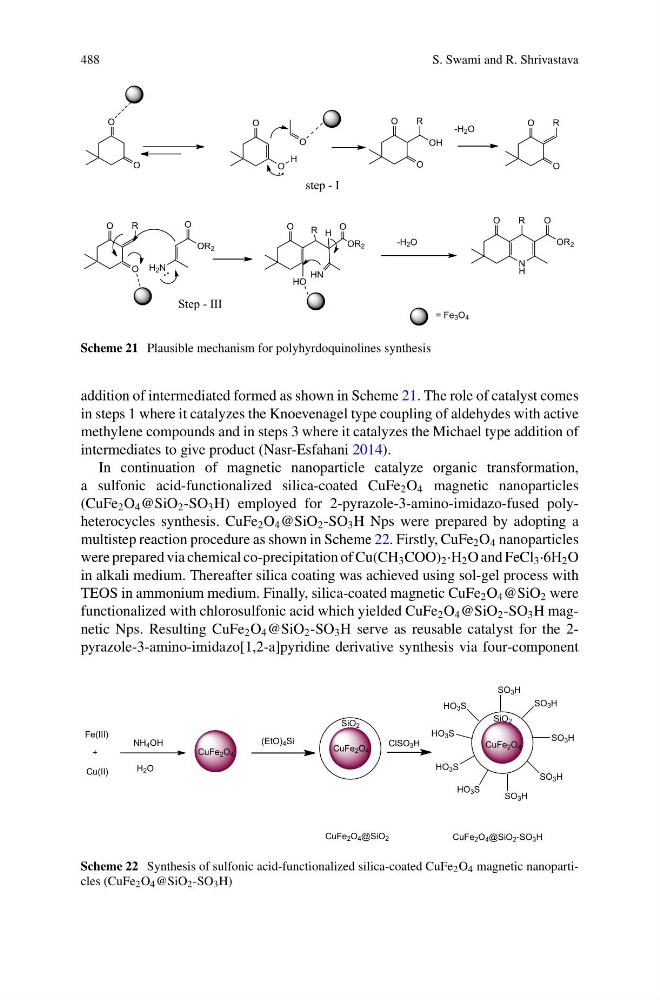
Scheme 21 Plausible mechanism for polyhyrdoquinolines synthesis
addition of intermediated formed as shown in Scheme 21. The role of catalyst comes
in steps 1 where it catalyzes the Knoevenagel type coupling of aldehydes with active
methylene compounds and in steps 3 where it catalyzes the Michael type addition of
intermediates to give product (Nasr-Esfahani 2014).
In continuation of magnetic nanoparticle catalyze organic transformation,
a sulfonic acid-functionalized silica-coated CuFe 2 O 4 magnetic nanoparticles
(CuFe 2 O 4 @SiO 2 -SO 3 H) employed for 2-pyrazole-3-amino-imidazo-fused polyheterocycles synthesis. CuFe 2 O 4 @SiO 2 -SO 3 H Nps were prepared by adopting a
multistep reaction procedure as shown in Scheme 22. Firstly, CuFe 2 O 4 nanoparticles
were prepared via chemical co-precipitation of Cu(CH 3 COO) 2 ·H 2 O and FeCl 3 ·6H 2 O
in alkali medium. Thereafter silica coating was achieved using sol-gel process with
TEOS in ammonium medium. Finally, silica-coated magnetic CuFe 2 O 4 @SiO 2 were
functionalized with chlorosulfonic acid which yielded CuFe 2 O 4 @SiO 2 -SO 3 H magnetic Nps. Resulting CuFe 2 O 4 @SiO 2 -SO 3 H serve as reusable catalyst for the 2pyrazole-3-amino-imidazo[1,2-a]pyridine derivative synthesis via four-component
Fe(III)
Cu(II)
NH 4 OH
H 2 O
CuFe 2 O 4
CuFe 2 O 4
CuFe 2 O 4
SiO 2
SiO 2
SO 3 H
SO 3 H
SO 3 H
HO 3 S
HO 3 S
HO 3 S
HO 3 S
SO 3 H
SO 3 H
+
(EtO) 4 Si
ClSO 3 H
CuFe 2 O 4 @SiO 2 -SO 3 H
CuFe 2 O 4 @SiO 2
Scheme 22 Synthesis of sulfonic acid-functionalized silica-coated CuFe 2 O 4 magnetic nanoparticles (CuFe 2 O 4 @SiO 2 -SO 3 H)
S. Swami and R. Shrivastava
N
H
O
O
O
O
H
O
O
R
OH
O
O
R
O
O
OR 2
R
O
R
O
O
O
O
H 2 N
OR 2
-H 2 O
R
O
OR 2
HN
HO
H
-H 2 O
= Fe 3 O 4
step - I
Step - III
Scheme 21 Plausible mechanism for polyhyrdoquinolines synthesis
addition of intermediated formed as shown in Scheme 21. The role of catalyst comes
in steps 1 where it catalyzes the Knoevenagel type coupling of aldehydes with active
methylene compounds and in steps 3 where it catalyzes the Michael type addition of
intermediates to give product (Nasr-Esfahani 2014).
In continuation of magnetic nanoparticle catalyze organic transformation,
a sulfonic acid-functionalized silica-coated CuFe 2 O 4 magnetic nanoparticles
(CuFe 2 O 4 @SiO 2 -SO 3 H) employed for 2-pyrazole-3-amino-imidazo-fused polyheterocycles synthesis. CuFe 2 O 4 @SiO 2 -SO 3 H Nps were prepared by adopting a
multistep reaction procedure as shown in Scheme 22. Firstly, CuFe 2 O 4 nanoparticles
were prepared via chemical co-precipitation of Cu(CH 3 COO) 2 ·H 2 O and FeCl 3 ·6H 2 O
in alkali medium. Thereafter silica coating was achieved using sol-gel process with
TEOS in ammonium medium. Finally, silica-coated magnetic CuFe 2 O 4 @SiO 2 were
functionalized with chlorosulfonic acid which yielded CuFe 2 O 4 @SiO 2 -SO 3 H magnetic Nps. Resulting CuFe 2 O 4 @SiO 2 -SO 3 H serve as reusable catalyst for the 2pyrazole-3-amino-imidazo[1,2-a]pyridine derivative synthesis via four-component
Fe(III)
Cu(II)
NH 4 OH
H 2 O
CuFe 2 O 4
CuFe 2 O 4
CuFe 2 O 4
SiO 2
SiO 2
SO 3 H
SO 3 H
SO 3 H
HO 3 S
HO 3 S
HO 3 S
HO 3 S
SO 3 H
SO 3 H
+
(EtO) 4 Si
ClSO 3 H
CuFe 2 O 4 @SiO 2 -SO 3 H
CuFe 2 O 4 @SiO 2
Scheme 22 Synthesis of sulfonic acid-functionalized silica-coated CuFe 2 O 4 magnetic nanoparticles (CuFe 2 O 4 @SiO 2 -SO 3 H)