

Magnetic Nanoparticles: Green and Environment Friendly …
483
Step – I. Synthesis of silica coated Fe 3 O 4 NPs
FeCl 2
H 2 O
pH>7
TEOS
EtOH, NH 3
TEOS = Si
O
O
O
O
Fe 3 O 4
Fe 3 O 4
FeCl 3
+
Silica coating
Step – II. Synthesis of GMSI-VBI ligand
N
N
N
H 3 C
OH
H 3 C
NH 3
Cl
Cl
Si
O
O
MeO OMe
MeO
N
N
NH 3
H 3 C
N
S
O
HO
O
Si
O
O
O
H 3 C
+
Cl
LiClO 4
Dry THF
Step – III. Synthesis of Fe 3 O 4 @SiO 2 GMSI-VBI MNPs
N
N
NH 3
H 3 C
N
S
O
HO
O
Si
O
O
O
Cl
Cl
H 2 C
Fe 3 O 4
THF
60
o
C
N
N
NH 3
H 3 C
N
S
O
HO
O
Si
O
O O
Cl
Cl
H 3 C
Fe 3 O 4
+
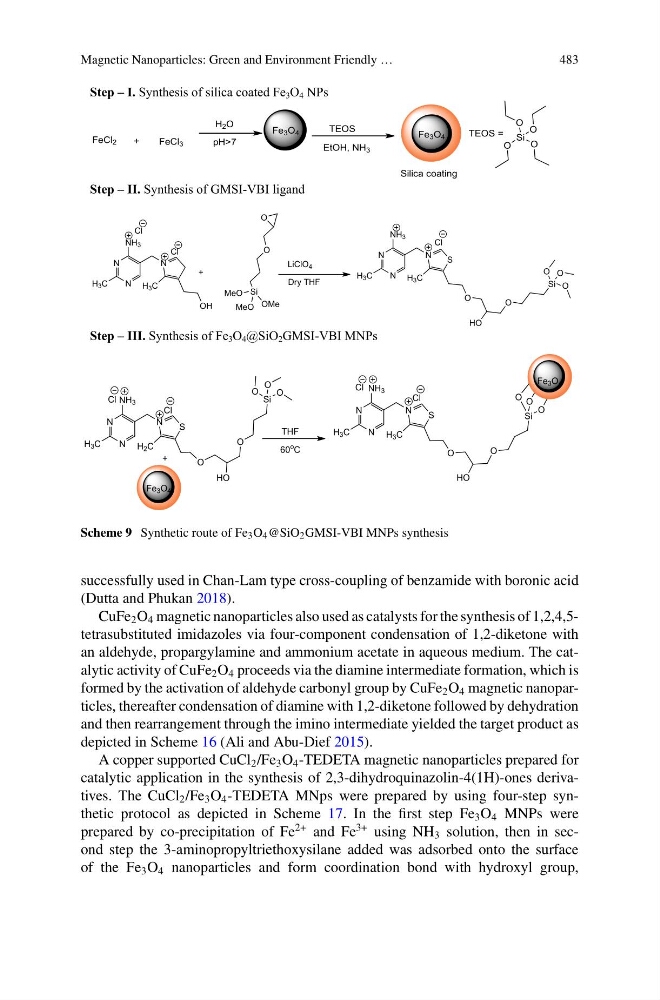
Scheme 9 Synthetic route of Fe 3 O 4 @SiO 2 GMSI-VBI MNPs synthesis
successfully used in Chan-Lam type cross-coupling of benzamide with boronic acid
(Dutta and Phukan 2018).
CuFe 2 O 4 magnetic nanoparticles also used as catalysts for the synthesis of 1,2,4,5tetrasubstituted imidazoles via four-component condensation of 1,2-diketone with
an aldehyde, propargylamine and ammonium acetate in aqueous medium. The catalytic activity of CuFe 2 O 4 proceeds via the diamine intermediate formation, which is
formed by the activation of aldehyde carbonyl group by CuFe 2 O 4 magnetic nanoparticles, thereafter condensation of diamine with 1,2-diketone followed by dehydration
and then rearrangement through the imino intermediate yielded the target product as
depicted in Scheme 16 (Ali and Abu-Dief 2015).
A copper supported CuCl 2 /Fe 3 O 4 -TEDETA magnetic nanoparticles prepared for
catalytic application in the synthesis of 2,3-dihydroquinazolin-4(1H)-ones derivatives. The CuCl 2 /Fe 3 O 4 -TEDETA MNps were prepared by using four-step synthetic protocol as depicted in Scheme 17. In the first step Fe 3 O 4 MNPs were
prepared by co-precipitation of Fe
2+ and Fe
3+ using NH 3 solution, then in second step the 3-aminopropyltriethoxysilane added was adsorbed onto the surface
of the Fe 3 O 4 nanoparticles and form coordination bond with hydroxyl group,
483
Step – I. Synthesis of silica coated Fe 3 O 4 NPs
FeCl 2
H 2 O
pH>7
TEOS
EtOH, NH 3
TEOS = Si
O
O
O
O
Fe 3 O 4
Fe 3 O 4
FeCl 3
+
Silica coating
Step – II. Synthesis of GMSI-VBI ligand
N
N
N
H 3 C
OH
H 3 C
NH 3
Cl
Cl
Si
O
O
MeO OMe
MeO
N
N
NH 3
H 3 C
N
S
O
HO
O
Si
O
O
O
H 3 C
+
Cl
LiClO 4
Dry THF
Step – III. Synthesis of Fe 3 O 4 @SiO 2 GMSI-VBI MNPs
N
N
NH 3
H 3 C
N
S
O
HO
O
Si
O
O
O
Cl
Cl
H 2 C
Fe 3 O 4
THF
60
o
C
N
N
NH 3
H 3 C
N
S
O
HO
O
Si
O
O O
Cl
Cl
H 3 C
Fe 3 O 4
+
Scheme 9 Synthetic route of Fe 3 O 4 @SiO 2 GMSI-VBI MNPs synthesis
successfully used in Chan-Lam type cross-coupling of benzamide with boronic acid
(Dutta and Phukan 2018).
CuFe 2 O 4 magnetic nanoparticles also used as catalysts for the synthesis of 1,2,4,5tetrasubstituted imidazoles via four-component condensation of 1,2-diketone with
an aldehyde, propargylamine and ammonium acetate in aqueous medium. The catalytic activity of CuFe 2 O 4 proceeds via the diamine intermediate formation, which is
formed by the activation of aldehyde carbonyl group by CuFe 2 O 4 magnetic nanoparticles, thereafter condensation of diamine with 1,2-diketone followed by dehydration
and then rearrangement through the imino intermediate yielded the target product as
depicted in Scheme 16 (Ali and Abu-Dief 2015).
A copper supported CuCl 2 /Fe 3 O 4 -TEDETA magnetic nanoparticles prepared for
catalytic application in the synthesis of 2,3-dihydroquinazolin-4(1H)-ones derivatives. The CuCl 2 /Fe 3 O 4 -TEDETA MNps were prepared by using four-step synthetic protocol as depicted in Scheme 17. In the first step Fe 3 O 4 MNPs were
prepared by co-precipitation of Fe
2+ and Fe
3+ using NH 3 solution, then in second step the 3-aminopropyltriethoxysilane added was adsorbed onto the surface
of the Fe 3 O 4 nanoparticles and form coordination bond with hydroxyl group,