

Application of Nanotechnology in Diagnosis and Therapeutics
417
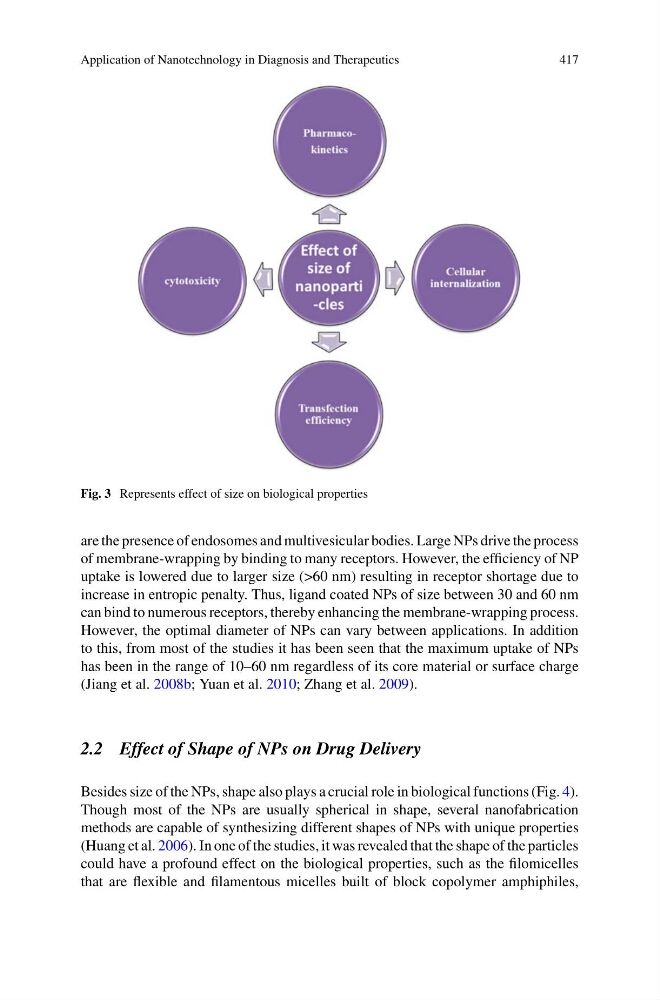
Fig. 3 Represents effect of size on biological properties
are the presence of endosomes and multivesicular bodies. Large NPs drive the process
of membrane-wrapping by binding to many receptors. However, the efficiency of NP
uptake is lowered due to larger size (>60 nm) resulting in receptor shortage due to
increase in entropic penalty. Thus, ligand coated NPs of size between 30 and 60 nm
can bind to numerous receptors, thereby enhancing the membrane-wrapping process.
However, the optimal diameter of NPs can vary between applications. In addition
to this, from most of the studies it has been seen that the maximum uptake of NPs
has been in the range of 10–60 nm regardless of its core material or surface charge
(Jiang et al. 2008b; Yuan et al. 2010; Zhang et al. 2009).
2.2 Effect of Shape of NPs on Drug Delivery
Besides size of the NPs, shape also plays a crucial role in biological functions (Fig. 4).
Though most of the NPs are usually spherical in shape, several nanofabrication
methods are capable of synthesizing different shapes of NPs with unique properties
(Huang et al. 2006). In one of the studies, it was revealed that the shape of the particles
could have a profound effect on the biological properties, such as the filomicelles
that are flexible and filamentous micelles built of block copolymer amphiphiles,
417
Fig. 3 Represents effect of size on biological properties
are the presence of endosomes and multivesicular bodies. Large NPs drive the process
of membrane-wrapping by binding to many receptors. However, the efficiency of NP
uptake is lowered due to larger size (>60 nm) resulting in receptor shortage due to
increase in entropic penalty. Thus, ligand coated NPs of size between 30 and 60 nm
can bind to numerous receptors, thereby enhancing the membrane-wrapping process.
However, the optimal diameter of NPs can vary between applications. In addition
to this, from most of the studies it has been seen that the maximum uptake of NPs
has been in the range of 10–60 nm regardless of its core material or surface charge
(Jiang et al. 2008b; Yuan et al. 2010; Zhang et al. 2009).
2.2 Effect of Shape of NPs on Drug Delivery
Besides size of the NPs, shape also plays a crucial role in biological functions (Fig. 4).
Though most of the NPs are usually spherical in shape, several nanofabrication
methods are capable of synthesizing different shapes of NPs with unique properties
(Huang et al. 2006). In one of the studies, it was revealed that the shape of the particles
could have a profound effect on the biological properties, such as the filomicelles
that are flexible and filamentous micelles built of block copolymer amphiphiles,