

366
R. Kumar et al.
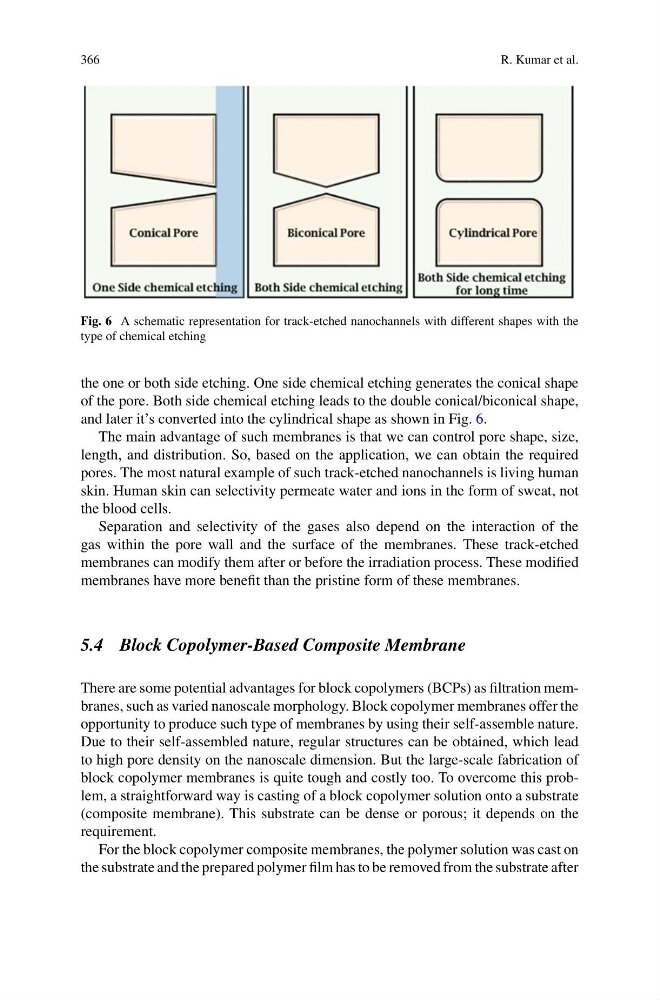
Fig. 6 A schematic representation for track-etched nanochannels with different shapes with the
type of chemical etching
the one or both side etching. One side chemical etching generates the conical shape
of the pore. Both side chemical etching leads to the double conical/biconical shape,
and later it’s converted into the cylindrical shape as shown in Fig. 6.
The main advantage of such membranes is that we can control pore shape, size,
length, and distribution. So, based on the application, we can obtain the required
pores. The most natural example of such track-etched nanochannels is living human
skin. Human skin can selectivity permeate water and ions in the form of sweat, not
the blood cells.
Separation and selectivity of the gases also depend on the interaction of the
gas within the pore wall and the surface of the membranes. These track-etched
membranes can modify them after or before the irradiation process. These modified
membranes have more benefit than the pristine form of these membranes.
5.4 Block Copolymer-Based Composite Membrane
There are some potential advantages for block copolymers (BCPs) as filtration membranes, such as varied nanoscale morphology. Block copolymer membranes offer the
opportunity to produce such type of membranes by using their self-assemble nature.
Due to their self-assembled nature, regular structures can be obtained, which lead
to high pore density on the nanoscale dimension. But the large-scale fabrication of
block copolymer membranes is quite tough and costly too. To overcome this problem, a straightforward way is casting of a block copolymer solution onto a substrate
(composite membrane). This substrate can be dense or porous; it depends on the
requirement.
For the block copolymer composite membranes, the polymer solution was cast on
the substrate and the prepared polymer film has to be removed from the substrate after
R. Kumar et al.
Fig. 6 A schematic representation for track-etched nanochannels with different shapes with the
type of chemical etching
the one or both side etching. One side chemical etching generates the conical shape
of the pore. Both side chemical etching leads to the double conical/biconical shape,
and later it’s converted into the cylindrical shape as shown in Fig. 6.
The main advantage of such membranes is that we can control pore shape, size,
length, and distribution. So, based on the application, we can obtain the required
pores. The most natural example of such track-etched nanochannels is living human
skin. Human skin can selectivity permeate water and ions in the form of sweat, not
the blood cells.
Separation and selectivity of the gases also depend on the interaction of the
gas within the pore wall and the surface of the membranes. These track-etched
membranes can modify them after or before the irradiation process. These modified
membranes have more benefit than the pristine form of these membranes.
5.4 Block Copolymer-Based Composite Membrane
There are some potential advantages for block copolymers (BCPs) as filtration membranes, such as varied nanoscale morphology. Block copolymer membranes offer the
opportunity to produce such type of membranes by using their self-assemble nature.
Due to their self-assembled nature, regular structures can be obtained, which lead
to high pore density on the nanoscale dimension. But the large-scale fabrication of
block copolymer membranes is quite tough and costly too. To overcome this problem, a straightforward way is casting of a block copolymer solution onto a substrate
(composite membrane). This substrate can be dense or porous; it depends on the
requirement.
For the block copolymer composite membranes, the polymer solution was cast on
the substrate and the prepared polymer film has to be removed from the substrate after