

312
U. S. Behera and J. S. Sangwai
SOLID SURFACE
OIL
NANOSUSPENSION
Wedge
SOLID SURFACE
OIL
NANOSUSPENSION
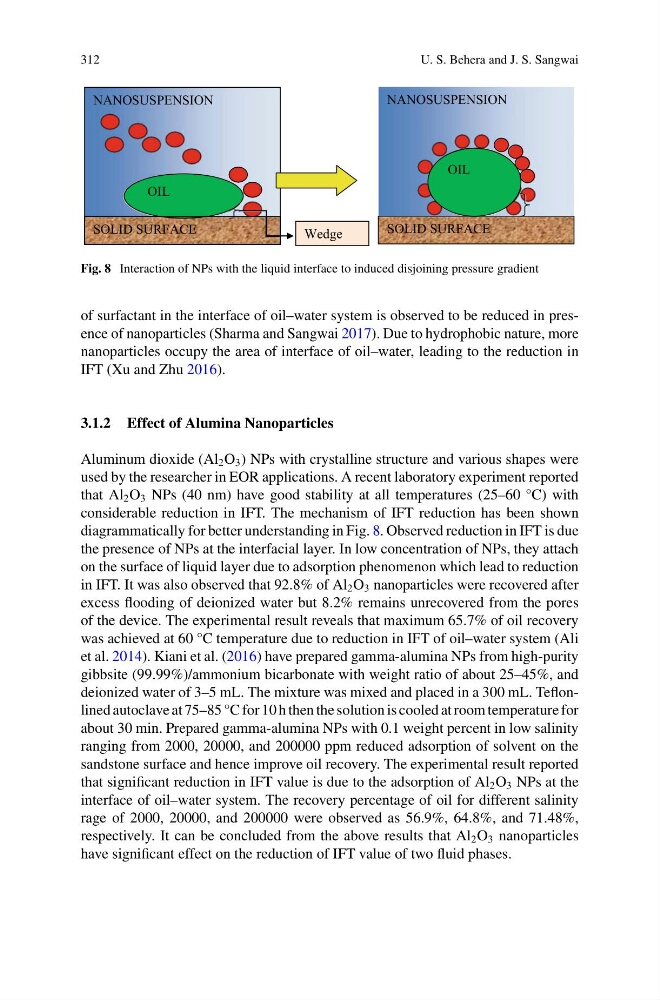
Fig. 8 Interaction of NPs with the liquid interface to induced disjoining pressure gradient
of surfactant in the interface of oil–water system is observed to be reduced in presence of nanoparticles (Sharma and Sangwai 2017). Due to hydrophobic nature, more
nanoparticles occupy the area of interface of oil–water, leading to the reduction in
IFT (Xu and Zhu 2016).
3.1.2 Effect of Alumina Nanoparticles
Aluminum dioxide (Al 2 O 3 ) NPs with crystalline structure and various shapes were
used by the researcher in EOR applications. A recent laboratory experiment reported
that Al 2 O 3 NPs (40 nm) have good stability at all temperatures (25–60 °C) with
considerable reduction in IFT. The mechanism of IFT reduction has been shown
diagrammatically for better understanding in Fig. 8. Observed reduction in IFT is due
the presence of NPs at the interfacial layer. In low concentration of NPs, they attach
on the surface of liquid layer due to adsorption phenomenon which lead to reduction
in IFT. It was also observed that 92.8% of Al 2 O 3 nanoparticles were recovered after
excess flooding of deionized water but 8.2% remains unrecovered from the pores
of the device. The experimental result reveals that maximum 65.7% of oil recovery
was achieved at 60 °C temperature due to reduction in IFT of oil–water system (Ali
et al. 2014). Kiani et al. (2016) have prepared gamma-alumina NPs from high-purity
gibbsite (99.99%)/ammonium bicarbonate with weight ratio of about 25–45%, and
deionized water of 3–5 mL. The mixture was mixed and placed in a 300 mL. Teflonlined autoclave at 75–85 °C for 10 h then the solution is cooled at room temperature for
about 30 min. Prepared gamma-alumina NPs with 0.1 weight percent in low salinity
ranging from 2000, 20000, and 200000 ppm reduced adsorption of solvent on the
sandstone surface and hence improve oil recovery. The experimental result reported
that significant reduction in IFT value is due to the adsorption of Al 2 O 3 NPs at the
interface of oil–water system. The recovery percentage of oil for different salinity
rage of 2000, 20000, and 200000 were observed as 56.9%, 64.8%, and 71.48%,
respectively. It can be concluded from the above results that Al 2 O 3 nanoparticles
have significant effect on the reduction of IFT value of two fluid phases.
U. S. Behera and J. S. Sangwai
SOLID SURFACE
OIL
NANOSUSPENSION
Wedge
SOLID SURFACE
OIL
NANOSUSPENSION
Fig. 8 Interaction of NPs with the liquid interface to induced disjoining pressure gradient
of surfactant in the interface of oil–water system is observed to be reduced in presence of nanoparticles (Sharma and Sangwai 2017). Due to hydrophobic nature, more
nanoparticles occupy the area of interface of oil–water, leading to the reduction in
IFT (Xu and Zhu 2016).
3.1.2 Effect of Alumina Nanoparticles
Aluminum dioxide (Al 2 O 3 ) NPs with crystalline structure and various shapes were
used by the researcher in EOR applications. A recent laboratory experiment reported
that Al 2 O 3 NPs (40 nm) have good stability at all temperatures (25–60 °C) with
considerable reduction in IFT. The mechanism of IFT reduction has been shown
diagrammatically for better understanding in Fig. 8. Observed reduction in IFT is due
the presence of NPs at the interfacial layer. In low concentration of NPs, they attach
on the surface of liquid layer due to adsorption phenomenon which lead to reduction
in IFT. It was also observed that 92.8% of Al 2 O 3 nanoparticles were recovered after
excess flooding of deionized water but 8.2% remains unrecovered from the pores
of the device. The experimental result reveals that maximum 65.7% of oil recovery
was achieved at 60 °C temperature due to reduction in IFT of oil–water system (Ali
et al. 2014). Kiani et al. (2016) have prepared gamma-alumina NPs from high-purity
gibbsite (99.99%)/ammonium bicarbonate with weight ratio of about 25–45%, and
deionized water of 3–5 mL. The mixture was mixed and placed in a 300 mL. Teflonlined autoclave at 75–85 °C for 10 h then the solution is cooled at room temperature for
about 30 min. Prepared gamma-alumina NPs with 0.1 weight percent in low salinity
ranging from 2000, 20000, and 200000 ppm reduced adsorption of solvent on the
sandstone surface and hence improve oil recovery. The experimental result reported
that significant reduction in IFT value is due to the adsorption of Al 2 O 3 NPs at the
interface of oil–water system. The recovery percentage of oil for different salinity
rage of 2000, 20000, and 200000 were observed as 56.9%, 64.8%, and 71.48%,
respectively. It can be concluded from the above results that Al 2 O 3 nanoparticles
have significant effect on the reduction of IFT value of two fluid phases.