

Interaction of Nanoparticles with Reservoir Fluids and Rocks …
309
Literature review exposes that reduction of interfacial tension in the presence of
nanoparticles with the surfactant is more than the pure surfactant. The influence of
nanoparticles in altering the various factors such as IFT, wettability, viscosity, and
density are discussed in detail with a case study taken from multiple researchers.
3.1 Interfacial Tension
Interfacial tension is the force that observed between interphase of two fluids which
hold the molecule of the interface tightly. The force is mostly measured by the
unit of dyne/cm. This force is also affected by concentration of surfactant, alkali,
and nanoparticles in the disperse medium. IFT of two fluid phases also depends on
pressure and temperature of the systems. As the surfactant is added into the fluid
phase during EOR in the reservoir, the surfactant molecule enters into the interphase
and makes the force week which in turn decreases the capillary force in pores, which
increases oil production. It has also been known that interfacial tension reduces the
presence of surfactant and alkali. The process of reduction of interfacial tension of
water–oil system in the presence of surfactant is called surfactant flooding. Similarly,
in the presence of alkali, the EOR process is called as alkali flooding.
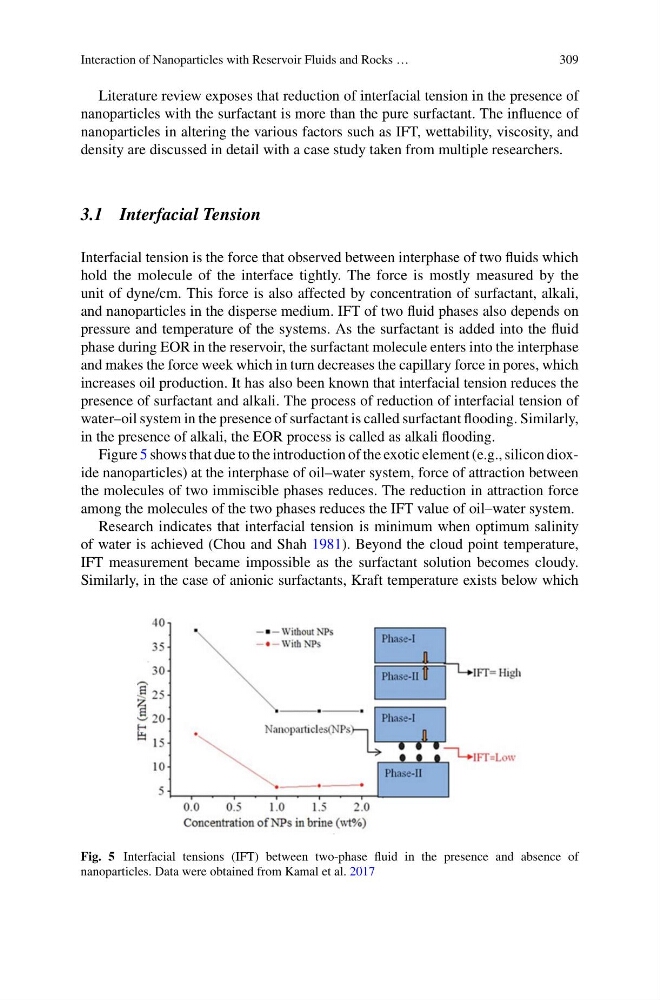
Figure 5 shows that due to the introduction of the exotic element (e.g., silicon dioxide nanoparticles) at the interphase of oil–water system, force of attraction between
the molecules of two immiscible phases reduces. The reduction in attraction force
among the molecules of the two phases reduces the IFT value of oil–water system.
Research indicates that interfacial tension is minimum when optimum salinity
of water is achieved (Chou and Shah 1981). Beyond the cloud point temperature,
IFT measurement became impossible as the surfactant solution becomes cloudy.
Similarly, in the case of anionic surfactants, Kraft temperature exists below which
Fig. 5 Interfacial tensions (IFT) between two-phase fluid in the presence and absence of
nanoparticles. Data were obtained from Kamal et al. 2017
309
Literature review exposes that reduction of interfacial tension in the presence of
nanoparticles with the surfactant is more than the pure surfactant. The influence of
nanoparticles in altering the various factors such as IFT, wettability, viscosity, and
density are discussed in detail with a case study taken from multiple researchers.
3.1 Interfacial Tension
Interfacial tension is the force that observed between interphase of two fluids which
hold the molecule of the interface tightly. The force is mostly measured by the
unit of dyne/cm. This force is also affected by concentration of surfactant, alkali,
and nanoparticles in the disperse medium. IFT of two fluid phases also depends on
pressure and temperature of the systems. As the surfactant is added into the fluid
phase during EOR in the reservoir, the surfactant molecule enters into the interphase
and makes the force week which in turn decreases the capillary force in pores, which
increases oil production. It has also been known that interfacial tension reduces the
presence of surfactant and alkali. The process of reduction of interfacial tension of
water–oil system in the presence of surfactant is called surfactant flooding. Similarly,
in the presence of alkali, the EOR process is called as alkali flooding.
Figure 5 shows that due to the introduction of the exotic element (e.g., silicon dioxide nanoparticles) at the interphase of oil–water system, force of attraction between
the molecules of two immiscible phases reduces. The reduction in attraction force
among the molecules of the two phases reduces the IFT value of oil–water system.
Research indicates that interfacial tension is minimum when optimum salinity
of water is achieved (Chou and Shah 1981). Beyond the cloud point temperature,
IFT measurement became impossible as the surfactant solution becomes cloudy.
Similarly, in the case of anionic surfactants, Kraft temperature exists below which
Fig. 5 Interfacial tensions (IFT) between two-phase fluid in the presence and absence of
nanoparticles. Data were obtained from Kamal et al. 2017