

Interaction of Heavy Crude Oil and Nanoparticles …
247
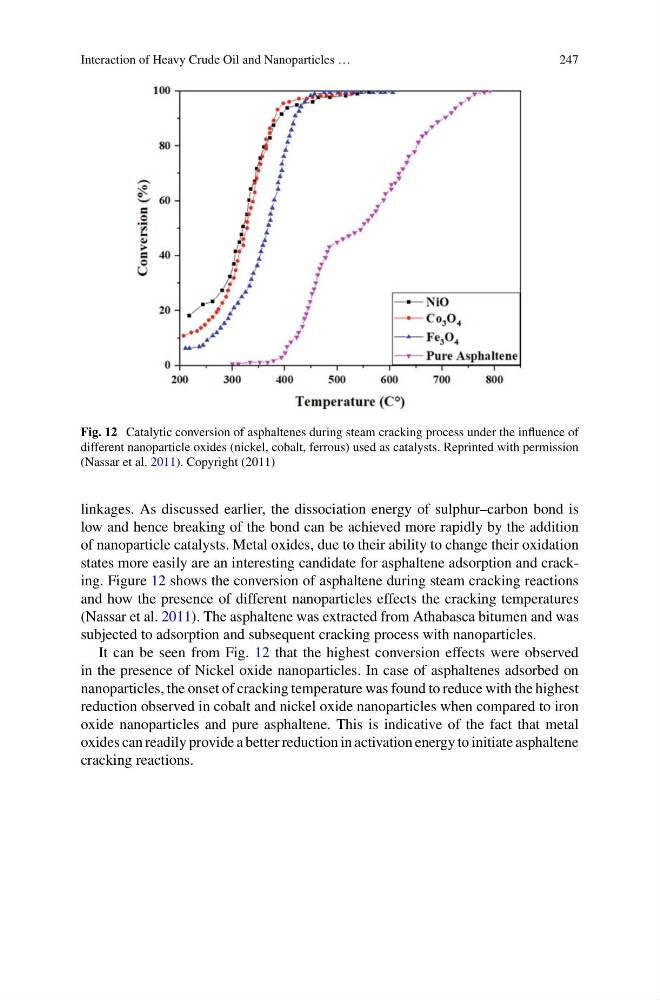
Fig. 12 Catalytic conversion of asphaltenes during steam cracking process under the influence of
different nanoparticle oxides (nickel, cobalt, ferrous) used as catalysts. Reprinted with permission
(Nassar et al. 2011). Copyright (2011)
linkages. As discussed earlier, the dissociation energy of sulphur–carbon bond is
low and hence breaking of the bond can be achieved more rapidly by the addition
of nanoparticle catalysts. Metal oxides, due to their ability to change their oxidation
states more easily are an interesting candidate for asphaltene adsorption and cracking. Figure 12 shows the conversion of asphaltene during steam cracking reactions
and how the presence of different nanoparticles effects the cracking temperatures
(Nassar et al. 2011). The asphaltene was extracted from Athabasca bitumen and was
subjected to adsorption and subsequent cracking process with nanoparticles.
It can be seen from Fig. 12 that the highest conversion effects were observed
in the presence of Nickel oxide nanoparticles. In case of asphaltenes adsorbed on
nanoparticles, the onset of cracking temperature was found to reduce with the highest
reduction observed in cobalt and nickel oxide nanoparticles when compared to iron
oxide nanoparticles and pure asphaltene. This is indicative of the fact that metal
oxides can readily provide a better reduction in activation energy to initiate asphaltene
cracking reactions.
247
Fig. 12 Catalytic conversion of asphaltenes during steam cracking process under the influence of
different nanoparticle oxides (nickel, cobalt, ferrous) used as catalysts. Reprinted with permission
(Nassar et al. 2011). Copyright (2011)
linkages. As discussed earlier, the dissociation energy of sulphur–carbon bond is
low and hence breaking of the bond can be achieved more rapidly by the addition
of nanoparticle catalysts. Metal oxides, due to their ability to change their oxidation
states more easily are an interesting candidate for asphaltene adsorption and cracking. Figure 12 shows the conversion of asphaltene during steam cracking reactions
and how the presence of different nanoparticles effects the cracking temperatures
(Nassar et al. 2011). The asphaltene was extracted from Athabasca bitumen and was
subjected to adsorption and subsequent cracking process with nanoparticles.
It can be seen from Fig. 12 that the highest conversion effects were observed
in the presence of Nickel oxide nanoparticles. In case of asphaltenes adsorbed on
nanoparticles, the onset of cracking temperature was found to reduce with the highest
reduction observed in cobalt and nickel oxide nanoparticles when compared to iron
oxide nanoparticles and pure asphaltene. This is indicative of the fact that metal
oxides can readily provide a better reduction in activation energy to initiate asphaltene
cracking reactions.