

Interaction of Heavy Crude Oil and Nanoparticles …
239
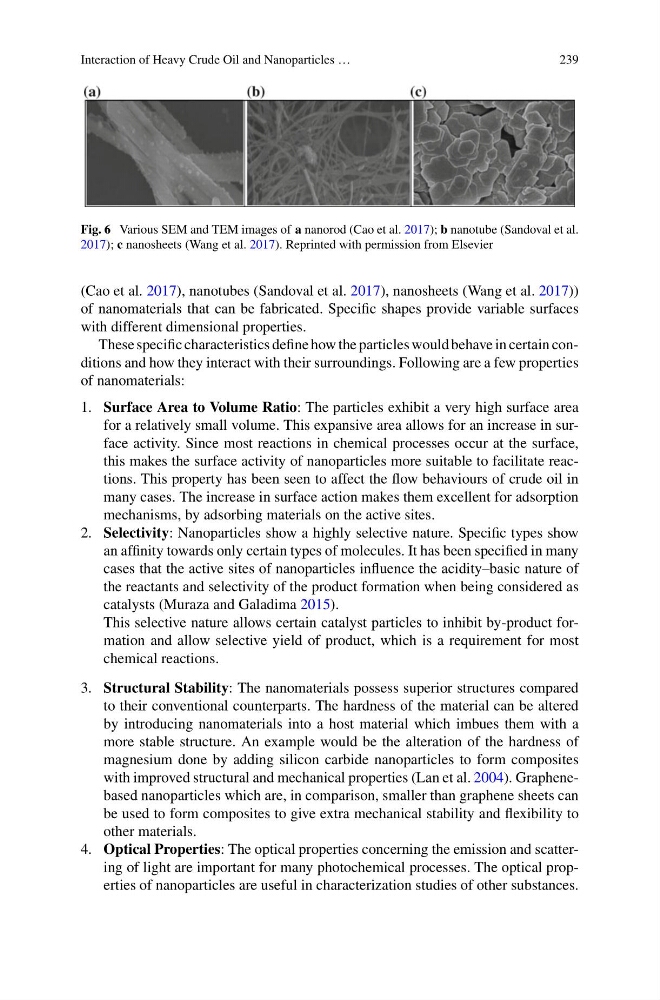
Fig. 6 Various SEM and TEM images of a nanorod (Cao et al. 2017); b nanotube (Sandoval et al.
2017); c nanosheets (Wang et al. 2017). Reprinted with permission from Elsevier
(Cao et al. 2017), nanotubes (Sandoval et al. 2017), nanosheets (Wang et al. 2017))
of nanomaterials that can be fabricated. Specific shapes provide variable surfaces
with different dimensional properties.
These specific characteristics define how the particles would behave in certain conditions and how they interact with their surroundings. Following are a few properties
of nanomaterials:
1. Surface Area to Volume Ratio: The particles exhibit a very high surface area
for a relatively small volume. This expansive area allows for an increase in surface activity. Since most reactions in chemical processes occur at the surface,
this makes the surface activity of nanoparticles more suitable to facilitate reactions. This property has been seen to affect the flow behaviours of crude oil in
many cases. The increase in surface action makes them excellent for adsorption
mechanisms, by adsorbing materials on the active sites.
2. Selectivity: Nanoparticles show a highly selective nature. Specific types show
an affinity towards only certain types of molecules. It has been specified in many
cases that the active sites of nanoparticles influence the acidity–basic nature of
the reactants and selectivity of the product formation when being considered as
catalysts (Muraza and Galadima 2015).
This selective nature allows certain catalyst particles to inhibit by-product formation and allow selective yield of product, which is a requirement for most
chemical reactions.
3. Structural Stability: The nanomaterials possess superior structures compared
to their conventional counterparts. The hardness of the material can be altered
by introducing nanomaterials into a host material which imbues them with a
more stable structure. An example would be the alteration of the hardness of
magnesium done by adding silicon carbide nanoparticles to form composites
with improved structural and mechanical properties (Lan et al. 2004). Graphenebased nanoparticles which are, in comparison, smaller than graphene sheets can
be used to form composites to give extra mechanical stability and flexibility to
other materials.
4. Optical Properties: The optical properties concerning the emission and scattering of light are important for many photochemical processes. The optical properties of nanoparticles are useful in characterization studies of other substances.
239
Fig. 6 Various SEM and TEM images of a nanorod (Cao et al. 2017); b nanotube (Sandoval et al.
2017); c nanosheets (Wang et al. 2017). Reprinted with permission from Elsevier
(Cao et al. 2017), nanotubes (Sandoval et al. 2017), nanosheets (Wang et al. 2017))
of nanomaterials that can be fabricated. Specific shapes provide variable surfaces
with different dimensional properties.
These specific characteristics define how the particles would behave in certain conditions and how they interact with their surroundings. Following are a few properties
of nanomaterials:
1. Surface Area to Volume Ratio: The particles exhibit a very high surface area
for a relatively small volume. This expansive area allows for an increase in surface activity. Since most reactions in chemical processes occur at the surface,
this makes the surface activity of nanoparticles more suitable to facilitate reactions. This property has been seen to affect the flow behaviours of crude oil in
many cases. The increase in surface action makes them excellent for adsorption
mechanisms, by adsorbing materials on the active sites.
2. Selectivity: Nanoparticles show a highly selective nature. Specific types show
an affinity towards only certain types of molecules. It has been specified in many
cases that the active sites of nanoparticles influence the acidity–basic nature of
the reactants and selectivity of the product formation when being considered as
catalysts (Muraza and Galadima 2015).
This selective nature allows certain catalyst particles to inhibit by-product formation and allow selective yield of product, which is a requirement for most
chemical reactions.
3. Structural Stability: The nanomaterials possess superior structures compared
to their conventional counterparts. The hardness of the material can be altered
by introducing nanomaterials into a host material which imbues them with a
more stable structure. An example would be the alteration of the hardness of
magnesium done by adding silicon carbide nanoparticles to form composites
with improved structural and mechanical properties (Lan et al. 2004). Graphenebased nanoparticles which are, in comparison, smaller than graphene sheets can
be used to form composites to give extra mechanical stability and flexibility to
other materials.
4. Optical Properties: The optical properties concerning the emission and scattering of light are important for many photochemical processes. The optical properties of nanoparticles are useful in characterization studies of other substances.